

Klaten Chicken Soup Amidst Hamenang Corruption Case
-
News
-
12 minutes ago
This article was translated by AI. Read the original article on Kompas.com. See Original
The phrase “no longer” presupposes that the originally fulfilled requirements have since dissipated, not that the requirements have been questioned from the outset.
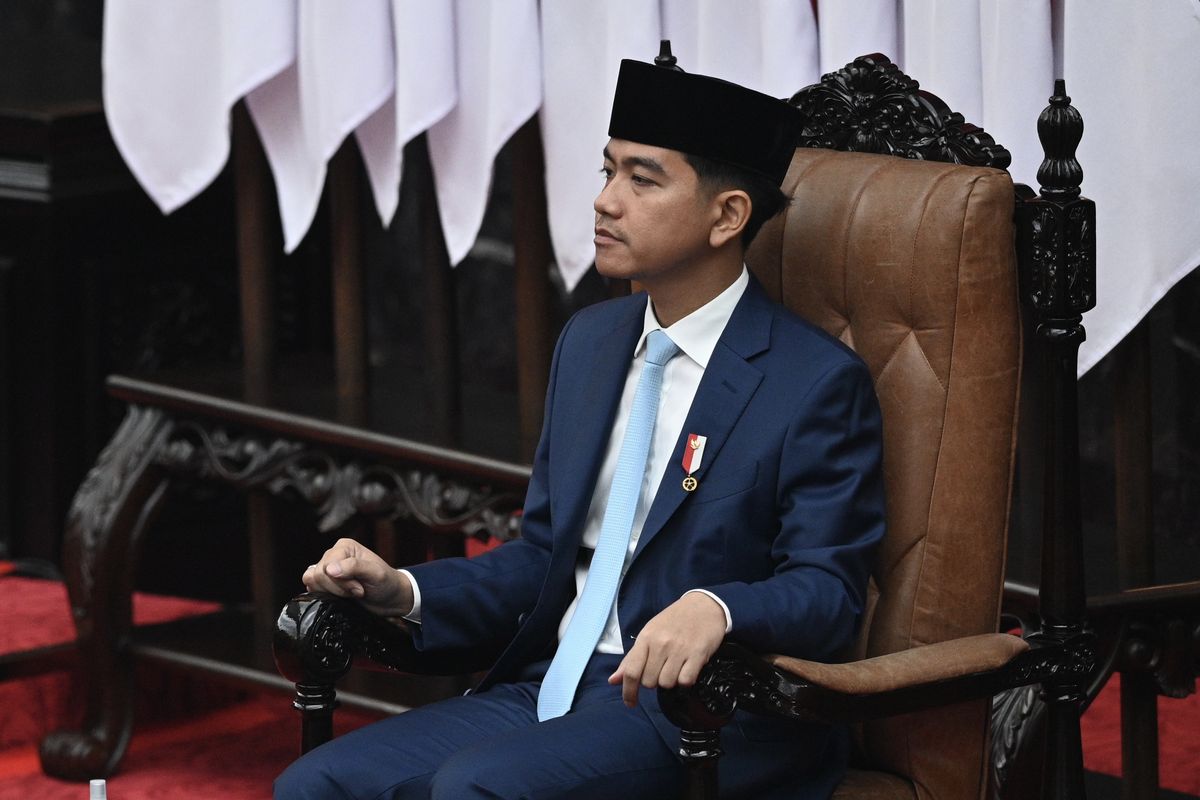
As for unseemly conduct, which in the Court's law is interpreted as actions that degrade the dignity of the position, it demands proof of awareness: did Gibran know his documents were inadequate but still used them?
Gibran's defenders have arguments that cannot be overlooked. The equivalency letter was issued by the ministry and accepted by the Election Commission, making the flaws more attributable to the issuer and the verifier.
The Court's consideration also states “did not find evidence,” which logically in terms of proof does not equate to establishing the intention to deceive.
This finding also arises from a case where the petitioners were declared to lack legal standing.
Conversely, critics can counter that the seeker of equivalency is Gibran himself, making it reasonable to assume he knows what was attached and what was not.
The suggestion of a Package C program floated by some reveals a similar dilemma.
Legally following that equivalency program does not constitute acknowledgment, nor does it rectify the flaws from 2024 since candidate requirements are assessed at registration.
However, politically that move is almost certainly interpreted as a silent admission.
Not taking it means closing the door to 2029; taking it means bearing public interpretation.
Meanwhile, the route to impeachment requires two-thirds support in the House of Representatives and the People's Consultative Assembly, a threshold hard to meet as long as the government's supporting coalition remains solid.
Too much focus on Gibran's fate could mislead attention.
The more fundamental question is how a candidate can pass without convincing evidence of graduation.
The chain is long, involving the Court's ruling leading to severe ethical sanctions, a stern warning from the DKPP to the leadership of the Election Commission in the same registration, disputed nominations, equivalency letters without basic documents, and verification that was confirmed not to have directly checked diplomas during the hearings.
This is not the error of a single table but a cascading failure.