

Rumors Emerge That Jeff Bezos Wants to Fund the Relocation of the Javan Rhino
-
News
-
12 minutes ago
This article was translated by AI. Read the original article on Kompas.com. See Original
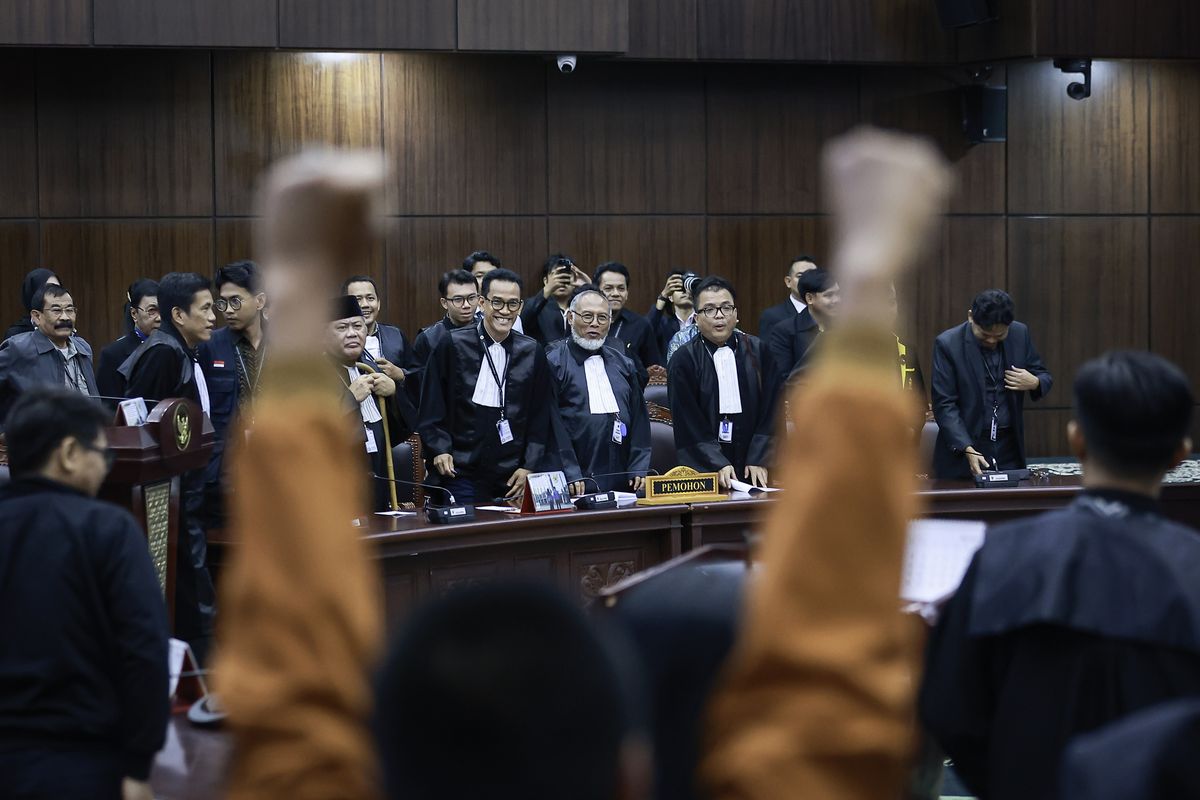
This distinction is crucial. The verdict resolves the case, but its legal reasoning could continue to fuel political and constitutional debate.
Once the President and Vice President are inaugurated, the issue no longer resides solely within the nomination process or election disputes.
The 1945 Constitution provides a specific mechanism for the removal of the President and/or Vice President.
Article 7A states that the President and/or Vice President may be removed upon proven misconduct or failure to meet the qualifications as President and/or Vice President.
This process cannot be initiated directly through a citizen lawsuit to the Court but must start from the House of Representatives, be examined by the Court, and then decided by the People's Consultative Assembly, as detailed in Article 7B.
This means that after inauguration, the path is entirely different.
However, this route is lengthy and highly political.
First, the House must build a case that the Vice President no longer meets the qualifications. A request to the Court also requires substantial political backing.
If the Court supports this view, the final decision still rests with the Assembly, which requires a high quorum and majority.
For this reason, the Court's remarks regarding Gibran's education do not automatically jeopardize his position.
Yet to claim that this issue has completely ended would be too simplistic.
A more realistic impact may arise as the 2029 elections approach.
If Gibran runs again as a presidential or vice presidential candidate, his educational documents will likely come under scrutiny during the nomination process.
At that point, the Court's considerations from 2026 will become public documents that will be hard to ignore.
Gibran's political opponents will not need to start debates from scratch.