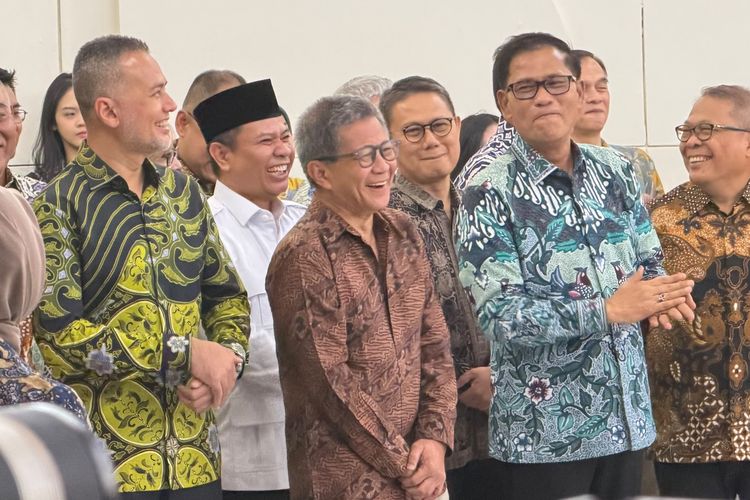


Minister Dudung: A Strong Country is Not One that Instills Fear, but One that Earns Trust and Love
-
News
-
Just now
This article was translated by AI. Read the original article on Kompas.com. See Original
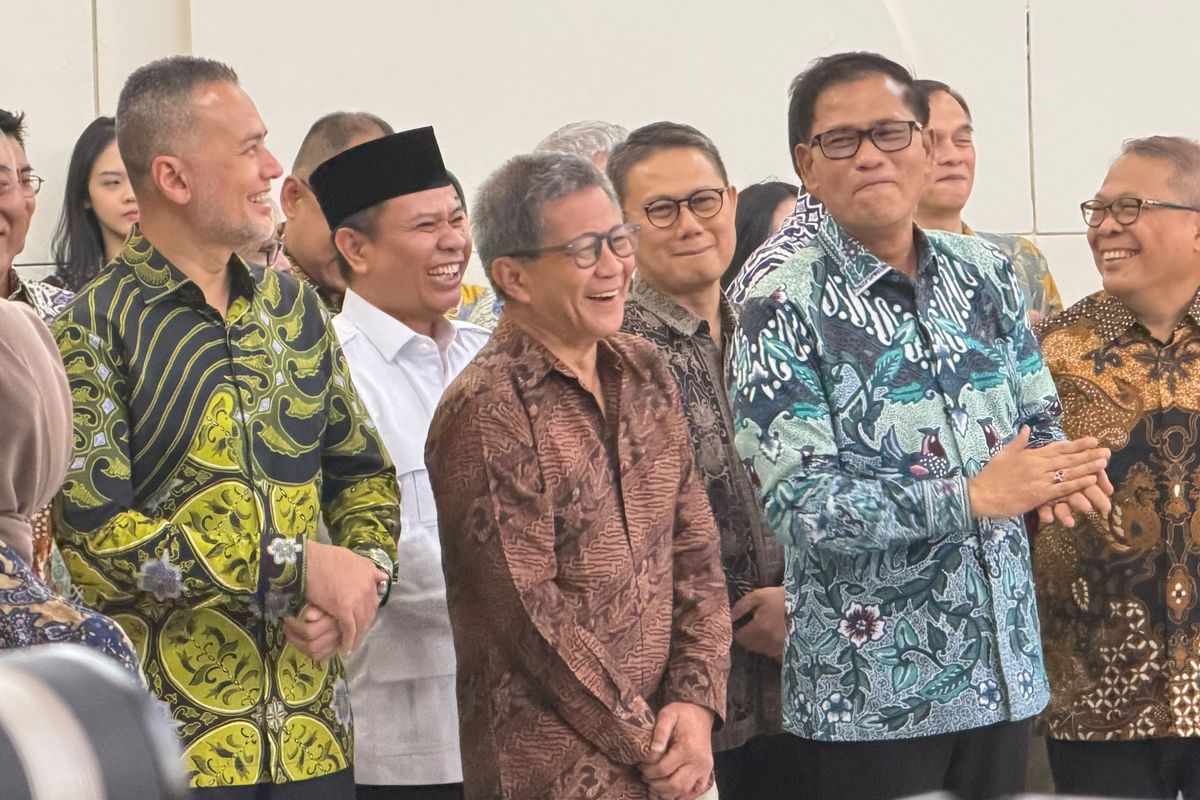
PUBLIC SPACE has been abuzz with unusual power consolidation maneuvers in early October 2026. President Prabowo Subianto has not only reshuffled his cabinet but also appointed a significant number of members to the Presidential Advisory Council (Wantimpres).
There are certainly many intriguing aspects to the President's political steps. However, the most attention-grabbing move is the entry of Rocky Gerung as a member of Wantimpres.
This is understandable. Up to now, Rocky has been hailed as an independent figure who is highly critical of power. He is an icon of intellectual resistance.
In Gramsci's terms, Rocky is a counter-hegemony agent. His critical thinking is seen as a representation of public voice.
As a result, some in the public lament Rocky's stance. They will no longer see Rocky express his sound reasoning so blatantly.
I attempt to read this from a different perspective.
Rocky must be considered alongside his two "ideological companions" who have also entered the palace. They are Syahganda Nainggolan and Jumhur Hidayat.
Syahganda has been appointed by the President as the Head of the Government Communication Agency (Bakom), replacing M. Qodari who has been shifted to a member of Wantimpres.
Jumhur Hidayat entered the palace earlier as Minister of Environment. Rocky and Syahganda were even present at Jumhur's inauguration.
The three activists and critical thinkers have been friends for a long time. On many occasions, they have voiced their criticisms of the power, particularly during Joko Widodo's administration.
In fact, due to their activism, both Syahganda and Jumhur spent time behind bars during Joko Widodo's era.
For the purpose of this article, I will refer to these three activists as the “Activist Trio.”
For a public accustomed to seeing the Activist Trio—especially Rocky Gerung—as the antithesis of power, Prabowo's decision to bring them into the palace and their willingness to join certainly invites skepticism.
Various criticisms and condemnations flooded public space in the aftermath of the appointments, especially directed at Rocky, even permeating dinner table conversations.
The public accused that their rationality and steadfastness in voicing criticism ultimately succumbed to the compromises of office. Is that true?
I try to understand this by examining the ideological aspects and political communication calculations. From this angle, I suspect that Prabowo's move is not a strategy to tame opposition actors. Likewise, the Activist Trio's decision to enter the palace is not a defeat of idealism.
It seems overly demeaning to the Activist Trio with their significant stature to assume they could be tamed by positions. Although it is not difficult for the public to point out activists with notable names who have succumbed to the embrace of power.
I still believe that the actions of Prabowo and the Activist Trio transcend the logic of pragmatic power-sharing. I see it as a structured effort to institutionalize an "intellectual fortress" to secure President Prabowo's ideological vision.
Since the beginning of his leadership in Indonesia, Prabowo has hit the ground running with various programs steeped in a sense of “state populism.”
Ernesto Laclau (2005) argues that populism is not a substantive ideology but a discursive logic that consolidates various unmet social demands into a collective political entity called "the people" facing the status quo (neoliberal apparatus).
In the context of Indonesia, Prabowo is forming what Laclau refers to as an “equivalential chain” by synthesizing various people's issues into a single populist redistributive policy nexus. The state assumes control and speaks on behalf of the people.
For instance, the Free Nutritious Meals policy (MBG). This populist program consumes a staggering budget of Rp 218.77 trillion (after a sharpening of expenses) in the 2026 fiscal year, targeting 74.56 million beneficiaries (BGN, Press Release, 17/09/2026).
The equivalence network is structurally expanded through the planned establishment of 80,000 Red and White Village Cooperatives (KDKMP).
This program is expected to require a total working capital investment of between Rp 240 trillion and Rp 400 trillion (with an estimated capital of Rp 3 billion - Rp 5 billion per cooperative unit).


















