


Prabowo’s Joke About Not Wanting to Look Fat During the Inauguration of the RS Harapan Kita-Tokushukai Building
-
News
-
6 minutes ago
This article was translated by AI. Read the original article on Kompas.com. See Original
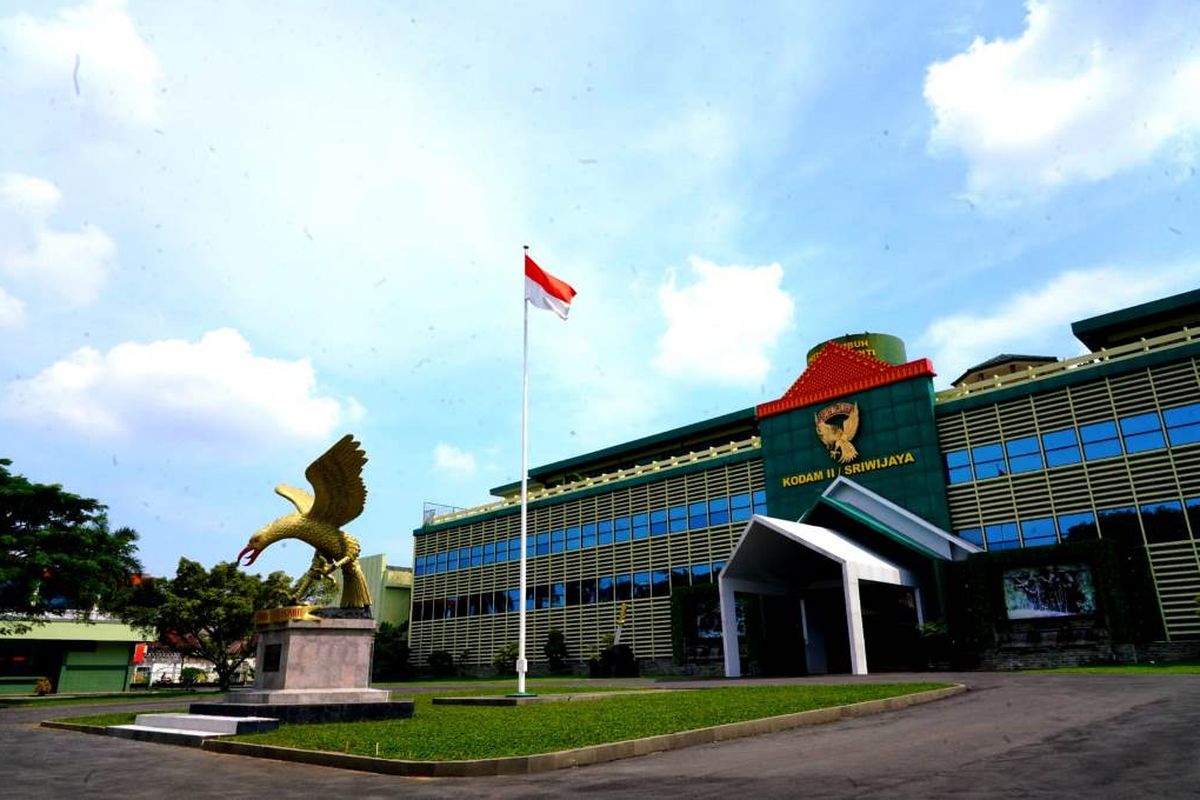
"The question is not just how many Kodam Indonesia has, but whether the Kodam, Navy Command, Army Command, Naval Base, Air Command, Air Bases, radar, satellite systems, intelligence, and combat units can function as a single national defense network," Selamat said.
Lab 45 Coordinator Analyst Christian Guntur Lebang remarked that the formation of new Kodam must also be linked to the changing character of threats faced by Indonesia.
He pointed out Prabowo's speech during the 81st TNI anniversary, which noted that threats to Indonesia are not only physical but also include cyber threats and misinformation.
"Just based on the speech, the President stated that threats now are not merely physical, including cyber threats and misinformation. Based on that logic, the addition of territorial commands seems irrelevant to the dynamic threats mentioned by the President," Guntur explained to Kompas.com on Monday.
He noted that the addition of territorial commands would be more relevant if Indonesia faced the possibility of invasion and ground occupation.
"The addition of territorial commands is relevant if Indonesia is indeed facing the potential for invasion and ground occupation. Given Indonesia's geographical position and global geopolitical competition, the likelihood of this occurring is very low," he stated.
Guntur also mentioned another possible reason behind strengthening territorial commands, which is the need to address global disruptions and reinforce national resilience.
According to him, the TNI could be positioned as a supporting factor for domestic supply chain resilience through conducting military operations other than war (MOOTW).
"President Prabowo sees the TNI as a key factor in that strategy, thus more Koter are needed, focusing not primarily on military threats, but conducting MOOTW related to resilience, economy, and social issues," he added.
Selamat stressed that the addition of command structures should also be accompanied by enhancement of defense capabilities.
He noted that modern warfare no longer recognizes rigid boundaries between land, sea, air, cyber, and space forces.
"Future warfare will not recognize rigid sectoral boundaries between land, sea, air, cyber, and space," Selamat asserted.
Therefore, he believes that technology capabilities, intelligence, and command systems are critical components in strengthening defense posture.
Selamat emphasized that intelligence, surveillance, and reconnaissance (ISR) capabilities, satellite systems, radar, and command and control systems must be prioritized alongside the formation of new command structures.
He cautioned that additions to the structure should not stop at merely increasing the number of headquarters and positions.

























