


Prabowo’s Joke About Not Wanting to Look Fat During the Inauguration of the RS Harapan Kita-Tokushukai Building
-
News
-
8 minutes ago
This article was translated by AI. Read the original article on Kompas.com. See Original
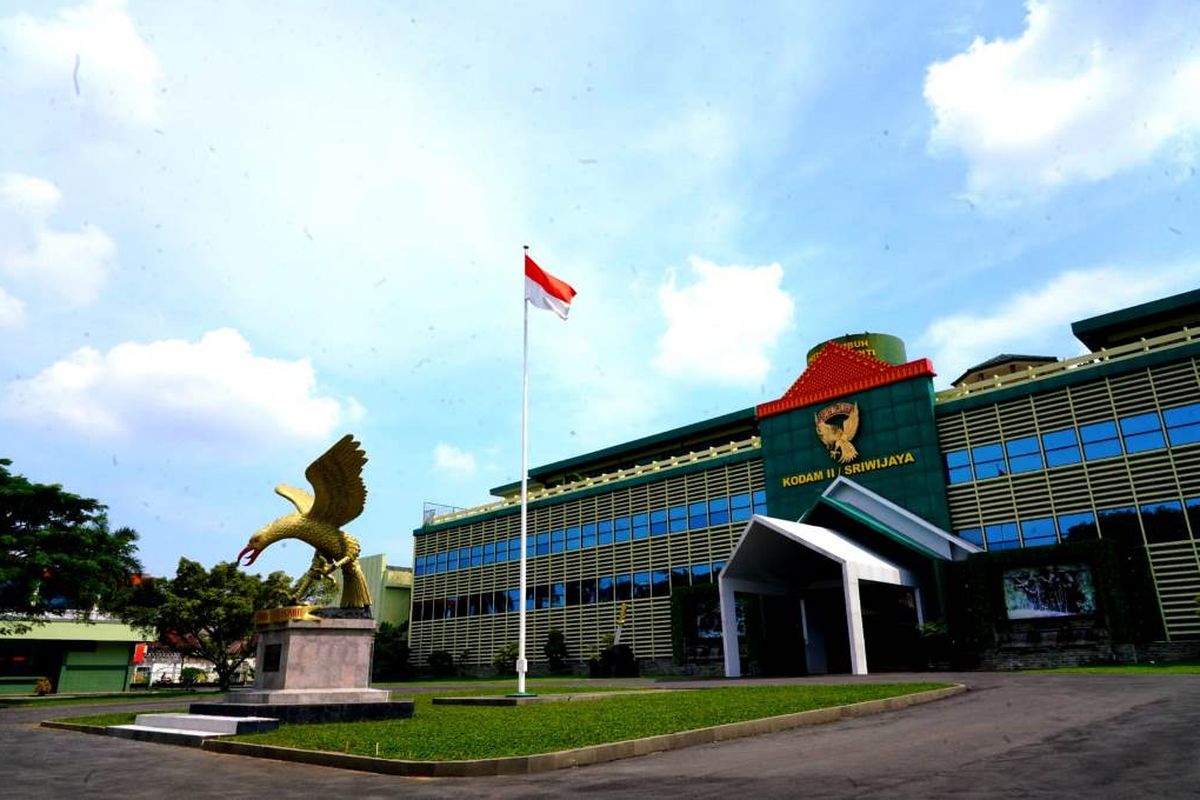
JAKARTA, KOMPAS.com - President Prabowo Subianto inaugurated six new Military Regional Commands (Kodam) of the Indonesian Army during the 81st anniversary celebration of the Indonesian Armed Forces at the TNI Headquarters Field, Cilangkap, East Jakarta, on Monday (5/10/2026).
The six new Kodam are Kodam XXV/Mahmud Riayat Syah in the Riau Islands, Kodam XXVI/Mataram in Yogyakarta Special Region, Kodam XXVII/Sobe Sonbai in East Nusa Tenggara, Kodam XXVIII/Maluku Kiraha in North Maluku, Kodam XXIX/Mambruk in Central Papua, and Kodam XXX/Winambora in West Nusa Tenggara.
The inauguration of these six Kodam is part of the inauguration of 204 new TNI units by Prabowo.
"With the blessings of God Almighty, I Prabowo Subianto, President of the Republic of Indonesia, hereby inaugurate 204 new TNI units," Prabowo declared during the ceremony.
The plan to establish several new Kodam had previously been communicated by the TNI Headquarters.
Two weeks before the inauguration, TNI's Head of Public Relations Major General Muhammad Nas mentioned that five new Kodam would be inaugurated at the 81st anniversary of the TNI.
The addition of these Kodam expands the territorial command structure of the Indonesian Army, covering regions with distinct geographical characteristics and security challenges.
Several observers have pointed out that attention must be given to ensure that the restructuring aligns with national defense needs.
Political and military observer from the National University (Unas) Selamat Ginting stated that the addition of Kodam should consider Indonesia's character as an archipelagic nation.
He emphasized that several areas now having new Kodam have strong maritime dimensions.
"Indonesia must also avoid a land-centric bias. As an archipelagic nation, Indonesia’s strategic threats are largely maritime and aerial," Selamat stated to Kompas.com on Monday.
He highlighted that the Riau Islands, North Maluku, East Nusa Tenggara, and Papua feature geographical characteristics closely linked to maritime aspects.
Therefore, according to Selamat, the existence of the new Kodam should be integrated with the capabilities of the Indonesian Navy and Air Force.
"Thus, the establishment of Kodam must be followed by integration with the Indonesian Navy (TNI AL) and Air Force (TNI AU)," he said.
He added that territorial defense cannot rely solely on the Army’s command structure.
"The question is not just how many Kodam Indonesia has, but whether the Kodam, Navy Command, Army Command, Naval Base, Air Command, Air Bases, radar, satellite systems, intelligence, and combat units can function as a single national defense network," Selamat said.
Lab 45 Coordinator Analyst Christian Guntur Lebang remarked that the formation of new Kodam must also be linked to the changing character of threats faced by Indonesia.
He pointed out Prabowo's speech during the 81st TNI anniversary, which noted that threats to Indonesia are not only physical but also include cyber threats and misinformation.
"Just based on the speech, the President stated that threats now are not merely physical, including cyber threats and misinformation. Based on that logic, the addition of territorial commands seems irrelevant to the dynamic threats mentioned by the President," Guntur explained to Kompas.com on Monday.
He noted that the addition of territorial commands would be more relevant if Indonesia faced the possibility of invasion and ground occupation.
"The addition of territorial commands is relevant if Indonesia is indeed facing the potential for invasion and ground occupation. Given Indonesia's geographical position and global geopolitical competition, the likelihood of this occurring is very low," he stated.
Guntur also mentioned another possible reason behind strengthening territorial commands, which is the need to address global disruptions and reinforce national resilience.
According to him, the TNI could be positioned as a supporting factor for domestic supply chain resilience through conducting military operations other than war (MOOTW).
"President Prabowo sees the TNI as a key factor in that strategy, thus more Koter are needed, focusing not primarily on military threats, but conducting MOOTW related to resilience, economy, and social issues," he added.
Selamat stressed that the addition of command structures should also be accompanied by enhancement of defense capabilities.
He noted that modern warfare no longer recognizes rigid boundaries between land, sea, air, cyber, and space forces.
"Future warfare will not recognize rigid sectoral boundaries between land, sea, air, cyber, and space," Selamat asserted.
Therefore, he believes that technology capabilities, intelligence, and command systems are critical components in strengthening defense posture.
Selamat emphasized that intelligence, surveillance, and reconnaissance (ISR) capabilities, satellite systems, radar, and command and control systems must be prioritized alongside the formation of new command structures.
He cautioned that additions to the structure should not stop at merely increasing the number of headquarters and positions.
"We must avoid the situation of 'many generals, few capabilities'. This paradox must be avoided," Selamat warned.
The addition of six Kodam also brings consequences regarding personnel, facilities, and budget.
Selamat noted that each Kodam requires organizational structure, staff, facilities, personnel, vehicles, housing, logistics, and support units.
"Adding six Kodam means an increase in six two-star general positions. However, the consequences do not stop at just six generals," he said.
According to him, these needs must be calculated so that organizational structure development aligns with combat capability modernization.
Selamat mentioned that TNI professionalism cannot merely be measured by the increase in structure or the number of senior officers.
"Professionalism means that the organization is formed based on strategic needs; positions are assigned based on meritocracy; budgets are used effectively; promotions are based on competence and track record; and structures are not built merely to accommodate excess officers," he explained.
Guntur also highlighted regulations regarding the deployment of TNI forces in the TNI Law.
He noted that the explanation of Article 11 of the TNI Law states that TNI force deployment does not always follow the administrative government structure.
This provision, according to Guntur, is intended to prevent opportunities for TNI force deployment being used for practical political purposes.
"Actually in the TNI Law, Article 11 in the explanation already stated that the TNI force deployment should not always follow the government administrative structure, which normatively aims to prevent the deployment of TNI for practical political purposes," Guntur said.
He feels this provision must be taken into account in the restructuring of new Kodam, which tends to lean towards a one Kodam per province model.
"This norm is then contradicted by the increase in the number of Kodam that appears to aim for one Kodam per province," he remarked.
According to Guntur, the formation of a Kodam in each province has actually been a discourse since 2024.
Deputy Chair of Commission I of the House of Representatives Dave Laksono stated that the establishment of six new Kodam is part of the reorganization and strengthening of the TNI organization.
He noted that this reorganization aims to align defense needs with the development of the strategic environment and the character of Indonesia's regions.
"What needs to be emphasized is how the presence of these new Kodam can further strengthen the TNI’s ability to carry out defense duties in the region," Dave said to Kompas.com on Monday.
He indicated that with Indonesia's vast and strategic geographical conditions, effective command structures are part of building a responsive and adaptive defense posture.
Dave stated that organizational strengthening must be accompanied by personnel readiness, facilities and infrastructure, as well as budgeting.
"Both organizational restructuring and attribute renewal are part of efforts to reinforce national defense," he concluded.
Commission I of the House of Representatives, Dave pointed out, supports initiatives directed at enhancing the preparedness, professionalism, and capabilities of the TNI in fulfilling its responsibilities for preserving sovereignty and territorial integrity of Indonesia.
"Commission I of the DPR RI supports initiatives aimed at improving readiness, professionalism, and capability of the TNI in carrying out its duties to uphold the sovereignty and integrity of the Unitary State of the Republic of Indonesia," added Dave.

























