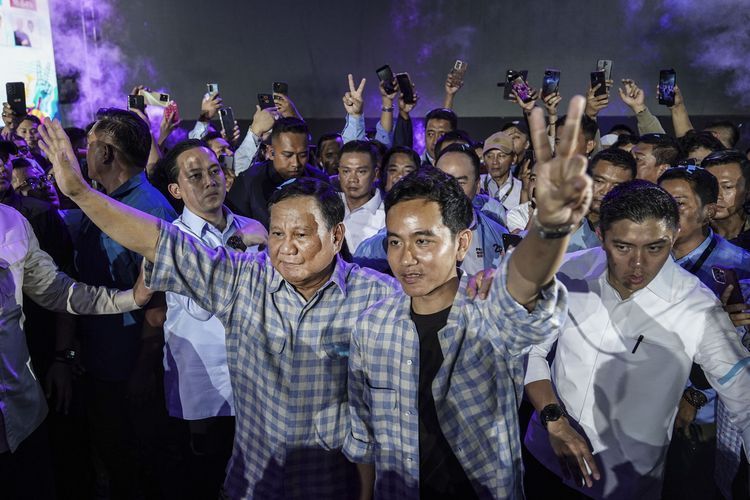

Prabowo Gathers Gerindra Cadres in Hambalang, Dasco and KDM Attend
-
News
-
2 hours ago
This article was translated by AI. Read the original article on Kompas.com. See Original

“The conflict between justice and legal certainty must be resolved by prioritizing legal certainty, unless the contradiction reaches an unbearable level.” — Gustav Radbruch (1946).
THIS STATEMENT by Gustav Radbruch resonates anew following the Constitutional Court's (MK) conclusion in the case Number 01/PHPU.PRES-XXIV/2026.
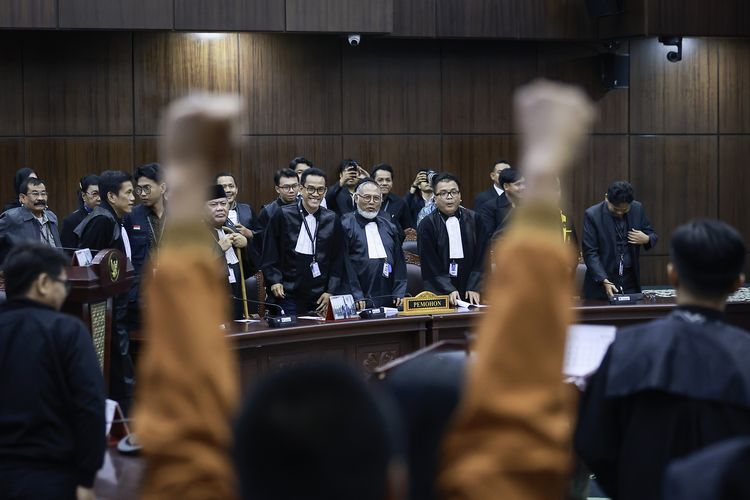
The trial, commonly known as the “Gibran Vice Presidential Diploma Dispute”, ended with a simple yet tumultuous ruling: the applicants' petitions were deemed inadmissible.
However, interpreting the verdict solely based on the ruling overlooks a more significant issue. The MK not only closed the case.
The MK allowed room for examination of the issues. Yet, once these issues emerged, the law appeared to lack a clear path for resolution.
This is where Vice President Gibran is not truly alone. He finds himself in the midst of a classic legal dilemma: legal certainty versus justice.
In this case, legal certainty demands resolution while justice insists that alleged shortcomings should not cease to be addressed simply because time has elapsed.
In this matter, the applicants alleged that Gibran's vice presidential candidacy was flawed due to educational requirements. The MK stated it has the authority to examine the case, even though the petition was submitted long past the PHPU deadline.
The rationale is that there existed a “special circumstance” that, according to the MK, has never been contested in the case PHPU of the President for 2024, thus requiring prior examination.
The MK based this approach on the principle of ius curia novit: courts must not reject cases merely because the law is absent or unclear (MK, 6/10/2026).
This measure is significant. It demonstrates that electoral justice cannot always be confined to procedural timetables.
The MK reminds us that its role is not just to tally votes. Beyond that, it ensures elections are conducted directly, openly, fairly, secretly, honestly, equitably, and periodically.
We know that electoral justice encompasses the protection of both the right to vote and the right to be elected (MK, 6/10/2026).
However, this opening of the examination raises a secondary issue. After reviewing the substance, the MK discovered troubling facts.
The MK did not find convincing evidence that Gibran possessed a diploma, certificate, or degree that qualifies him as equivalent to high school level or its equivalent.