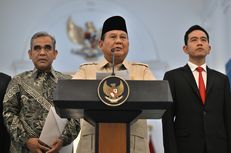
Gibran Not a Political Party Cadre, Prabowo Has More Freedom in Choosing His Successor
-
News
-
12 minutes ago
This article was translated by AI. Read the original article on Kompas.com. See Original

Worse still, some fraud operations in Southeast Asia are supported by human trafficking and forced labor.
Victims of fake recruitment can be forced to scam others in fraud centers.
They simultaneously become victims of exploitation, and in certain situations, risk being treated as perpetrators.
Indonesia actually has no shortage of legal instruments. Law Number 1 of 2024 concerning the Second Amendment to the Law on Electronic Information and Transactions regulates the dissemination of false or misleading information that harms consumers in electronic transactions, with a maximum prison sentence of six years and a fine of up to 1 billion rupiah.
The Personal Data Protection Law and the Anti-Trafficking in Persons Law are also relevant when crimes involve data theft, exploitation, or coercion.
However, problems and challenges in law enforcement in Indonesia face several complex issues that have yet to be addressed, such as forensic capacity, inter-agency coordination, perpetrator anonymity, and transnational networks.
Therefore, Indonesia's first agenda must be to accelerate the recovery of funds, not just to increase reports. Banks, payment providers, police, OJK, and digital platforms need to have a joint response protocol that operates around the clock.
Verified reports must trigger immediate investigations into the flow of funds, the suspension of transactions in accordance with legal authority, and the blocking of related accounts. Any remaining funds should be prioritized for return to victims.
Second, law enforcement must pursue networks, not just stop at account holders. Authorities need to trace controllers, recruiters, infrastructure providers, and the flow of profits.
Collaboration with other countries is essential when perpetrators, servers, victims, and accounts are located across different jurisdictions.
Account holders who intentionally facilitate crimes must be carefully distinguished from those whose accounts are misused.
Third, digital platforms should not only measure success by the number of accounts deleted.
Multinational company Meta, for example, may shut down millions of accounts, but a more meaningful measurement is the reduction in victims, fraudulent ads, and stolen funds.
The government needs to promote transparency, rapid response to reports, and accountability from platforms that fail to meet their legal obligations.
Lastly, victim protection should be an integral part of the criminal process. Easy reporting, assistance, fund recovery, and restitution need to be strengthened.
Digital literacy is important, but it should not be a subtle way to blame victims.
While it may seem impossible to eradicate all risks associated with technology leading to crimes in the digital space, law enforcement must ensure that the speed of money transfers does not always outpace the speed at which the law operates.
Success in combating online fraud should not be measured by the number of perpetrators announced as captured, but rather by how many crimes are prevented, money is saved, and victims are rehabilitated.