


Gerindra Reveals Criteria for Prabowo's Vice Presidential Candidates, Must Be Able to Execute Programs
-
News
-
6 minutes ago
This article was translated by AI. Read the original article on Kompas.com. See Original
Looking ahead 12 months, 7 percent plan to raise domestic storage, whereas 9 percent expect to further diversify overseas storage.
The proportion intending to diversify foreign storage rose from 2 percent in the previous survey.
These findings indicate growing attention by some central banks to evaluate and diversify gold storage arrangements.
“Some increase domestic storage, while others expand the number of foreign locations they use. This shows storage diversification, not a uniform shift to domestic storage,” Gopaul explained.
Changing the location of gold reserves does not necessarily mean central banks are preparing to sell them.
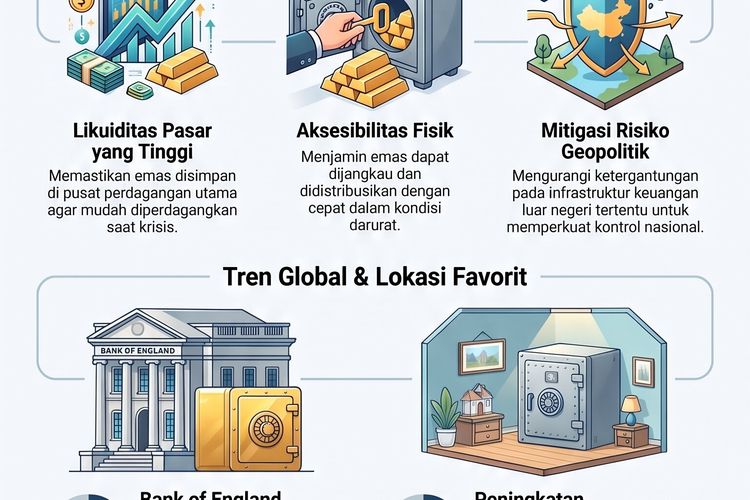
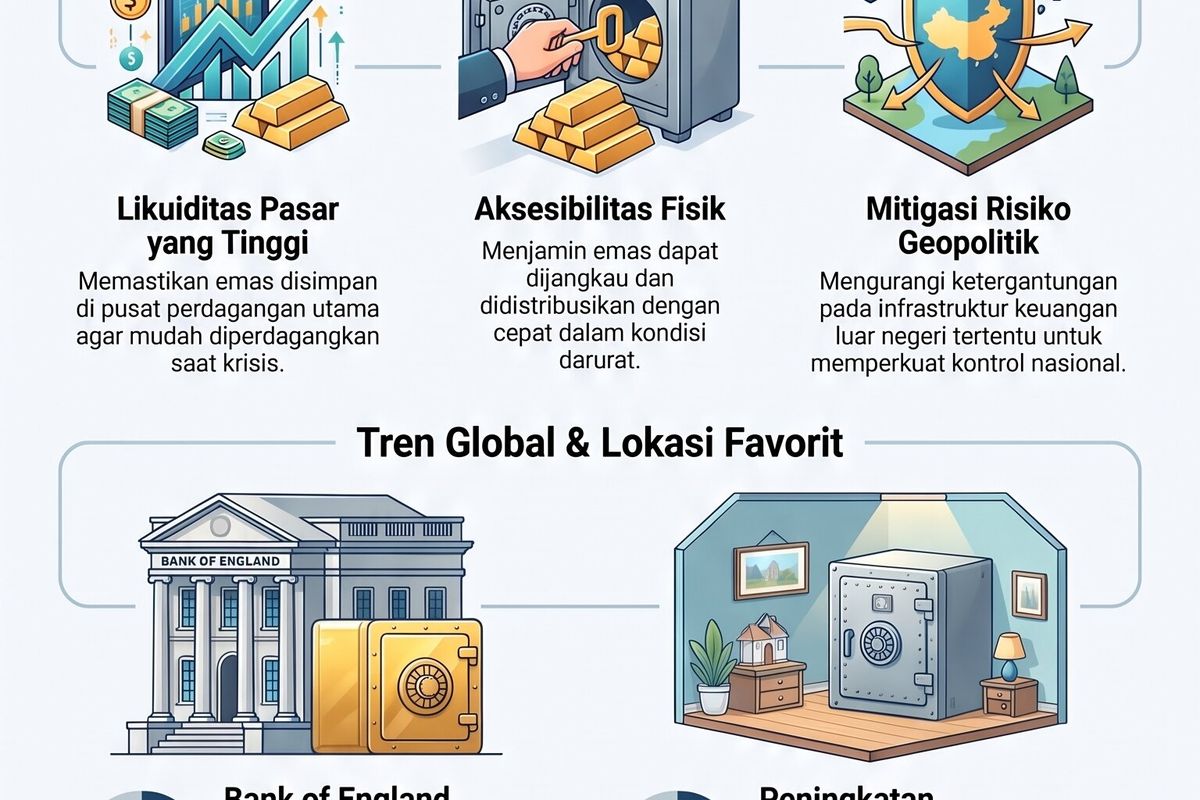
Gopaul clarified that relocating gold to more liquid markets may look like gearing up for sales, but liquidity provides options under extreme conditions.
Gold placed at major trading hubs can be mobilized more efficiently. However, increased capability does not imply central banks plan to use their gold reserves.
DNB explicitly stated it does not anticipate using the gold. The relocation aims to ensure reserves are more quickly accessible if needed.
The 2026 WGC survey also shows only 1 percent of respondents expect their gold reserves to decrease in the next 12 months. Conversely, 45 percent expect reserves to increase.
Therefore, Gopaul said recent gold reserve relocations should not be automatically interpreted as evidence that central banks are preparing sales.
On the contrary, these examples show that gold location has become an important part of active reserve management.
In the future, adjusting storage locations may also involve more storage centers.
Singapore has announced plans to provide gold storage services for central banks and foreign sovereign entities, while Hong Kong is expanding its clearing, settlement, and gold storage infrastructure.
According to Gopaul, these developments demonstrate that security is no longer the only consideration in determining gold reserve locations.
For some central banks, gold must also be accessible, tradable, and distributable across multiple reliable locations during times of stress.