
What Did the Former BPK Chairman Say to Exonerate Yaqut in the Hajj Quota Corruption Trial?
-
News
-
4 minutes ago
This article was translated by AI. Read the original article on Kompas.com. See Original
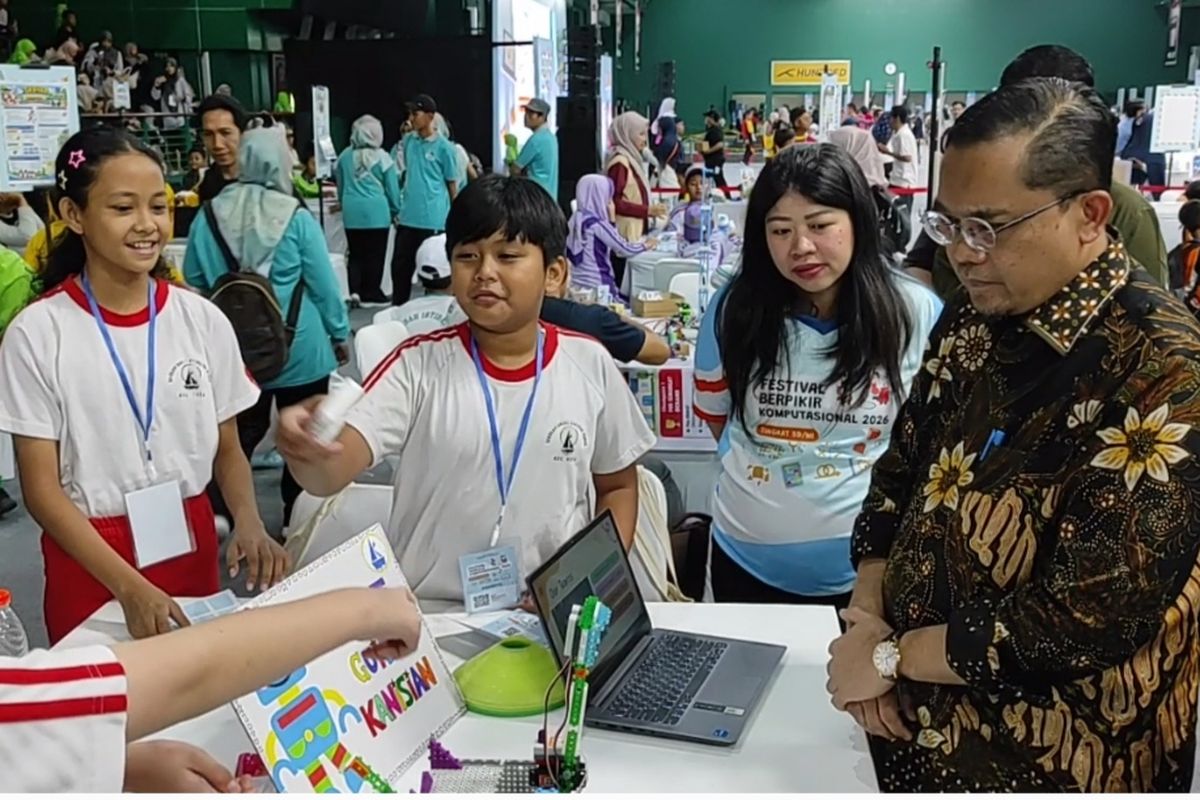
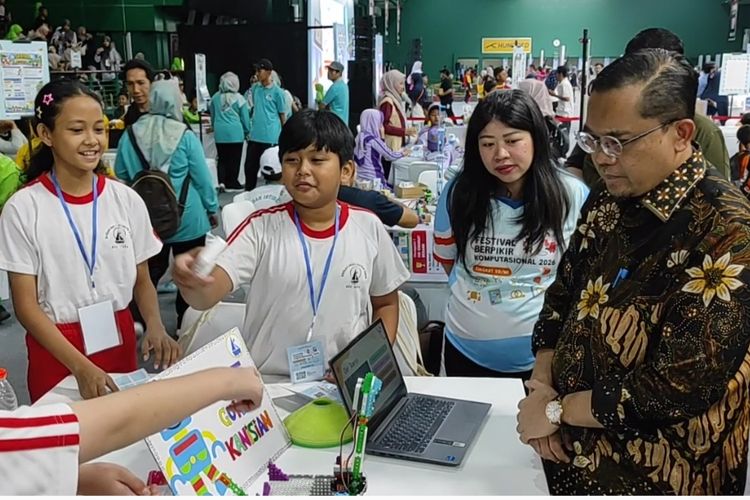
The 2026 Computational Thinking Festival marked the culmination of a series of trainings and mentoring sessions organized by Bakti Pendidikan Djarum Foundation to enhance computational problem-solving skills.
Currently, the foundation has partnered with 22 elementary schools (SD/MI level).
Marcella Marissa, Program Manager at Djarum Foundation, said several schools in Kudus apply computational thinking creatively through simple teacher-initiated activities.
These activities are designed to meet computational thinking principles, including decomposition (breaking down complex problems into smaller parts), pattern recognition, abstraction (selecting relevant information), and algorithms (creating step-by-step problem-solving processes).
“At SD 3 Kalirejo, for example, teachers encourage students to map out the most efficient route to school,” Marcella explained.
A 2023 social-emotional skills survey by the Organization for Economic Co-Operation and Development (OECD) in Kudus found that 55 percent of 15-year-old students exhibited unhealthy behavior patterns, rarely exercising and seldom eating fruits and vegetables daily.
Therefore, these activities deliberately combine computational thinking principles with physical literacy.
“We see computational thinking as a fundamental skill that needs to be developed early to help students think logically, solve problems, and face challenges with resilience and confidence,” she said.
Marcella noted that, based on research correlating computational thinking with student capacity as reflected in PISA standards, it is hoped that in 10 to 15 years, students across all schools in Kudus will meet PISA assessment benchmarks.
“Competencies at the average OECD level, alongside higher happiness and health levels than the average,” she added.
She affirmed that Djarum Foundation is committed to continuing and gradually expanding computational thinking enhancement programs to higher education levels in collaboration with the government and other partners.
Meanwhile, Gogot Suharwoto, Director General of Early Childhood Education, Basic Education, and Non-formal and Informal Education at Kemendikdasmen, said the 2026 Computational Thinking Festival aligns with the national policy direction promoted by Kemendikdasmen.
“Namely Coding and Artificial Intelligence Learning (KKA), as well as strengthening literacy, numeracy, and STEM capacities,” Gogot said during the event.
Computational thinking positively impacts students’ understanding of holistic problem-solving processes.
Through habituation in learning, students learn about problem structure and reasoning contextually in daily activities, ultimately boosting their literacy and numeracy skills.
Gogot hopes the good practices from training and mentoring in Kudus Regency will also be implemented elsewhere.