Cak Imin Encourages Pesantren-Based Vocational Schools to Elevate Standards to International Levels
-
News
-
1 hour ago
This article was translated by AI. Read the original article on Kompas.com. See Original
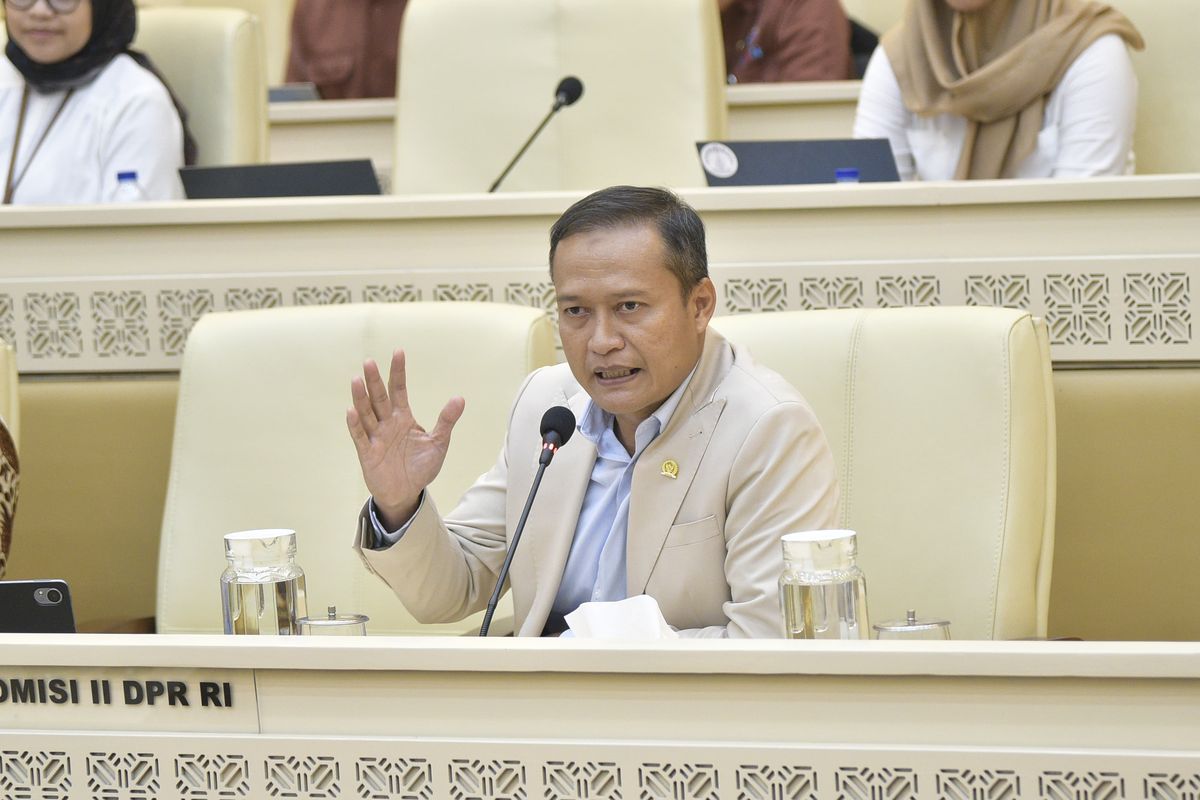
JAKARTA, KOMPAS.com - The discussion of the draft bill on Agrarian Reform Regulation at the Indonesian House of Representatives (DPR RI) is being pushed beyond mere land administration arrangements to also address the correction of inequitable land control.
Azis Subekti, a member of the Working Committee (Panja) on the Agrarian Reform Regulation bill from the Gerindra Party faction in the DPR RI Legislation Body, said that accelerating certification and modernizing land administration alone are insufficient to resolve agrarian issues.
He explained that even with improved land administration, the structure of land control will not necessarily change unless accompanied by policies aimed at correcting inequalities.
"The state cannot simply know who controls the land. The state must also be courageous enough to ask how much land is controlled, how it was acquired, whether it is being used productively, and who benefits from it," Azis said in a statement on Saturday (19/9/2026).
He stated that the Agrarian Reform Regulation bill needs to clearly regulate land ownership limits, evaluations of unused land, resolutions of agrarian conflicts, and cross-sectoral data integration.
Azis firmly asserted that agrarian reform must not be understood merely as redistribution or division of land to the public.
According to him, land grants must be accompanied by access to capital, technology, irrigation, seeds, assistance, business institutions, and markets.
"Land provided without capital, technology, mentoring, business institutions, and market access can be resold because recipients are unable to manage it," he warned.
Therefore, Azis urged that asset reform must go hand in hand with access reform. Farmers who receive land need to be encouraged to join economic institutions such as cooperatives.
In this way, farmers could hold stronger positions in buying production means, processing harvests, building storage systems, and distributing products.
Azis noted that this scheme could connect agrarian reform with agendas on food security, downstream processing, people's financing, and regional-based industrial development.
On the other hand, Azis emphasized that correcting land control structures must still be accompanied by legal certainty.
He said investment and business activities that legally obtain rights, fulfill obligations, and operate productively still deserve protection.
"Agrarian reform must be a firm middle path: it should not damage productivity, but must not tolerate injustice; it must not ignore legal certainty, nor allow the law to become a fortress for excessive control," Azis stated.
He hopes the Agrarian Reform Regulation bill can resolve overlapping authorities in land affairs, forestry, plantations, mining, spatial planning, and regional governance.
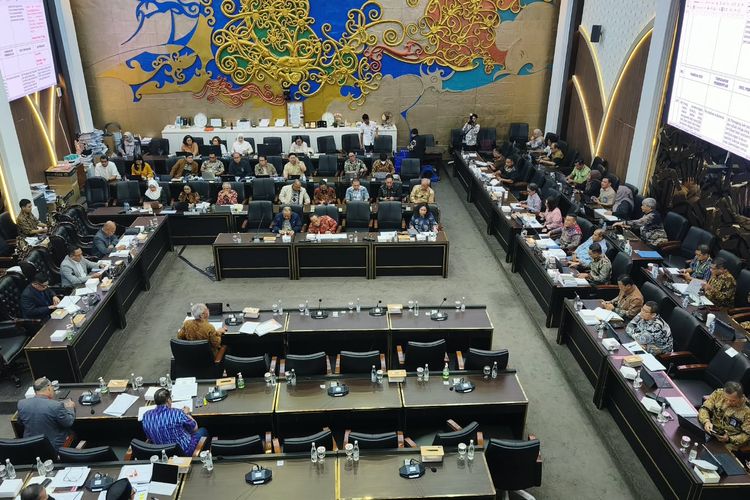 Working Committee meeting on the Agrarian Reform Regulation bill, Friday (19/9/2026) (Kompas.com/Febrianto Adi Saputro)