

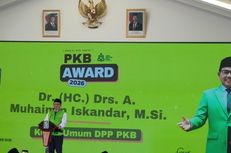
Cak Imin Encourages Pesantren-Based Vocational Schools to Elevate Standards to International Levels
-
News
-
2 hours ago
This article was translated by AI. Read the original article on Kompas.com. See Original

Meanwhile, 14 percent of respondents with emergency funds are considering owning complex investment products, compared to only 2 percent in the group without emergency funds.
Lauda Muliana, Personal Banking Segment Head at OCBC, stated that financial health is not just about the amount of money owned but also about having a foundation and plan to cope with uncertainty while achieving financial goals.
“For OCBC, being financially healthy is not simply having more money, but having a foundation and plan that enables us to handle uncertainty while still having room to grow,” Lauda said.
According to her, a financial journey should begin with understanding one’s financial condition, setting priorities, building financial resilience, and then growing wealth according to individual goals and profiles.
The 2026 FFI findings also indicate that saving habits, emergency fund ownership, and investments can go hand in hand with lifestyle needs.
This means financial health does not mean eliminating lifestyle expenses but ensuring each expense aligns with one’s capacity and long-term financial goals.
As a note, the 2026 FFI research involved respondents aged 25-35 living in Jabodetabek, Surabaya, Medan, Bandung, and Makassar.
Respondents have an income above Rp 5 million and own bank accounts.