

Cak Imin Encourages Pesantren-Based Vocational Schools to Elevate Standards to International Levels
-
News
-
2 hours ago
This article was translated by AI. Read the original article on Kompas.com. See Original

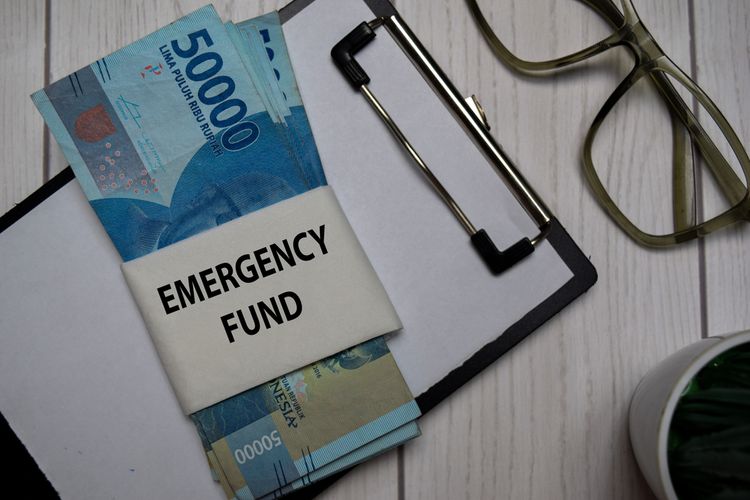
JAKARTA, KOMPAS.com - The 2026 Financial Fitness Index (FFI) research recorded that 92 percent of young people routinely set aside income to save, yet only 27 percent have an emergency fund.
“The 2026 FFI study shows that amid a declining FFI score, the need to maintain basic financial fulfillment remains strong, such as daily expenses and debt repayments,” said Inggit Primadevi, Director of Strategic Analytics & Insight at NielsenIQ Indonesia, in a statement on Saturday (9/19/2026).
“Interestingly, we also see more people beginning to build savings habits and prepare for the future. This indicates growing awareness, which is an important asset for facing upcoming financial challenges,” she added.
 Illustration of daily saving habits.
The 2026 FFI research is an annual study conducted by OCBC in collaboration with NielsenIQ (NIQ) Indonesia to assess the financial health, behaviors, priorities, and readiness of Indonesians in facing the future.
Despite the increase in saving habits, the financial fitness score among Indonesian youth actually declined to 39.64 in 2026 from 40.60 the previous year.
Meanwhile, the proportion of people with financial health scores above the Indonesian average rose slightly from 28 percent to 29 percent.
These findings indicate that increased financial awareness has not fully translated into stronger financial management practices.
Fifty-five percent of respondents believe their current financial planning will lead to future financial success.
However, 80 percent of respondents have yet to keep financial records.
This situation reveals a gap between perceptions of financial health and actual daily financial management practices.
 Illustration of managing finances during a recession.
While saving habits have improved, several important foundations, such as financial record-keeping and emergency funds, are still lacking among most respondents.
The research also found a correlation between having an emergency fund and the readiness to develop assets.
Respondents with emergency funds were found more likely to own more complex investment products, such as stocks, deposits, mutual funds, forex, and other instruments.
Nine percent of respondents with emergency funds already hold complex investment products.
This figure is higher compared to 4 percent among those without emergency funds.
Meanwhile, 14 percent of respondents with emergency funds are considering owning complex investment products, compared to only 2 percent in the group without emergency funds.
Lauda Muliana, Personal Banking Segment Head at OCBC, stated that financial health is not just about the amount of money owned but also about having a foundation and plan to cope with uncertainty while achieving financial goals.
“For OCBC, being financially healthy is not simply having more money, but having a foundation and plan that enables us to handle uncertainty while still having room to grow,” Lauda said.
According to her, a financial journey should begin with understanding one’s financial condition, setting priorities, building financial resilience, and then growing wealth according to individual goals and profiles.
The 2026 FFI findings also indicate that saving habits, emergency fund ownership, and investments can go hand in hand with lifestyle needs.
This means financial health does not mean eliminating lifestyle expenses but ensuring each expense aligns with one’s capacity and long-term financial goals.
As a note, the 2026 FFI research involved respondents aged 25-35 living in Jabodetabek, Surabaya, Medan, Bandung, and Makassar.
Respondents have an income above Rp 5 million and own bank accounts.