

Cak Imin Encourages Pesantren-Based Vocational Schools to Elevate Standards to International Levels
-
News
-
3 hours ago
This article was translated by AI. Read the original article on Kompas.com. See Original
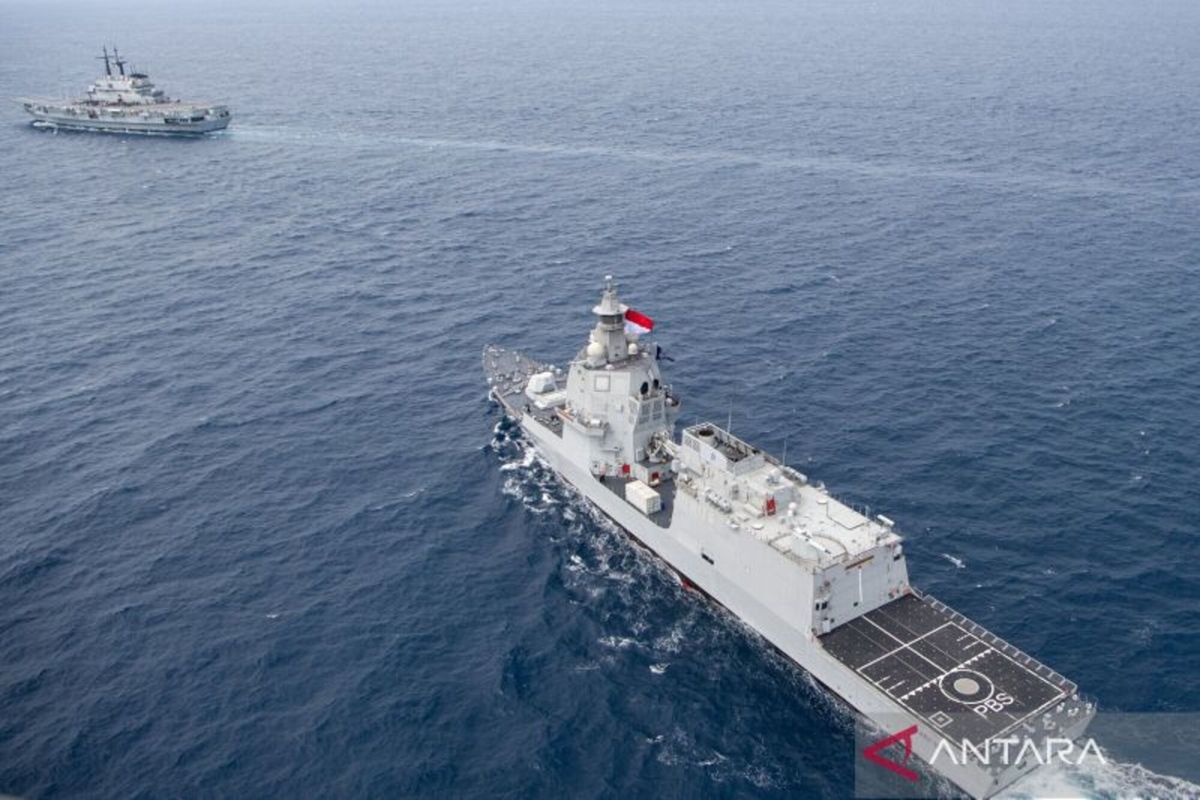
A ship over 40 years old requires special attention to obsolescence, spare part availability, new system integration, and maintenance needs.
Thus, costs should include retrofit, operations, training, aircraft support, docking, overhaul, spare parts, electronic systems, infrastructure, and future modernization.
However, economic calculations must look beyond expenditures; benefits must be factored in using a strategic return on investment approach.
If, for example, Rp 10 trillion only yields a ship that operates a few years, then its strategic benefits are limited.
But if that investment simultaneously produces thousands of hours of engineer training, shipyard capacity enhancements, mastery of integration technology, national drone development, manpower certification, growth of domestic suppliers, and independent maintenance capacity, then the investment’s value far exceeds the ship’s worth.
That is why the Garibaldi project must be designed as an industrial learning project.
The government plans to conduct Garibaldi’s modifications in Indonesia, with PT PAL as a key player. This opens opportunities far beyond mere repairs.
So far, the national shipbuilding industry’s capability has often been judged by its ability to build or repair vessels.
The next challenge is system integration. An aircraft carrier is a complex system that unites the ship’s structure, propulsion, electrical systems, aviation facilities, communication, sensors, command-and-control, logistics, and unmanned systems.
If PT PAL succeeds in mastering this integration, Garibaldi will leave a legacy far more important than the ship itself.
Therefore, technology transfer with Italy must have concrete targets: the number of Indonesian engineers trained, technology transferred, components manufacturable domestically, systems maintainable without dependence on the original equipment manufacturer, design knowledge acquired, and capacities applicable to future ship projects.
Indonesia does not merely need document transfer; it requires competency transfer.
This concept must be expanded beyond PT PAL to the entire ecosystem. The electronics, radar, sensor, communication, machinery, materials, software, drone, and component industries should be integrated into the value chain.
Universities and research institutions need access to technological challenges emerging from this project.
In this way, a single ship can generate an ecosystem.
A retrofit project can lead to new research. Research creates prototypes.
Prototypes enter the industry. Industry produces products. Products support suppliers.
Suppliers need skilled workers. Skilled workers strengthen the national technology base.
This cycle often distinguishes countries that merely buy defense equipment from those that build a defense industry. Garibaldi must be placed in the latter category.
At this point, Garibaldi’s meaning expands beyond defense. In maritime geopolitical thought, naval power never stands alone.
Alfred Thayer Mahan saw industry, trade, ports, society, and the navy as parts of one maritime power entity.
Contemporary thinker Geoffrey Till further views sea power as a combination of military capability and the ability to use the sea to achieve economic, political, and security goals.
Indonesia has all the geographic prerequisites to become a maritime power. What remains incomplete is integration.
We have more than 17,000 islands, an extensive coastline, strategic sea lanes, fisheries resources, ocean energy, and a geographical position between the Indian and Pacific Oceans.
Yet, this potential has not fully translated into industrial, technological, and prosperity advantages.
Therefore, Garibaldi should be part of a bigger agenda. The defense industry must connect with shipbuilding.
Drone technology must connect with the blue economy. Ports should link with industrial zones.