

Cak Imin Encourages Pesantren-Based Vocational Schools to Elevate Standards to International Levels
-
News
-
3 hours ago
This article was translated by AI. Read the original article on Kompas.com. See Original
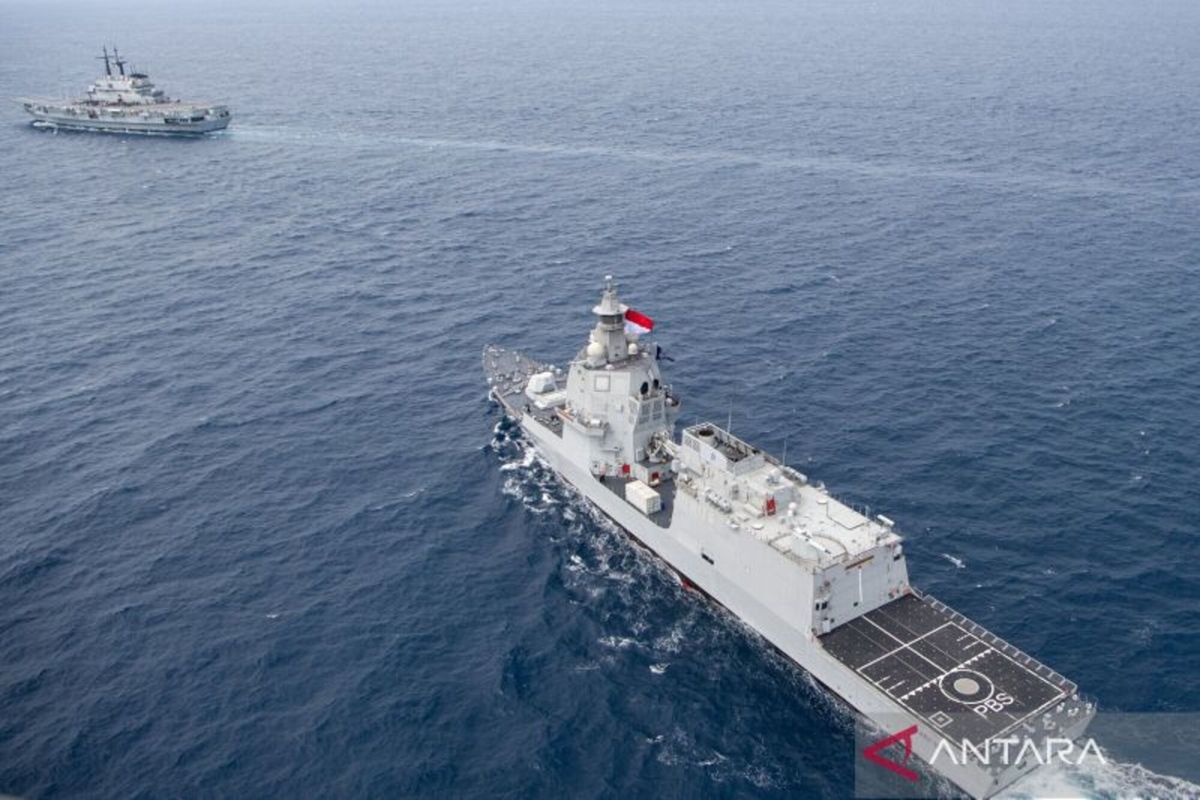
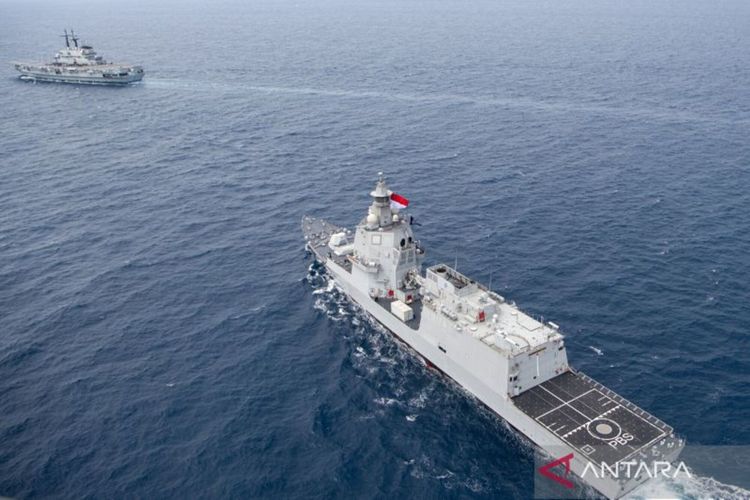
ON September 18, 2026, Giuseppe Garibaldi arrived at Tanjung Priok. This 180-meter-long warship, with a full load displacement of around 13,850 tons, embarks on a new chapter as Indonesia's first aircraft carrier.
It came after over four decades of service with the Italian Navy and was retired in 2024. The grant's value is approximately 54.02 million euros.
The government then prepared retrofit and modernization efforts estimated to cost between Rp 7.2 trillion and Rp 16.8 trillion, although the final figure will depend on technical inspection results and configuration decisions. (jdih.dpr.go.id)
These figures bring us to a larger issue. Indonesia isn’t merely acquiring a ship; it's making a decision to enter a military and technological capability previously unattained.
The consequences extend beyond retrofit costs. There are expenses for crew, fuel, training, spare parts, maintenance, docking, aviation systems, base infrastructure, periodic modernization, and operational readiness.
The government has yet to establish an annual operating budget, as it largely depends on the usage patterns and final configuration of the ship.
Therefore, the measure of success for Garibaldi should not be limited to getting it operational again.
More significantly, it is Indonesia’s ability to turn this investment into knowledge, technology, industry, and lasting maritime strength—far beyond the ship’s lifespan.
Garibaldi is not a supercarrier. It was designed as a light aircraft carrier with historical operations of fixed-wing aircraft and helicopters.
Indonesia does not intend to mimic the aircraft carriers of major powers that deploy dozens of fighter jets.
President Prabowo Subianto has stated that Garibaldi will be rejuvenated as a helicopter and drone carrier, with plans to carry around 10 medium-class helicopters.
These helicopters are directed, among other roles, to support forest and land fire mitigation operations. (Antaranews.com)
This choice has strategic logic. Indonesia is an archipelagic nation with vast maritime territory, thousands of islands, busy international trade routes, and is one of the countries most vulnerable to natural disasters.
In such conditions, the ability to transfer helicopters, drones, personnel, medical equipment, and logistics from one region to another via a mobile base is invaluable.
Thus, Garibaldi can serve as a multipurpose platform. In peacetime, it can support humanitarian operations, search and rescue, disaster management, and territorial surveillance.
In contingency situations, it can act as a mobile command center and floating airbase.
During defense operations, it can serve as a node in maritime surveillance and security networks.
This concept becomes even more relevant when combined with drone technology developments.
The most strategic aspect of Garibaldi’s new design lies in drones. Defense worldwide is evolving from purely manned platforms toward systems increasingly integrated with unmanned systems, artificial intelligence, autonomous navigation, and sensor networks.
Indonesia doesn’t have to go through all the historical stages of countries with carriers before it.
We can chart a technological path tailored to our needs. Garibaldi can become a testbed for Indonesian naval UAV development, including surveillance, mapping, communication, search and rescue, and maritime domain awareness.
The implications are extensive. Defense drones developed can also be used to monitor illegal fishing.
Sensor technology can be applied in disaster mapping. Communication systems can support emergency operations when land infrastructure is cut off. Autonomous system technology can evolve into civilian products.
This is where defense meets industrialization. Every military investment that generates dual-use technology offers a multiplier effect beyond the defense sector.
Public debates on Garibaldi’s cost should not stop at retrofit expenses.
The Rp 7.2 trillion to Rp 16.8 trillion range should be the starting point for applying the life-cycle cost principle.
The government needs to calculate all costs from the ship's receipt to its eventual retirement.
A ship over 40 years old requires special attention to obsolescence, spare part availability, new system integration, and maintenance needs.
Thus, costs should include retrofit, operations, training, aircraft support, docking, overhaul, spare parts, electronic systems, infrastructure, and future modernization.
However, economic calculations must look beyond expenditures; benefits must be factored in using a strategic return on investment approach.
If, for example, Rp 10 trillion only yields a ship that operates a few years, then its strategic benefits are limited.
But if that investment simultaneously produces thousands of hours of engineer training, shipyard capacity enhancements, mastery of integration technology, national drone development, manpower certification, growth of domestic suppliers, and independent maintenance capacity, then the investment’s value far exceeds the ship’s worth.
That is why the Garibaldi project must be designed as an industrial learning project.
The government plans to conduct Garibaldi’s modifications in Indonesia, with PT PAL as a key player. This opens opportunities far beyond mere repairs.
So far, the national shipbuilding industry’s capability has often been judged by its ability to build or repair vessels.
The next challenge is system integration. An aircraft carrier is a complex system that unites the ship’s structure, propulsion, electrical systems, aviation facilities, communication, sensors, command-and-control, logistics, and unmanned systems.
If PT PAL succeeds in mastering this integration, Garibaldi will leave a legacy far more important than the ship itself.
Therefore, technology transfer with Italy must have concrete targets: the number of Indonesian engineers trained, technology transferred, components manufacturable domestically, systems maintainable without dependence on the original equipment manufacturer, design knowledge acquired, and capacities applicable to future ship projects.
Indonesia does not merely need document transfer; it requires competency transfer.
This concept must be expanded beyond PT PAL to the entire ecosystem. The electronics, radar, sensor, communication, machinery, materials, software, drone, and component industries should be integrated into the value chain.
Universities and research institutions need access to technological challenges emerging from this project.
In this way, a single ship can generate an ecosystem.
A retrofit project can lead to new research. Research creates prototypes.
Prototypes enter the industry. Industry produces products. Products support suppliers.
Suppliers need skilled workers. Skilled workers strengthen the national technology base.
This cycle often distinguishes countries that merely buy defense equipment from those that build a defense industry. Garibaldi must be placed in the latter category.
At this point, Garibaldi’s meaning expands beyond defense. In maritime geopolitical thought, naval power never stands alone.
Alfred Thayer Mahan saw industry, trade, ports, society, and the navy as parts of one maritime power entity.
Contemporary thinker Geoffrey Till further views sea power as a combination of military capability and the ability to use the sea to achieve economic, political, and security goals.
Indonesia has all the geographic prerequisites to become a maritime power. What remains incomplete is integration.
We have more than 17,000 islands, an extensive coastline, strategic sea lanes, fisheries resources, ocean energy, and a geographical position between the Indian and Pacific Oceans.
Yet, this potential has not fully translated into industrial, technological, and prosperity advantages.
Therefore, Garibaldi should be part of a bigger agenda. The defense industry must connect with shipbuilding.
Drone technology must connect with the blue economy. Ports should link with industrial zones.
Vocational education should align with maritime industry needs. Marine research must integrate with economic and security policies.
Only then can we shift from naval power to national maritime power.
Ultimately, the Garibaldi issue is not about whether Indonesia deserves to own an aircraft carrier.
The more fundamental question is whether this nation is ready to change its perspective on the sea.
We have treated the sea for too long as mere space between islands, while the sea geographically unites Indonesia and determines its strategic position in the world.
Trade moves through the sea. Energy and resources come from the sea. Threats may also emerge from the sea.
Through the sea, Indonesia’s connectivity, diplomacy, and influence are projected.
Therefore, owning the first aircraft carrier should become a momentum to rebuild maritime consciousness.
Garibaldi can be its symbol. But a symbol only matters if it produces real change.
We need a roadmap that links experience operating Garibaldi with national capability building through 2045.
The initial stage should focus on operational learning, retrofit, and maintenance mastery.
The next stage should strengthen naval aviation, drones, C4ISR, and component industries.
Afterward, integration systems and national design capabilities should expand.
The goal is not merely for Indonesia to own a bigger carrier one day.
The goal is for Indonesia to have the capability to design, build, operate, and maintain its own strategic maritime systems.
That is where Garibaldi gains its historical significance.
This ship indeed comes from Italy. It is over 40 years old. Its modernization requires trillions of rupiah.
Its operation will require a non-negligible budget. All must be calculated transparently and responsibly.
But the age of a ship does not define the longevity of an idea.
If Indonesia can turn Garibaldi into a technology school, an industrial laboratory, a drone base, a humanitarian platform, and a catalyst for maritime ecosystem revival, its strategic value will not stop at a 13,850-ton displacement or 180-meter length.
It will be measured by the new capacities it leaves behind for the nation.
In the end, Indonesia’s first aircraft carrier should not become a monument of pride but a national learning engine.
From ship to technology. From technology to industry.
From industry to prosperity. From prosperity to national strength. And from national strength to maritime civilization.
Garibaldi has arrived in Jakarta. What must set sail soon after is not only the ship but Indonesia’s grand vision to reposition the sea as the center of power, prosperity, and the nation’s future.