

Cak Imin Encourages Pesantren-Based Vocational Schools to Elevate Standards to International Levels
-
News
-
4 hours ago
This article was translated by AI. Read the original article on Kompas.com. See Original

"The raw water is seawater, which has very high TDS and salt content. This cannot be done using ordinary water treatment systems," Santika said.
Seawater must pass through membranes with very fine pores.
To allow water to pass through the membranes, high pressure is required.
"So, imagine processing water with a very tight filter that requires a very large effort," he said.
Generating such high pressure demands significant energy.
"Besides the huge effort, this also requires high energy because it needs pressure," Santika added.
The high energy requirement affects the production cost of the water.
"The result is high operational and maintenance costs. Therefore, the cost of production will automatically be high," he continued.
Considering the energy needs, operational, and maintenance costs, PAM Jaya has not yet implemented large-scale desalination to supply water needs on Jakarta's mainland.
For now, PAM Jaya continues to maximize available raw water sources.
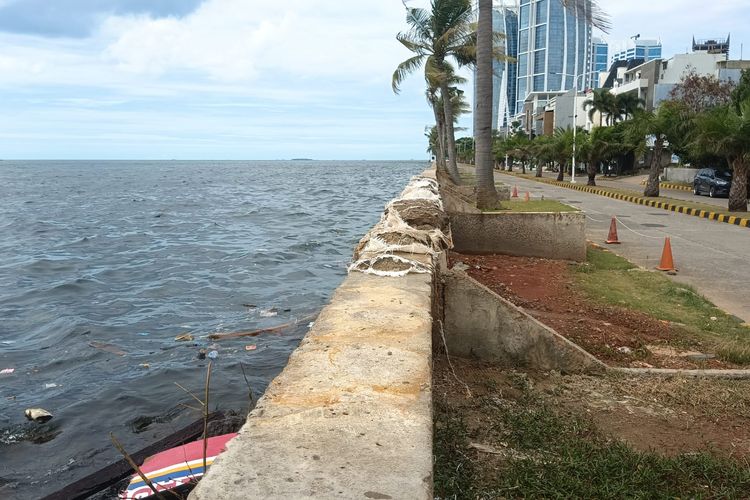
Amid drought threats, the option to process seawater remains a possibility to consider in the future, especially if supporting infrastructure like the Giant Sea Wall begins construction.
Thus, seawater could not only serve as an option when raw water sources diminish but also potentially be prepared as a new water source for Jakarta.