

Prabowo Says Democracy Can Be Bought by Authorities, Bupati Candidates Must Spend Rp 100 Billion
-
News
-
9 minutes ago
This article was translated by AI. Read the original article on Kompas.com. See Original

The U.S. Supreme Court later struck down Trump-era tariffs imposed under national emergency powers, including those related to fentanyl trade.
The Trump administration then re-established certain tariffs using new authorities, such as a 12.5 percent tariff on Chinese goods related to alleged forced labor practices.
The U.S. is also finalizing a separate tariff investigation aimed at addressing industrial overcapacity, which the U.S. government alleges is widespread in China.
As part of the tariff ceasefire, China pledged to restore supply flows of critical minerals to users in the U.S. and other countries.
However, a senior U.S. official said on Friday (September 18) that China’s performance in meeting those commitments "has fallen short of expectations."
This issue is expected to be a central topic ahead of the Trump-Xi summit.
Discussions on AI are crucial because the U.S. and China are two leading powers in the development and global deployment of advanced AI technologies.
Rare-earth minerals also play a vital role in manufacturing advanced semiconductor technologies, key components for AI development.
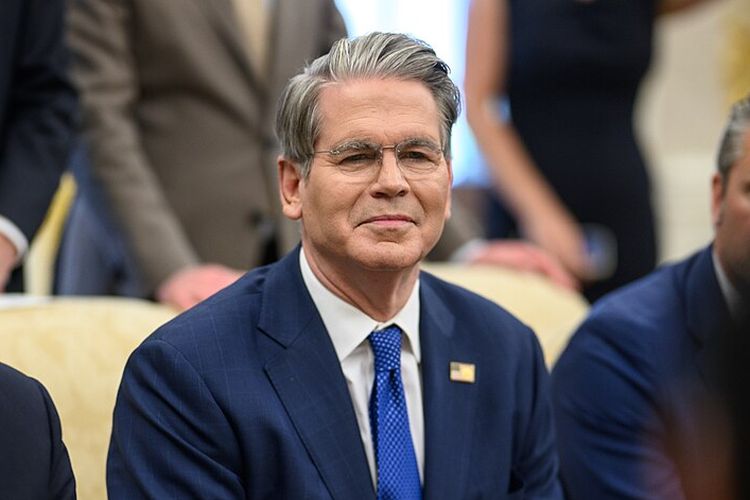
Bessent stated on Friday that the talks will include both open-weight and closed-weight AI models.
Open-weight models are AI systems whose core components are publicly accessible. Users can download and customize these models for specific purposes.
Chinese-made open-weight models are increasingly used by U.S. companies because they tend to be cheaper than closed-weight models developed by companies like Anthropic and OpenAI.
"The United States remains a leader in AI. We are open to discussing ways to avoid shared risks and prevent the fracturing of our two systems," Bessent said in a statement regarding talks with China.
Previously, Bessent also advocated for the U.S. and China to agree on AI guard rails. These rules aim to prevent high-capability AI models from falling into the hands of non-state actors with malicious intent.
In May, the U.S. and China also agreed to begin talks on reducing tariffs on non-strategic goods through a mechanism called the "Board of Trade."
The two countries also agreed to establish a similar forum to address various investment issues.