Prabowo Says Democracy Can Be Bought by Authorities, Bupati Candidates Must Spend Rp 100 Billion
-
News
-
9 minutes ago
This article was translated by AI. Read the original article on Kompas.com. See Original
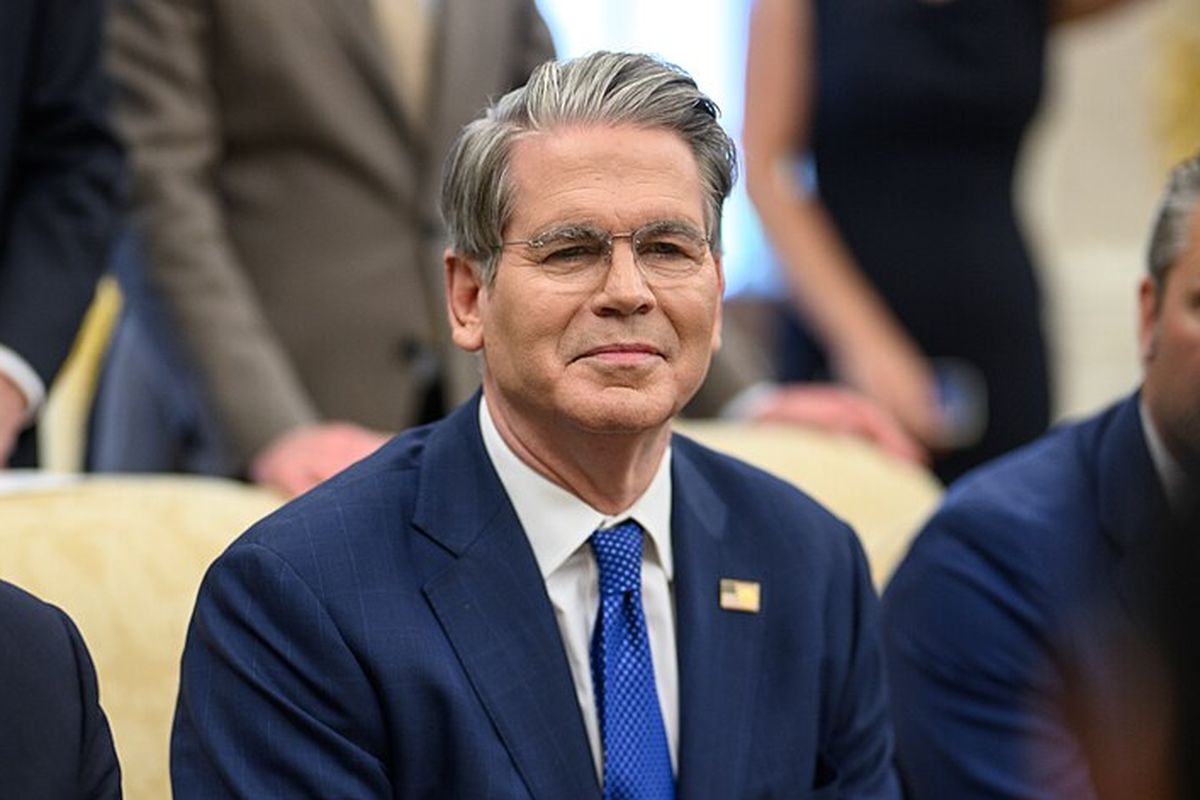
KOMPAS.com – U.S. Treasury Secretary Scott Bessent and China’s Vice Premier He Lifeng are scheduled to meet in New York on Sunday (September 20, 2026) to discuss artificial intelligence (AI), trade tariffs, and the supply of critical minerals.
The meeting takes place ahead of a high-level summit between U.S. President Donald Trump and Chinese President Xi Jinping in Washington later this week. The talks between Bessent and He will also involve U.S. Trade Representative Jamieson Greer.
The meeting is set to begin around 10:30 a.m. local time (14:30 GMT) at JPMorgan Chase’s headquarters in Manhattan and is expected to last the entire day.
According to Reuters, a key agenda item is the status of the U.S.-China trade tariff ceasefire, which is due to expire on November 10, 2026.
Both countries will also talk about the flow of rare-earth magnets and critical minerals from China. U.S. officials consider current supplies insufficient to meet the needs of both domestic and global users.
Another issue is the potential implementation of safeguards or guard rails for AI. This discussion arises amid reports of security breaches involving AI models.
Analysts expect the U.S. and China to reach only limited agreements, mainly as a signal that both sides remain committed to preventing a deterioration in trade relations.
"I think there will be some tangible outcomes to show since there will be a presidential meeting. However, I don’t feel we are on the verge of a major breakthrough," said Anna Ashton, a China trade analyst and founder of Ashton Intelligence.
"I believe maintaining the status quo is probably the best common expectation for both parties," she added.
Many of the issues to be discussed by Bessent, He, and Greer are continuations of topics from the Trump-Xi meeting in Beijing last May.
One focus is the effort by both nations to reduce tariffs on non-strategic goods. China had also previously committed to increasing purchases of U.S. agricultural products by 17 billion U.S. dollars annually and buying over 200 Boeing aircraft.
The talks between Bessent, He, and Greer also continue a pattern of negotiations conducted over the past 16 months.
These three officials have met multiple times across cities in Europe and Asia to prepare possible agreements for discussion between Trump and Xi.
The effort includes the trade ceasefire reached in Busan, South Korea, in November 2025.
The agreement capped U.S. tariffs on Chinese goods imposed during Trump’s administration at around 20 percent, following a tariff escalation that resulted in triple-digit rates on both sides.
The U.S. Supreme Court later struck down Trump-era tariffs imposed under national emergency powers, including those related to fentanyl trade.
The Trump administration then re-established certain tariffs using new authorities, such as a 12.5 percent tariff on Chinese goods related to alleged forced labor practices.
The U.S. is also finalizing a separate tariff investigation aimed at addressing industrial overcapacity, which the U.S. government alleges is widespread in China.
As part of the tariff ceasefire, China pledged to restore supply flows of critical minerals to users in the U.S. and other countries.
However, a senior U.S. official said on Friday (September 18) that China’s performance in meeting those commitments "has fallen short of expectations."
This issue is expected to be a central topic ahead of the Trump-Xi summit.
 Illustration of AI ChatGPT regarding a supercomputer in China.
Discussions on AI are crucial because the U.S. and China are two leading powers in the development and global deployment of advanced AI technologies.
Rare-earth minerals also play a vital role in manufacturing advanced semiconductor technologies, key components for AI development.
Bessent stated on Friday that the talks will include both open-weight and closed-weight AI models.
Open-weight models are AI systems whose core components are publicly accessible. Users can download and customize these models for specific purposes.
Chinese-made open-weight models are increasingly used by U.S. companies because they tend to be cheaper than closed-weight models developed by companies like Anthropic and OpenAI.
"The United States remains a leader in AI. We are open to discussing ways to avoid shared risks and prevent the fracturing of our two systems," Bessent said in a statement regarding talks with China.
Previously, Bessent also advocated for the U.S. and China to agree on AI guard rails. These rules aim to prevent high-capability AI models from falling into the hands of non-state actors with malicious intent.
In May, the U.S. and China also agreed to begin talks on reducing tariffs on non-strategic goods through a mechanism called the "Board of Trade."
The two countries also agreed to establish a similar forum to address various investment issues.
The Trump administration had tightened restrictions on U.S. investment in certain sectors in China.
Reuters reported on Friday that the U.S. government is preparing new regulations related to these investments.
The new rules may allow U.S. pharmaceutical companies to invest in promising Chinese drug developments and enter into licensing agreements.
China’s Ministry of Commerce said on Saturday (September 19, 2026) that He Lifeng will also lead a delegation of Chinese companies to the U.S. for economic and trade consultations ahead of the Trump-Xi meeting.
The business delegation is seen as a reciprocal move following a U.S. CEO delegation that Trump took to Beijing in May.
This announcement comes as Trump expressed openness to the possibility of Chinese automakers establishing plants in the U.S.
However, the U.S. automotive industry group on Friday urged Trump to maintain the effective ban on sales of Chinese-made vehicles in the U.S. for national security reasons.