

Gibran Does Not Discuss Resignation Intent
-
News
-
1 minute ago
This article was translated by AI. Read the original article on Kompas.com. See Original
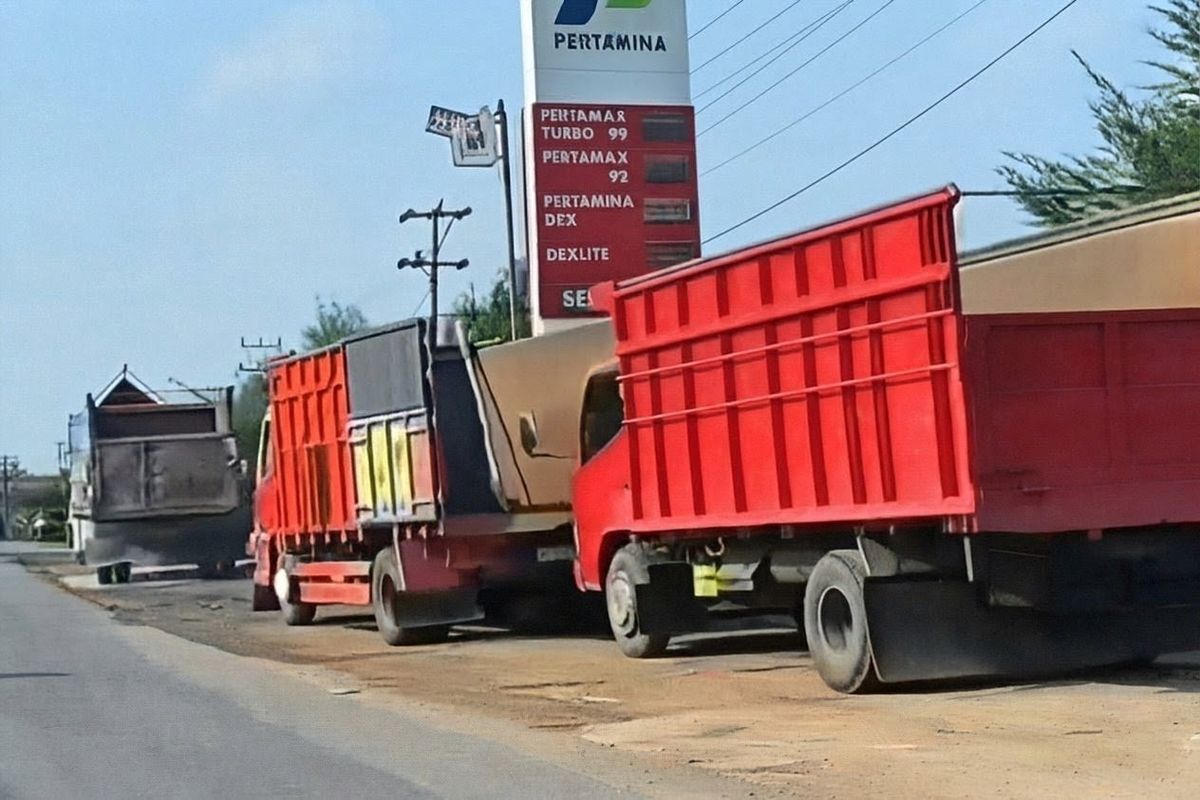
LAMPUNG, KOMPAS.com - Long lines of vehicles waiting to get subsidized biodiesel at several gas stations in Lampung are not only made up of local vehicles.
Several drivers admitted that many vehicles with license plates from outside Lampung were also seen in the queues.
This phenomenon caught the attention of the Lampung Regional Police because Lampung is one of the main routes for interregional freight transport vehicles.
The police now want to find out to what extent vehicles from outside the province are also consuming subsidized biodiesel in Lampung and whether this condition contributes to the long queues.
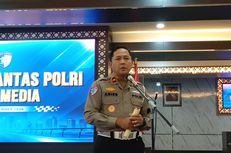
The Director of the Special Criminal Investigation Unit at Lampung Police, Police Commissioner Heri Rusyaman, said that checks conducted together with local government, Pertamina, and relevant parties showed that the biodiesel stock in Lampung is actually still available.
"From our field checks, the stock is actually present, complete, and sufficient," Heri said when met at the Lampung Police Headquarters on Friday (18/9/2026).
According to Heri, the queues occur partly due to the high number of consumers and a shift from non-subsidized fuel to biodiesel caused by a significant price difference.
Moreover, vehicles passing through from outside Lampung also need to be taken into account.
"There are indeed vehicles from outside the region filling up in Lampung because they're passing through. This also needs to be considered," Heri added.
This condition was confirmed by a truck driver interviewed by Kompas.com at a gas station on By Pass Soekarno-Hatta Street, Bandar Lampung.
Herman admitted he often sees vehicles with license plates from outside Lampung queuing for biodiesel.
However, he said the issue should not only be seen from the vehicles' origin.
"They do need fuel for their vehicles. We share the same profession, solidarity. Even though they're from outside regions, we all need fuel. Would we really prohibit that?" Herman said.
According to Herman, vehicles from outside areas have the right to refuel as long as they follow the applicable rules.
He urged all drivers to queue properly and avoid actions that could harm other drivers.
"It's okay to buy fuel in Bandar Lampung, as long as you follow the rules, queue, and don’t do anything strange," he said.
By "strange," Herman meant acquiring subsidized fuel improperly, then queuing again to get another allocation.
"Queuing once, then the fuel is siphoned off somewhere else, then queuing again. Don't do that. That's cheating. It's already hard for us," he added.
Similar remarks were made by Suryadi, another truck driver.
He explained that it is normal to find vehicles from various regions along the Lampung crossroad because the area is a route for interregional freight transport.
"On this highway, vehicles come from all over, so there are definitely many from outside regions," Suryadi said.
He does not mind vehicles from outside Lampung filling biodiesel in Lampung as long as all drivers comply with the rules.
"The important thing is don’t cheat. We truck drivers must be understanding, queue together, and endure hardship together. The key is orderliness," he added.
Suryadi also admitted he had received advice from the police to report any suspected fraud in buying subsidized biodiesel.
"A police officer came by recently. They said if there’s cheating, like siphoning or tampering with gas station staff, we should report it," he said.
He welcomed the oversight but hopes the queue problem does not end with fuel running out before all vehicles waiting get their allocation.
"Queuing is fine, but don’t have vehicles waiting a long time only to find no fuel left," Suryadi said.
The drivers’ statements provide another perspective on the biodiesel queue issue in Lampung.
Vehicles from outside the region do not automatically mean they are violating regulations.
Many are freight transport vehicles on interregional trips that need fuel to continue their journeys.
The police challenge is how to ensure that this consumption remains within regulations when the available biodiesel quota must meet the needs of vehicles in Lampung as well as passing vehicles.
Therefore, Lampung Police are gathering data from all gas stations to compare quota, number of consumers, delivery times, and when stocks run out.
The data will then be cross-checked with Pertamina and BPH Migas data.
Heri said the inspection is necessary to determine whether the queues are simply due to increased demand or if there are irregular refueling patterns.
"If the quota is sufficient up to the area, but queues still occur, this needs to be investigated," he said.
The police will also examine the characteristics of each gas station.
Stations with high consumer volume will be compared to stations in areas with fewer consumers.
"If a station has few consumers but a high quota, this is something to look into. We want to avoid abuse," Heri said.
Meanwhile, Pertamina Patra Niaga assures that the biodiesel supply in Lampung remains available and distribution is even increased to respond to higher consumption.
Rusminto Wahyudi, Area Manager Communication, Relations & CSR at Pertamina Patra Niaga for the South Sumatra and Bangka Belitung Regional, said that the average biodiesel distribution in Lampung rose from around 2,178 kiloliters (KL) per day in January-April 2026 to 2,503 KL per day in May-August.
Entering September, Pertamina added around 265 KL per day, making the average distribution approximately 2,768 KL per day.
Pertamina also stated that supplies to gas stations with high consumption remain monitored and can be increased if needed.
For example, at Campang Raya gas station in Bandar Lampung, biodiesel distribution up to September 6, 2026, recorded 3,248 KL or 116.55 percent of the proportional quota for the third quarter of 2026.
Rusminto assured that Pertamina continues distribution according to quota and regulations.
Besides the vehicle origin, police are also examining refueling patterns using barcode systems.
Heri said one transaction can take about 12 to 15 minutes.
The length of the process, combined with increased vehicle numbers, can prolong queues.
The police also plan to cross-check transaction data to ensure vehicles that have refueled do not get subsidized fuel again within an inappropriate timeframe.
"We will cross-check. Whether a vehicle that got 100 liters today can get more tomorrow or not. That’s what we’re looking at," Heri said.
Inspections also target potential misuse of barcodes and any indications of vehicles suspected of taking fuel again after refueling.
These findings are still being investigated and have not yet been concluded as violations.