

Tracing Criminal Money through the Asset Seizure Law, Why Isn't TPPU Included?
-
News
-
3 minutes ago
This article was translated by AI. Read the original article on Kompas.com. See Original

JAKARTA, KOMPAS.com - The enactment of the Asset Seizure Law is expected to strengthen the country's efforts to recover wealth derived from criminal activities.
However, the scope of crimes covered by this law raises questions.
This is because money laundering (TPPU) is not listed as one of the crimes targeted for asset seizure.
In fact, money laundering often serves as a method to conceal or disguise the proceeds of crime.
When money obtained from corruption or other crimes is transferred, disguised, or even stored under someone else's name, tracing and recovering the assets becomes increasingly complicated.
According to information from the DPR website, Article 4 of the Asset Seizure Law allows for asset seizure in cases of corruption and six other categories of crime.
These categories include narcotics and psychotropic substances, terrorism and terrorism financing, human trafficking, arms smuggling, human trafficking, and fraud and/or embezzlement that uses information technology or affects the economy at large.
So, why was TPPU not included in the scope of this law, and what impact does this have on efforts to recover criminal proceeds?
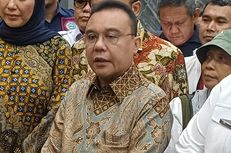
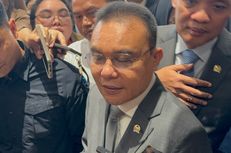
The Deputy Chairperson of Commission III of the DPR, Ahmad Sahroni, stated that the main spirit of the Asset Seizure Law is to maximize law enforcement.
The goal is not only to punish the perpetrators of crimes but also to recover losses for the state or victims through the seizure of assets derived from crimes.
According to Sahroni, the scope and technical aspects of the law were part of the considerations during discussions with the government.
He mentioned that the Asset Seizure Law indeed applies several principles that are generally recognized in the TPPU regime.
"In fact, the asset seizure applies the TPPU principles, such as follow the money, asset recovery, and so on," Sahroni told Kompas.com on Friday (20/11/2026).
He emphasized that the most important aspect of this law is ensuring that the proceeds of crime cannot be enjoyed by the perpetrators.
However, he did not provide a specific explanation for why TPPU was not listed as one of the crimes targeted for asset seizure in Article 4.
Head of the Law and Investigation Division at Indonesia Corruption Watch (ICW), Ibrahim, believes that asset seizure and the money laundering regime are two interrelated instruments.
He stated that both have different functions but are part of the same effort to recover the proceeds of crime.
The money laundering regime is used to trace the flow of funds, while asset seizure serves as a mechanism to reclaim wealth derived from criminal activities.