
PKS Respects Prabowo's Decision to Propose Amran-Sugiono as Vice Presidential Candidates: We Have No Rights
-
News
-
4 minutes ago
This article was translated by AI. Read the original article on Kompas.com. See Original

JAKARTA, KOMPAS.com - The enactment of the Asset Seizure Law is expected to strengthen the country's efforts to recover wealth derived from criminal activities.
However, the scope of crimes covered by this law raises questions.
This is because money laundering (TPPU) is not listed as one of the crimes targeted for asset seizure.
In fact, money laundering often serves as a method to conceal or disguise the proceeds of crime.
When money obtained from corruption or other crimes is transferred, disguised, or even stored under someone else's name, tracing and recovering the assets becomes increasingly complicated.
According to information from the DPR website, Article 4 of the Asset Seizure Law allows for asset seizure in cases of corruption and six other categories of crime.
These categories include narcotics and psychotropic substances, terrorism and terrorism financing, human trafficking, arms smuggling, human trafficking, and fraud and/or embezzlement that uses information technology or affects the economy at large.
So, why was TPPU not included in the scope of this law, and what impact does this have on efforts to recover criminal proceeds?
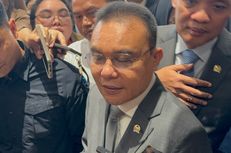
The Deputy Chairperson of Commission III of the DPR, Ahmad Sahroni, stated that the main spirit of the Asset Seizure Law is to maximize law enforcement.
The goal is not only to punish the perpetrators of crimes but also to recover losses for the state or victims through the seizure of assets derived from crimes.
According to Sahroni, the scope and technical aspects of the law were part of the considerations during discussions with the government.
He mentioned that the Asset Seizure Law indeed applies several principles that are generally recognized in the TPPU regime.
"In fact, the asset seizure applies the TPPU principles, such as follow the money, asset recovery, and so on," Sahroni told Kompas.com on Friday (20/11/2026).
He emphasized that the most important aspect of this law is ensuring that the proceeds of crime cannot be enjoyed by the perpetrators.
However, he did not provide a specific explanation for why TPPU was not listed as one of the crimes targeted for asset seizure in Article 4.
Head of the Law and Investigation Division at Indonesia Corruption Watch (ICW), Ibrahim, believes that asset seizure and the money laundering regime are two interrelated instruments.
He stated that both have different functions but are part of the same effort to recover the proceeds of crime.
The money laundering regime is used to trace the flow of funds, while asset seizure serves as a mechanism to reclaim wealth derived from criminal activities.
"It’s true that asset seizure and money laundering regimes are related: one traces the flow of money, the other takes it back," Ibrahim told Kompas.com on Friday.
He expressed concern that the reasons behind the exclusion of TPPU from the Asset Seizure Law are not adequately made public.
This is because the documents from the Work Committee and Drafting Team discussing this law have not been disclosed to the public.
"I think this question needs to be explained by the DPR," he added.
Ibrahim assessed that the absence of TPPU could potentially weaken recovery efforts.
He noted that criminal proceeds in the natural resources, tax, and finance sectors are at risk of not being seized under the Asset Seizure Law if not accompanied by a criminal decision, unless the case is categorized under corruption.
Moreover, law enforcement must deal with two legally separate regimes with different standards.
This situation is viewed as complicating the tracing and recovery of assets, especially when the proceeds of crime have been transferred or disguised through various transactions.
Ibrahim also highlighted the lack of regulations regarding the seizure of illicit enrichment in this law.
This means that the state still needs to prove that the assets to be seized originate from specific criminal acts.
Similar criticism was voiced by Hasrul Halili, head of the Anti-Corruption Study Center at Gadjah Mada University’s Faculty of Law (PUKAT FH UGM).
He believes that the range of crimes covered by the Asset Seizure Law remains too narrow.
One of the main issues is that TPPU was not included, even though it often serves as a means to conceal corruption proceeds.
According to Hasrul, this narrowing of scope risks limiting the state's ability to reach assets that have been disguised through various methods.
He also pointed out the regulation regarding what assets can be seized.
Within the Asset Seizure Law, assets used for criminal activities are limited to tangible movable goods.
However, according to him, the coverage of assets in other provisions is broader, including immovable property, intangible goods, and companies.
Hasrul referred to Article 91 of the Criminal Code and Article 18 of the Anti-Corruption Law, which regulate a broader asset scope.
Moreover, he criticized the use of loss assessment in determining the value of asset seizures.
According to Hasrul, this metric is not always appropriately applied to bribery and gratification crimes because they do not always incur an immediately calculable loss to the state.
"The correct measure is the value of the gains or profits obtained from the crime," Hasrul stated in his remarks to Kompas.com on Friday.
He also highlighted the legislative process of this law, which he deems lacking meaningful public participation.
He mentioned that the public has waited over a decade for the Asset Seizure Bill to be passed.
However, the substance of the law that was ultimately approved by the DPR was deemed far from the public’s expectations.
"The public has waited for the Asset Seizure Bill for years. Unfortunately, when it was finally passed, the content was far from what the public hoped for," Hasrul said.
He asserted that the substance of this law has not fully touched on the spirit of a fairer and more progressive law enforcement.
Meanwhile, criminal law expert from Trisakti University, Abdul Fickar Hadjar, noted that TPPU was indeed not specifically listed as a primary offense in the Asset Seizure Law enacted by the DPR on November 19, 2026.
He explained that the DPR and the government simplified the list of targets for asset seizure from 13 criteria to corruption and six other categories of crime.
Fickar believes that the absence of TPPU along with provisions on illicit enrichment deserves scrutiny.
Because both instruments have the potential to assist the state in tracing assets that have been concealed or transferred under someone else's name.
However, Fickar clarified that the exclusion of TPPU from the Asset Seizure Law does not mean that money laundering offenses cease to be handled.
According to him, TPPU mechanisms can still be implemented based on existing regulations, namely Law Number 8 of 2010 on the Prevention and Eradication of Money Laundering.
Meanwhile, the Asset Seizure Law focuses on assets stemming from predicate offenses that fall within its list.
"Therefore, TPPU mechanisms continue to operate based on the applicable TPPU legal provisions (Law No. 8 of 2010), while law enforcement can still trace assets resulting from predicate offenses included on the Asset Seizure Law’s list," Fickar explained to Kompas.com on Friday.
He believes that these two legal regimes can function independently.
The Asset Seizure Law focuses on assets from predicate offenses, while the handling of TPPU will still adhere to the special regulations that have been in effect.