
The Solo-Hambalang Axis Relationship Enters a New Phase Following Gibran's Resignation
-
News
-
22 minutes ago
This article was translated by AI. Read the original article on Kompas.com. See Original
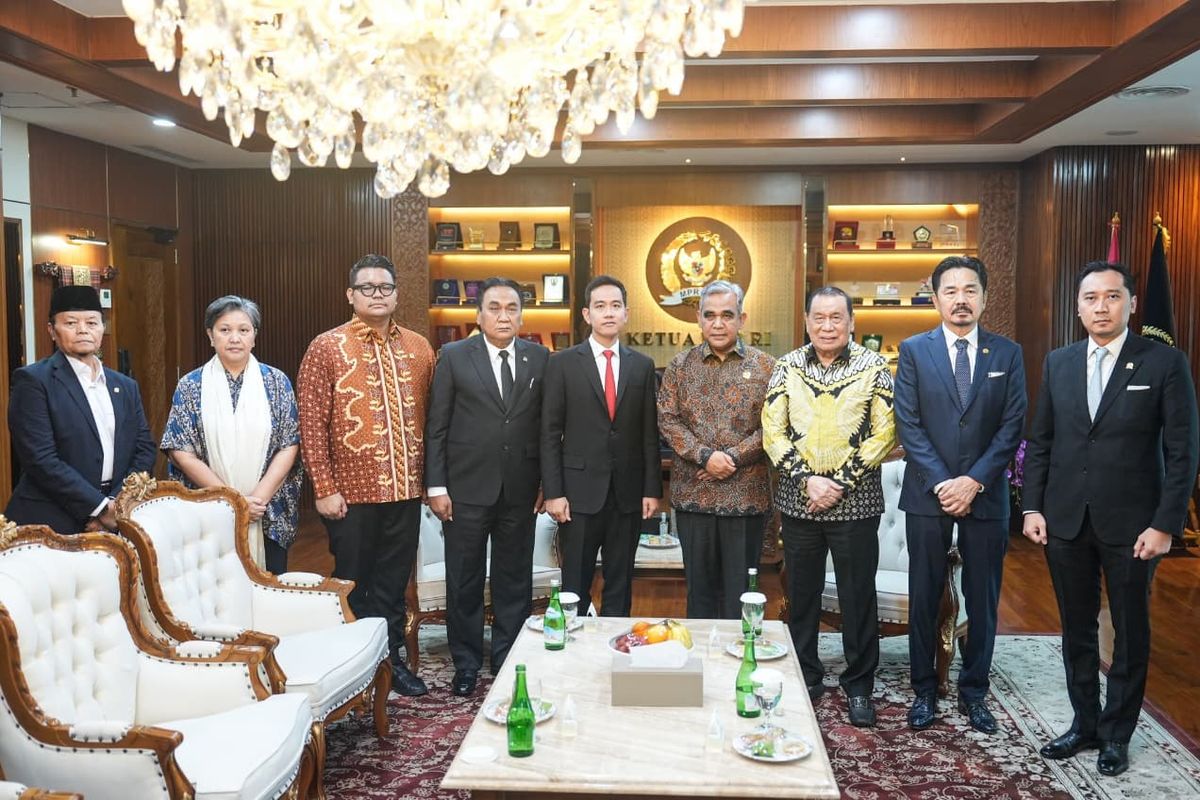
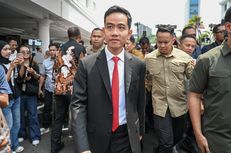
GIBRAN'S RESIGNATION marks a new chapter in Indonesia's governance. Kompas, (12/11/2026),
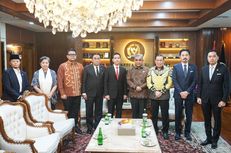
Gibran submitted his resignation letter to the leadership of the People's Consultative Assembly (MPR).
MPR Chairman Ahmad Muzani confirmed the receipt of the letter and stated that Gibran requested that the process be expedited.
Muzani further noted that a similar letter had also been submitted to President Prabowo Subianto.
Following Gibran's resignation as Vice President, is there still a need for impeachment proceedings in the DPR?
This question is vital in the context of governance design, as it is Indonesia's first experience with a Vice President's resignation.
The 1945 Constitution has not rigidly regulated this situation, and there is no Presidential Law in Indonesia.
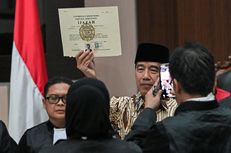
This event fundamentally alters the debate about Gibran's educational qualifications.
Previously, 120 DPR members from eight factions signed a proposal for an Opinion Rights (HMP) regarding the alleged failure to meet the qualifications to serve as Vice President.
In fact, the DPR had initially scheduled a plenary meeting to discuss the announcement of this proposal.
The 1945 Constitution identifies several reasons that can lead to the termination of the President or Vice President's office: (1) resignation, (2) dismissal, or (3) death.
Each scenario has different consequences and procedures. Resignation is a voluntary act, while impeachment is a dismissal through constitutional mechanisms based on Articles 7A and 7B of the 1945 Constitution.
Therefore, if Gibran indeed resigns, proof of impeachment is not needed to end his term.
The DPR/MPR does not need to first prove any violations as outlined in Article 7A.
Resignation itself provides a distinct basis for the termination of office, after being processed in accordance with applicable regulations.