Get Ready for MPR to Choose Gibran's Replacement: 2 Teams Formed, Deadline Set
-
News
-
22 minutes ago
This article was translated by AI. Read the original article on Kompas.com. See Original
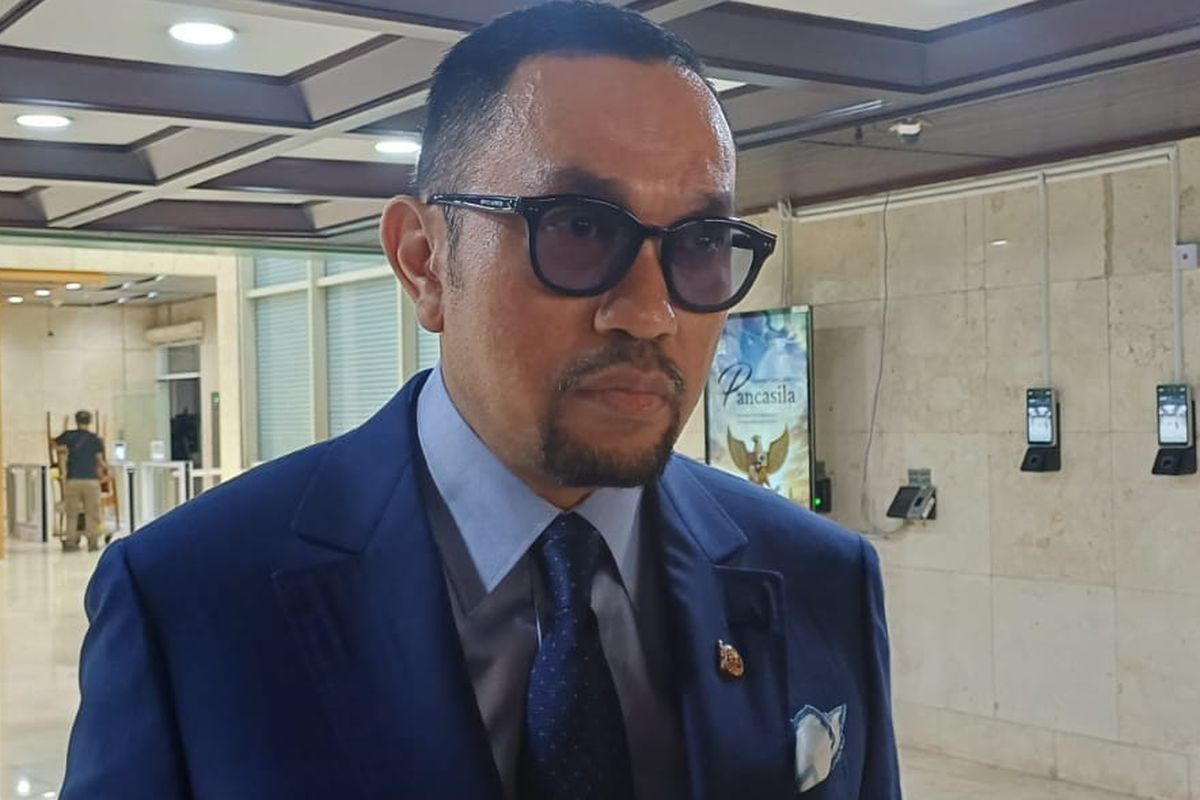
JAKARTA, KOMPAS.com - Ahmad Sahroni, Vice Chairman of Commission III of the Indonesian House of Representatives (DPR RI), has called on the Corruption Eradication Commission (KPK) to ensure that all public officials consistently report and update their Wealth Reports for State Officials (LHKPN).
Sahroni also urged for clarity in the regulations surrounding LHKPN, including penalties for officials who fail to report their wealth transparently and systematically.
“However, the LHKPN regulations must indeed be clarified; there must be penalties for those who are not orderly and transparent, so that the rules are certain,” Sahroni stated when contacted on Tuesday (27/10/2026).
According to Sahroni, improving the reporting of LHKPN should begin with ensuring that all public officials fulfill their obligation to report their wealth.
Furthermore, Sahroni added, the KPK must ensure that officials update their wealth reports transparently.
“This is a form of transparency and accountability in office,” Sahroni explained.
This statement was made in response to a proposal by KPK Vice Chairman Johanis Tanak concerning the asset confiscation of public officials who fail to accurately report their wealth in LHKPN.
However, Sahroni believes that the confiscation of an official's assets that are not reported in the LHKPN must still have a legal basis and clear proof.
“It would violate human rights to seize assets without a clear reason. There still must be proof of wrongdoing and a clear legal basis to confiscate someone's assets. This is to prevent abuse of power,” Sahroni explained when contacted on Tuesday (27/10/2026).
Previously reported, Johanis Tanak suggested that the draft Asset Confiscation Law provide strict measures against public officials who do not include all their assets in the LHKPN.
Tanak stated that law enforcement agencies, including the KPK, could confiscate assets that are not reported if it is found that the wealth exceeds what was declared in the LHKPN.
“Any official who inaccurately reports their wealth, after it is discovered that their wealth exceeds the limits of the LHKPN report, law enforcement, in this case the KPK, can proceed to confiscate the assets,” Tanak said in Yogyakarta, quoted on Monday (26/10/2026).
According to Tanak, this regulation is necessary to encourage public officials to be compliant and honest in reporting their wealth.
He believes that the provision for asset confiscation in the law can motivate officials to report their wealth correctly and completely.