

DKPP Highlights KPU's Inconsistent Statements Regarding 'Gibran's Education Article'
-
News
-
4 hours ago
This article was translated by AI. Read the original article on Kompas.com. See Original
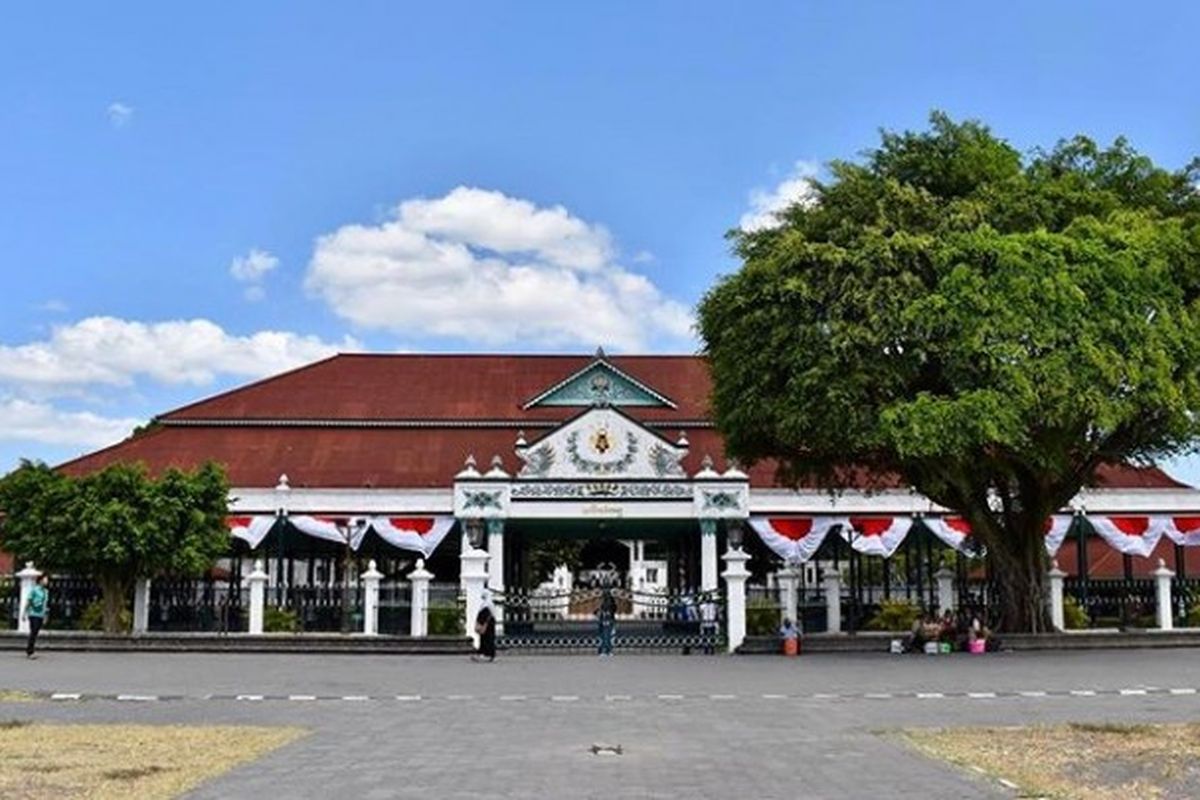
DEMANDS from the Special Region of Yogyakarta (DIY) Regional Legislative Council (DPRD) for the central government to reinstate the Transfer to Regions (TKD), particularly the Special Fund (Danais), should be taken seriously.
This is not merely an additional budget request from the region. Behind this lies a more fundamental issue: the state's consistency in honoring the history, constitution, and political commitments that underpin Yogyakarta's special status.
Chairman of Commission A of the DPRD DIY, Eko Suwanto, highlighted the decrease in the allocation of central transfers to regions and the cut in Danais, which originally reached approximately IDR 1.42 trillion in 2023 and 2024, dropping to about IDR 1 trillion in 2025 and 2026.
This means that over the past two years, Danais has shrunk by around IDR 420 billion, or nearly a third of its previous allocation.
This figure is not insignificant. Such a decrease could limit DIY's fiscal space to carry out its special affairs and finance development programs that directly impact community interests.
Therefore, the aspirations of the DPRD DIY to raise Danais in 2027 deserve serious consideration by the central government.
There is one thing that policy makers in Jakarta need to understand: Danais is not a common financial transfer.
This fund represents a fiscal consequence of the state's recognition of DIY's special status. It carries historical, constitutional, political, and administrative dimensions that cannot simply be equated with funds transferred to other regions.
The constitutional basis is clear. Article 18B, paragraph (1) of the 1945 Constitution states that the state recognizes and respects regional government units that are special or unique, as regulated by law.
This recognition is not merely a symbolic respect. It must be manifested through the arrangement of authority and support that allows for the implementation of that special status.
During my tenure as Director General of Regional Autonomy at the Ministry of Home Affairs from 2010 to 2014, I served as the Chairman of the Government Working Committee discussing the Draft Law on the Special Status of DIY with the House of Representatives, particularly Commission II which was then led by Agun Gunandjar Sudarsa.
This process taught us that Yogyakarta's special status did not arise purely from the goodwill of the central government but from a long history of relationship between Yogyakarta and the Republic of Indonesia.
The special status was later confirmed through Law Number 13 of 2012 on the Special Status of the Special Region of Yogyakarta.
This law provides five special authorities to DIY: the procedure for appointing the governor and deputy governor, institutional matters, culture, land, and spatial planning.
In the appointment of regional heads, for example, DIY does not conduct direct elections for governor and deputy governor like other regions.
The governor is held by the reigning Sultan Hamengku Buwono, while the deputy governor is held by the reigning Adipati Paku Alam, through a designation mechanism according to the law.
This arrangement reflects the state's recognition of the history and governmental structure of the Ngayogyakarta Hadiningrat Sultanate and the Pakualaman Duchy.
Thus, DIY’s special status cannot be narrowed down to the mechanism of appointing the governor and deputy governor. There are other substantive authorities that must be exercised and funded sustainably.
Why does the state need to give special attention to Yogyakarta? The answer can be traced back to the very beginning of the Republic of Indonesia.
First, after the Proclamation of Independence on August 17, 1945, Sultan Hamengku Buwono IX and Paku Alam VIII expressed their support and joined the Republic of Indonesia.
Through mandates and announcements in September 1945, they affirmed Yogyakarta's position within the newly established Republic.
Although the Yogyakarta Sultanate and Pakualaman Duchy had the history and political capacity to maintain self-governance, both chose to become part of Indonesia. The recognition of Yogyakarta's special status is a critical aspect of that historical relationship.
Second, when Jakarta was no longer safe due to Dutch military aggression, Yogyakarta became the capital of the Republic of Indonesia from January 1946 until 1949.
The Sultanate provided tangible support for the continuity of the Republic's governance, including the use of facilities and financial support when the state was still highly resource-constrained.
In other words, Yogyakarta was not just a refuge for the Republic; it played a role in sustaining the Indonesian government during a critical time in the struggle for independence.
Third, the recognition of this special status was then given a solid legal foundation through Law No. 13 of 2012.
The state established special authorities for DIY while also providing a funding instrument to implement them.
Of course, this historical relationship does not mean Yogyakarta gains unlimited rights to state funds.























