

Bareskrim Searches 2 Locations Related to DSSA Stock Market Crime Case
-
News
-
1 minute ago
This article was translated by AI. Read the original article on Kompas.com. See Original
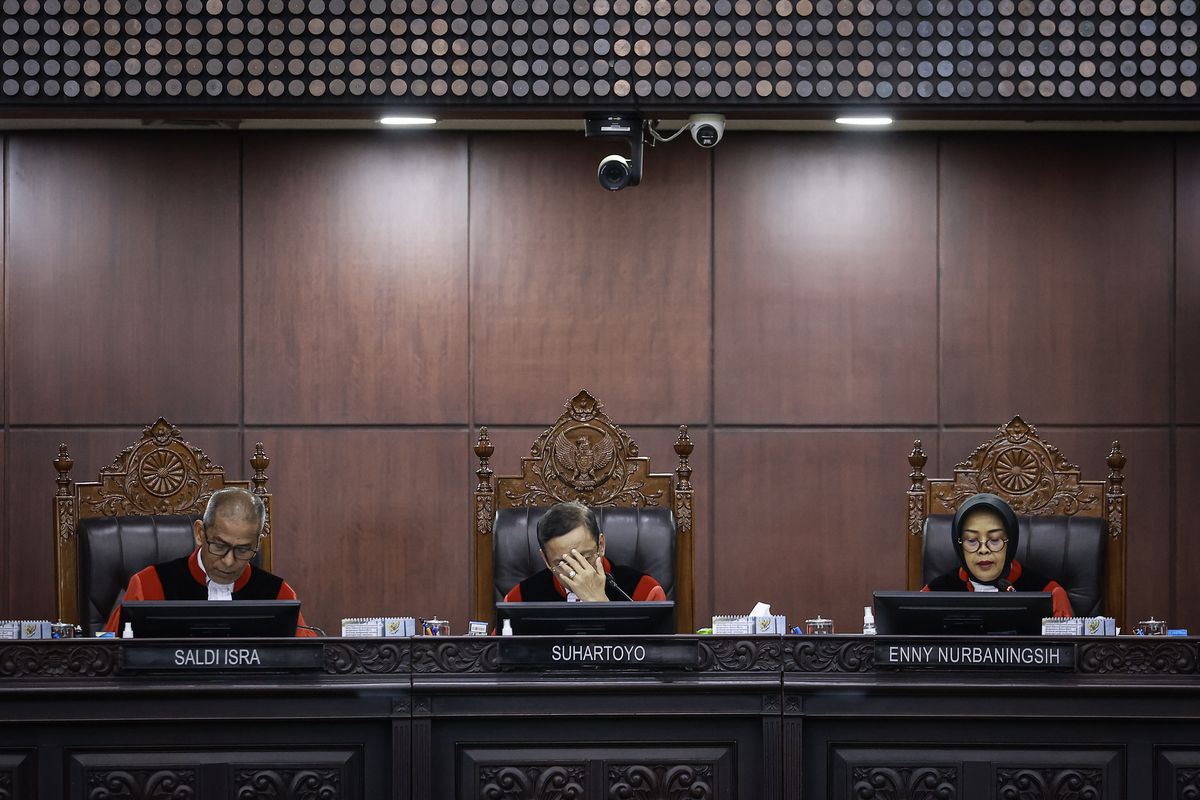
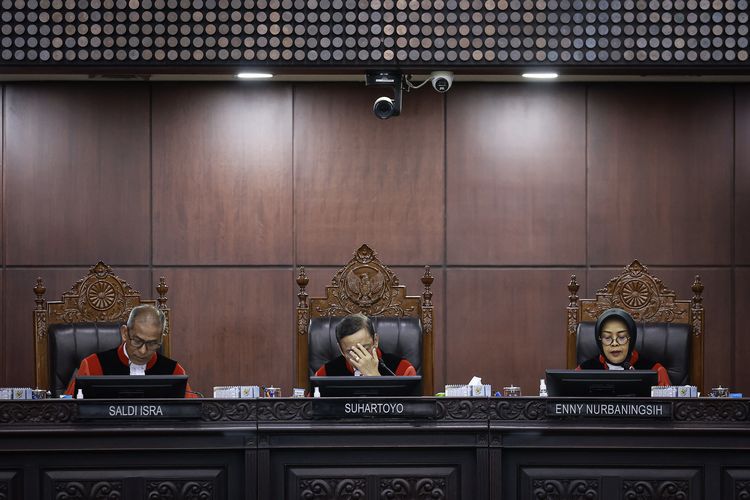
RULING The Constitutional Court regarding the education certificate of Vice President Gibran Rakabuming Raka should have resolved the matter. Instead, the opposite has occurred.
Legally, the Court stated that the petitioners lacked legal standing and that the election result disputes are not a means to disqualify an elected vice president.
However, in its considerations, the Court noted it did not find any evidence of foreign diplomas equivalent to high school graduation.
While the legal door is closed, a bigger question remains wide open.
This question is now rolling like a snowball. Before the ink on the ruling had even dried, nine constitutional judges were reported to the Honorary Council of the Constitutional Court, accused of being non-independent due to alleged public and petitioner pressure (Kompas, 7/10/2026).
The Palace emphasized that the diploma is not nonexistent, but rather has not been located (Kompas, 8/10/2026).
Jokowi stated that someone who has completed their undergraduate degree must have gone through the previous levels.
Every answer leads to new questions, and every affected institution is pulled into the fray.
Mahfud MD, in a discussion on the Rosi program on Kompas TV, sharply articulated the issue: Gibran now possesses legal status as vice president but has lost his moral legitimacy.
This piece originates from that distinction. The stakes are not just about one position but involve this nation's choice between stability bought through silence and stability built through reform.
I argue that the latter must take precedence since stability without legitimacy is merely a deferred debt.
The distinction between legality and legitimacy is not merely semantic. Max Weber reminded us that modern power endures not just because its procedures are legitimate but because citizens believe those procedures are enforced honestly.
Legality is paper; legitimacy is belief. When that belief erodes, the paper retains validity, but the authority underpinning it gradually collapses.
Political scientist Seymour Martin Lipset offered another crucial distinction.
According to him, a government endures for two reasons: effectiveness, meaning the ability to produce performance, and legitimacy, meaning citizens' belief that existing institutions are trustworthy.