

DKPP Highlights KPU's Inconsistent Statements Regarding 'Gibran's Education Article'
-
News
-
4 hours ago
This article was translated by AI. Read the original article on Kompas.com. See Original
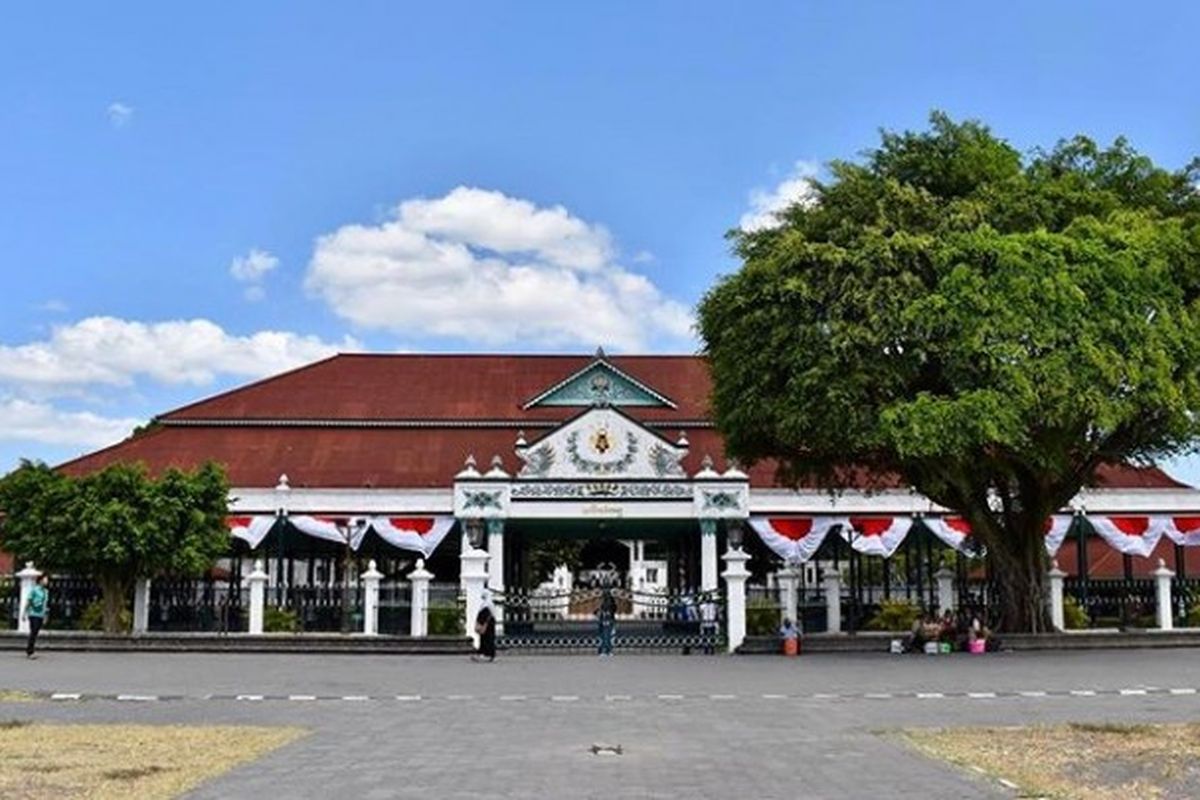
DEMANDS from the Special Region of Yogyakarta (DIY) Regional Legislative Council (DPRD) for the central government to reinstate the Transfer to Regions (TKD), particularly the Special Fund (Danais), should be taken seriously.
This is not merely an additional budget request from the region. Behind this lies a more fundamental issue: the state's consistency in honoring the history, constitution, and political commitments that underpin Yogyakarta's special status.
Chairman of Commission A of the DPRD DIY, Eko Suwanto, highlighted the decrease in the allocation of central transfers to regions and the cut in Danais, which originally reached approximately IDR 1.42 trillion in 2023 and 2024, dropping to about IDR 1 trillion in 2025 and 2026.
This means that over the past two years, Danais has shrunk by around IDR 420 billion, or nearly a third of its previous allocation.
This figure is not insignificant. Such a decrease could limit DIY's fiscal space to carry out its special affairs and finance development programs that directly impact community interests.
Therefore, the aspirations of the DPRD DIY to raise Danais in 2027 deserve serious consideration by the central government.
There is one thing that policy makers in Jakarta need to understand: Danais is not a common financial transfer.
This fund represents a fiscal consequence of the state's recognition of DIY's special status. It carries historical, constitutional, political, and administrative dimensions that cannot simply be equated with funds transferred to other regions.
The constitutional basis is clear. Article 18B, paragraph (1) of the 1945 Constitution states that the state recognizes and respects regional government units that are special or unique, as regulated by law.
This recognition is not merely a symbolic respect. It must be manifested through the arrangement of authority and support that allows for the implementation of that special status.
During my tenure as Director General of Regional Autonomy at the Ministry of Home Affairs from 2010 to 2014, I served as the Chairman of the Government Working Committee discussing the Draft Law on the Special Status of DIY with the House of Representatives, particularly Commission II which was then led by Agun Gunandjar Sudarsa.
This process taught us that Yogyakarta's special status did not arise purely from the goodwill of the central government but from a long history of relationship between Yogyakarta and the Republic of Indonesia.
The special status was later confirmed through Law Number 13 of 2012 on the Special Status of the Special Region of Yogyakarta.
This law provides five special authorities to DIY: the procedure for appointing the governor and deputy governor, institutional matters, culture, land, and spatial planning.
In the appointment of regional heads, for example, DIY does not conduct direct elections for governor and deputy governor like other regions.
The governor is held by the reigning Sultan Hamengku Buwono, while the deputy governor is held by the reigning Adipati Paku Alam, through a designation mechanism according to the law.
This arrangement reflects the state's recognition of the history and governmental structure of the Ngayogyakarta Hadiningrat Sultanate and the Pakualaman Duchy.
Thus, DIY’s special status cannot be narrowed down to the mechanism of appointing the governor and deputy governor. There are other substantive authorities that must be exercised and funded sustainably.
Why does the state need to give special attention to Yogyakarta? The answer can be traced back to the very beginning of the Republic of Indonesia.
First, after the Proclamation of Independence on August 17, 1945, Sultan Hamengku Buwono IX and Paku Alam VIII expressed their support and joined the Republic of Indonesia.
Through mandates and announcements in September 1945, they affirmed Yogyakarta's position within the newly established Republic.
Although the Yogyakarta Sultanate and Pakualaman Duchy had the history and political capacity to maintain self-governance, both chose to become part of Indonesia. The recognition of Yogyakarta's special status is a critical aspect of that historical relationship.
Second, when Jakarta was no longer safe due to Dutch military aggression, Yogyakarta became the capital of the Republic of Indonesia from January 1946 until 1949.
The Sultanate provided tangible support for the continuity of the Republic's governance, including the use of facilities and financial support when the state was still highly resource-constrained.
In other words, Yogyakarta was not just a refuge for the Republic; it played a role in sustaining the Indonesian government during a critical time in the struggle for independence.
Third, the recognition of this special status was then given a solid legal foundation through Law No. 13 of 2012.
The state established special authorities for DIY while also providing a funding instrument to implement them.
Of course, this historical relationship does not mean Yogyakarta gains unlimited rights to state funds.
However, that history creates political and moral responsibilities for the government to consistently treat DIY’s special status with respect, not merely acknowledging it in legislation while neglecting its funding needs.
Article 42 of Law No. 13 of 2012 clearly stipulates that the government provides funding for the administration of DIY's special affairs in the state budget, according to the needs of DIY and the financial capabilities of the state.
This funding is discussed and determined by the government based on proposals from the local government.
When the draft law was discussed, there were demands that Danais be determined using a specific formula, including being linked to the percentage of the national General Allocation Fund.
However, the final formulation agreed upon did not set a fixed percentage. The amount of Danais was left to the process of assessing DIY’s needs and the government’s determination, taking into account the country's financial capacity.
This choice is a political and fiscal compromise. DIY accepted that the amount of Danais was not guaranteed by a fixed formula. Consequently, the central government obtained room to determine the allocation size each year.
However, budget flexibility should not be interpreted as a freedom to cut Danais without considering the purpose of granting special status.
The phrase according to the needs of DIY and the financial abilities of the country must be read holistically, rather than solely emphasizing fiscal limitations.
If the needs for the administration of special affairs remain significant, the government must rationally assess whether the provided allocation is adequate.
The country’s financial capacity must also be viewed comprehensively, and not merely used as an automatic excuse to reduce the budget every time the government enacts efficiency policies.
Danais was first allocated in 2013 for about IDR 231 billion. This amount then increased to around IDR 1.4 trillion in 2023 and 2024.
This increase gave DIY the opportunity to strengthen the implementation of its special authorities, including the development and structuring of cultural areas.
Since the implementation of budget efficiency policies under Presidential Instruction No. 1 of 2025, the allocation of Danais has dropped to about IDR 1 trillion in 2025, maintaining that same level in 2026.
This decline raises a question: has the need for the implementation of DIY's special status also dropped by a third? If not, what adequate basis is there to justify such a considerable cut?
This question deserves an open response from the central government. Efficiency policies that should be implemented by prioritizing must not be uniformly applied without differentiating the character and constitutional responsibilities of each region.
This issue becomes increasingly important as the government plans the 2027 state budget with a total expenditure exceeding IDR 4,000 trillion, while the allocation for TKD mentioned in the budget assumptions is around IDR 735 trillion.
Such figures indeed need to be contextualized within the overall spending needs and the country’s fiscal capability.
However, amid the enormity of the national budget, the government needs to transparently explain the basis for the allocation determinations for regions, particularly those with special or unique status.
For DIY, Danais is not just an additional amount of money to fill the APBD gap. It is intended to finance the implementation of authorities that ordinary regions do not possess.
Acutting Danais would mean narrowing the local government’s ability to execute the special mandates granted by law.
The impact does not stop at administrative matters. Cultural management, historical heritage preservation, character-based spatial planning, and land management related to the special authority require planned and sustainable financing.
This funding can also benefit the community if managed properly. The government and the DPRD DIY mentioned that the utilization of Danais in Yogyakarta City has contributed to reducing the stunting rate from 14.6% in 2024 to 8.4% in 2025.
Such claims certainly need to be interpreted alongside other factors influencing the decline in stunting.
However, this example shows that the benefits of special budget allocations can extend to public service needs, not merely cultural ceremonial activities.
Thus, what is needed is not only an increase in the budget but also guarantees that every rupiah of Danais is managed transparently, accountably, and yields measurable benefits.
The central government is entitled to demand good governance, but such demands should run parallel with adequate funding provisions.
There are also political reasons that cannot be overlooked. In 2027, the DPRD DIY will conduct the appointment process for the governor and deputy governor for the 2027-2032 period following the Law on DIY’s Special Status.
This process directly implements one of the special authorities governed by law. The central government must ensure that budgetary and administrative support is adequately available.
The government must not require that all special authorities are carried out properly while simultaneously reducing resources to implement them. This would be tantamount to granting a mandate without proportional support.
Therefore, the central government needs to relax the allocation of Danais in the 2027 state budget. The first step is to raise the Danais allocation from IDR 1 trillion towards a level of need closer to the 2023-2024 allocation, considering the official proposals from DIY, the actual needs for executing five special affairs, and the financial capacity of the state.
Second, the Ministry of Finance, the Ministry of Home Affairs, and the DIY Government need to jointly evaluate the impact of Danais cuts over the last two years.
This evaluation must measure delayed activities, reduced benefits, and priority financing needs for 2027.
The results must be communicated transparently so that budget decisions are not solely based on uniform cut approaches.
Third, the government needs to establish a medium-term funding framework for Danais. Indeed, the Law on Special Status does not set binding percentage allocations.
However, the government can still develop a multiyear planning mechanism with need, performance, and fiscal capability indicators. This way, DIY will not continuously face funding uncertainties each year-end fiscal cycle.
Fourth, the central government must differentiate Danais from general transfers in determining efficiency priorities.
Budget adjustments may be made, but they must be based on the evaluation of needs and outcomes, not merely on uniform savings targets.
At the same time, the DIY Government should strengthen accountability for the use of Danais. Programs that are irrelevant to special authorities, lack clear outcome indicators, or do not provide tangible benefits to the community should be evaluated.
Special status should not become a reason to loosen oversight. On the contrary, because it has a special mandate, DIY needs to demonstrate that special funding yields commensurate benefits.
The issue of Danais truly tests how the central government perceives regional autonomy.
Is decentralization only understood as a matter of dividing powers that can be expanded or narrowed at the government's discretion?
Or does decentralization also entail respect for the historical, political, social, and cultural diversity that makes up Indonesia?
DIY serves as a reminder that a unitary state need not be built by homogenizing all regions. The constitution recognizes regions with special characteristics and uniqueness.
Therefore, national fiscal policies must be able to translate that recognition into tangible support.
I am concerned that the cuts to Danais that have taken place from 2025 to 2026 indicate that the historical and political dimensions of DIY’s special status have not fully been considered in budget decision-making at the center.
The government certainly has the right to set spending priorities, but the logic of efficiency should not blind it to the commitments of the state that have been expressed in the constitution and laws.
The relationship between Jakarta and Yogyakarta has been built not only through bureaucracy and budget transfers but also through trust. That trust must be maintained.
When the DPRD DIY aspires for Danais to be raised, the central government should not view it merely as a regional request for extra funds.
It is an opportunity to reaffirm the state's commitment to the special status that has been constitutionally recognized.
The government needs to restore Danais in 2027 to a more appropriate level. Not merely to satisfy the wishes of regional government but to ensure that the special authorities mandated by law can be effectively implemented.
In the end, the state budget is not merely a table of numbers, and efficiency is not a standalone goal.
The budget must serve as an instrument to fulfill the state’s obligations, including historical and constitutional obligations to regions with special status.
Governments may change. Budget priorities may shift. However, history should not be erased from memory, and the state’s commitments should not be overshadowed by fiscal calculators.
"Never forget history. Especially the history of regions that helped save the Republic."























