
Gaspol Today: The Pros and Cons of Prabowo's Choices, Amran or Sugiono?
-
News
-
15 minutes ago
This article was translated by AI. Read the original article on Kompas.com. See Original
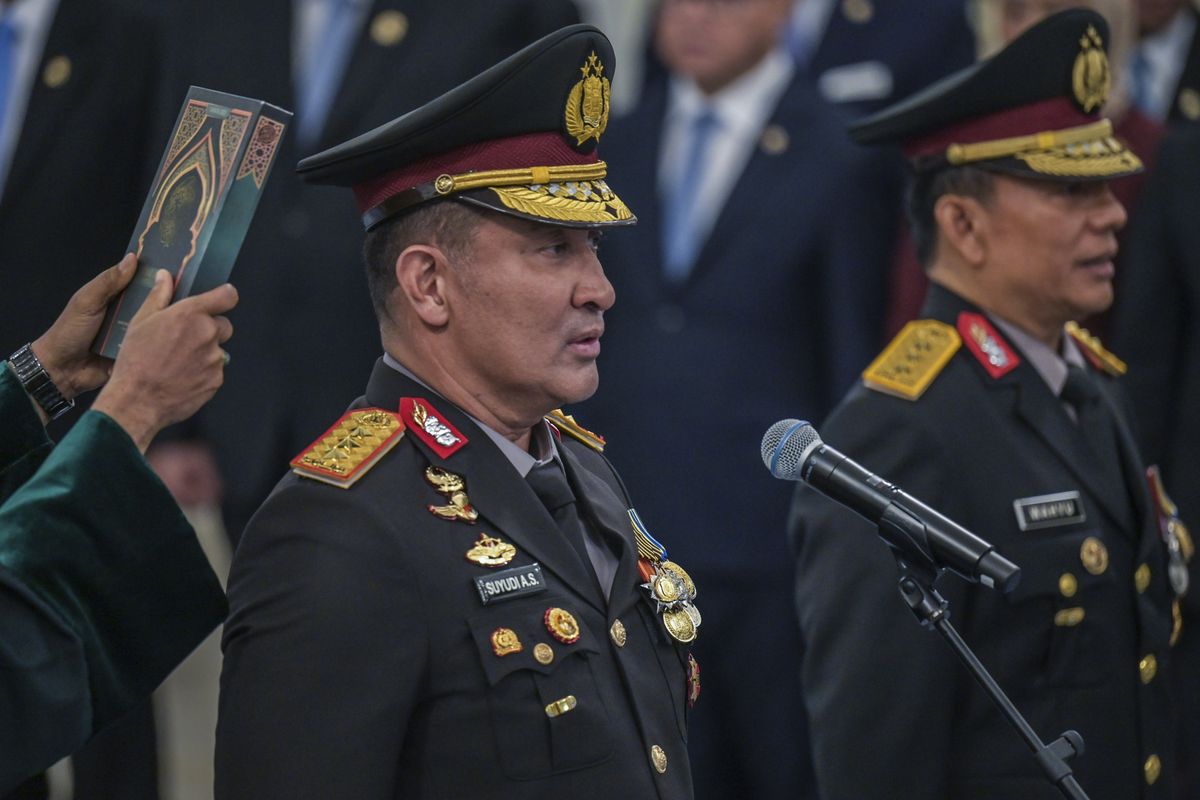
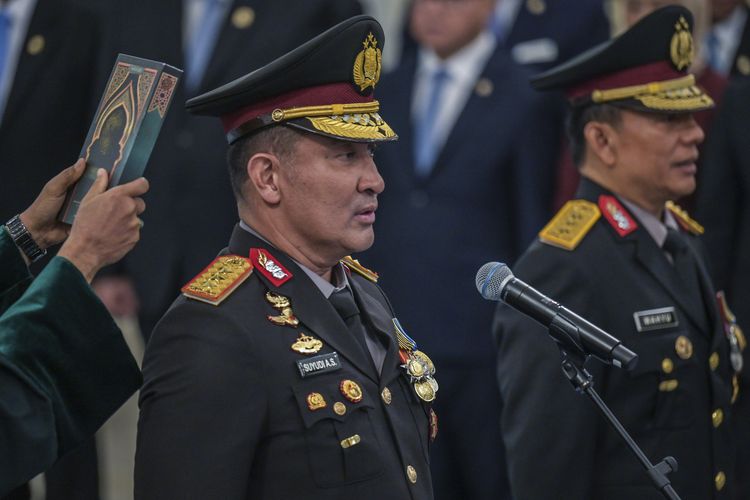
JAKARTA, KOMPAS.com - National Police Chief Suyudi Ario Seto took significant action by carrying out a reshuffle and promotion just a day after his appointment on Thursday (1/10/2026).
The changes are noteworthy, involving approximately 88 high-ranking officers and middle-ranking officers.
The reshuffle is outlined in Telegram Letter Number ST/2205/X/KEP./2026.
Seventy of these personnel received promotions or were assigned to new positions.
Many of the positions are considered strategic, including 14 top officials at the National Police Headquarters and 19 regional police chiefs (kapolda).
So, what drives Suyudi to reshuffle his ranks?
Police observer from ISESS (Institute for Security & Strategic Studies) Bambang Rukminto believes the reshuffle should not be merely seen as an organizational refreshment.
He argues that the replaced positions are not secondary roles.
The reshuffle includes high-ranking officials such as the Inspector General for Supervision (Irwasum), the Chief Criminal Investigator (Kabareskrim), the Chief Secretary (Kabaharkam), the Head of Education and Training (Kalemdiklat), and several regional police chiefs who are key nodes of power, oversight, law enforcement, security management, and organizational culture formation within the police.
Changing individuals in these critical positions, according to Bambang, signifies a shift in part of the internal power structure of the police.
“Especially since it happened immediately after the turnover of the National Police Chief and Deputy Chief.
I refer to this as a “Blitzkrieg”—a swift operation.
In fact, considering the breadth of positions affected, this move by General Suyudi Ario Seto could be termed a “bedol desa”,” Bambang said on Monday.
He also noted that the reshuffle represents a consolidation of power alongside the leadership transition.
According to Bambang, every new leadership, in this case the National Police Chief, needs trusted individuals.
This, he says, is part of organizational logic.
“It’s impossible for a new leader to be forced to execute a change agenda with the entire elite configuration shaped by the previous leadership. Therefore, consolidation is a reasonable step,” he explained.
While it is a form of consolidation, Bambang pointed out that there is a significant difference between leadership consolidation and power consolidation.
Leadership consolidation is necessary for the organization to operate effectively.
In contrast, power consolidation can be dangerous if its sole purpose is to ensure loyalty to the leadership.
“Here’s where Suyudi's actions must be scrutinized. Some of the officials transferred are figures that have long held certain positions or have held strategic roles multiple times. Their replacement can be interpreted positively as an effort to open up opportunities for regeneration and to break long-term concentrations of influence,” he stated.
Political communications observer from Esa Unggul University, Jamiluddin Ritonga, noted that this massive overhaul was also executed to realize the quick wins program put forth by the National Police Chief.
This restructuring, he said, is not surprising.
He recalled Suyudi’s commitment during the fit and proper test in the parliament.
Suyudi committed to restructuring the internal police force within his first 100 days in office.