
Ma'ruf Amin Resigns as Chairman of MUI Advisory Council, What’s the Reason?
-
News
-
12 minutes ago
This article was translated by AI. Read the original article on Kompas.com. See Original
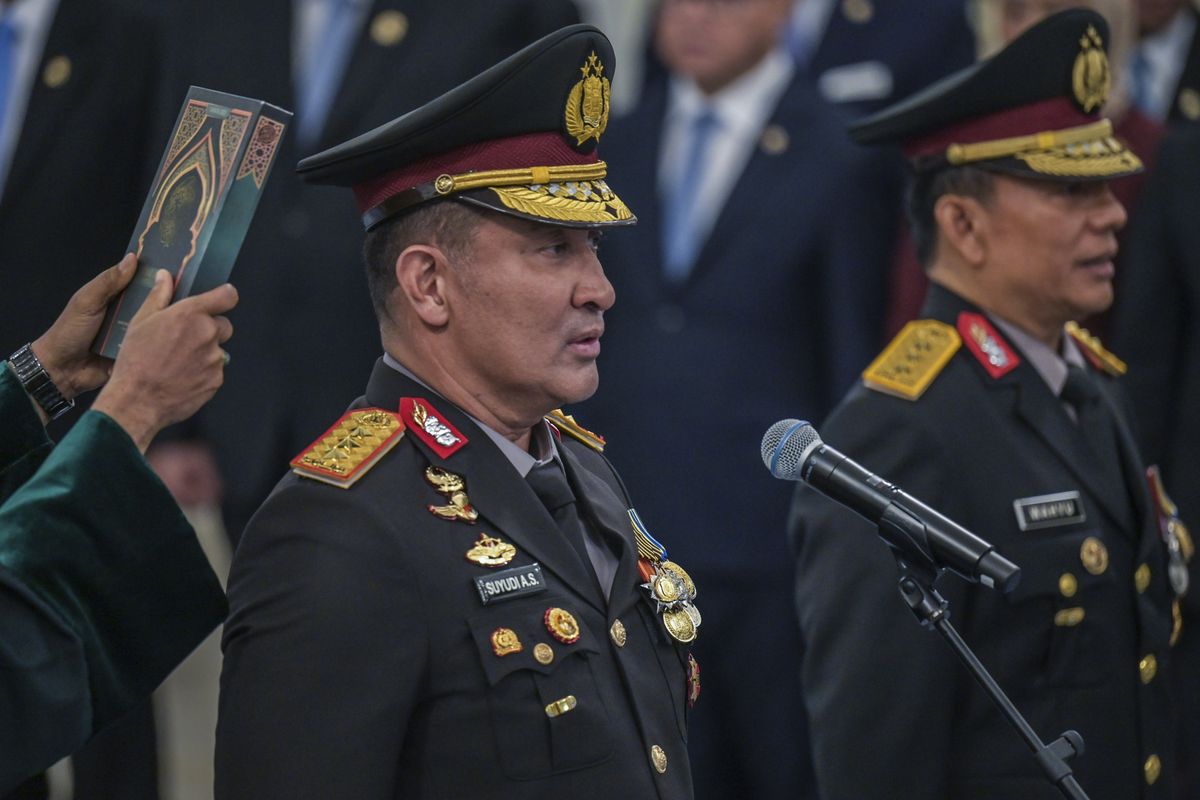
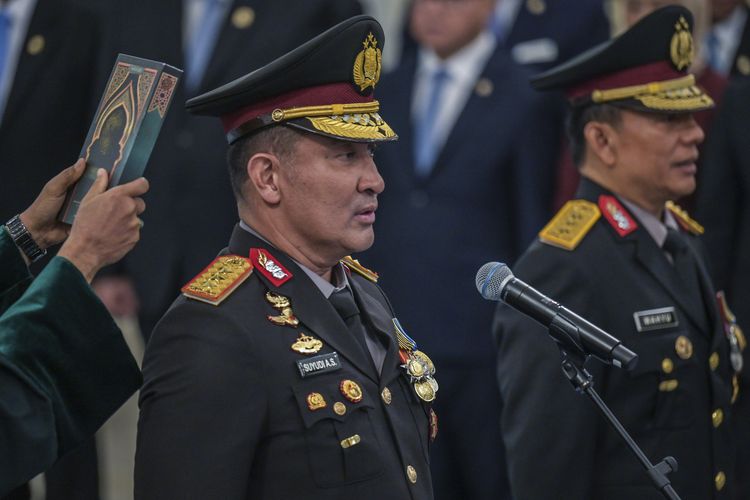
ON October 1, 2026, Indonesia welcomed a new National Police Chief, General Suyudi Ario Seto. He succeeds Listyo Sigit Prabowo, the longest-serving National Police Chief in the reform era.
Rather than adopting bombastic slogans, Chief Suyudi has introduced a straightforward vision: "The Police Together with the Community."
In this era of digitalization and information transparency, alongside the increasingly complex and multidimensional challenges facing the police, the new Chief must not only strengthen internal organizational consolidation but also foster relationships and cooperation with other institutions and civil society.
The new Chief must be independent and uphold the integrity of the police as a law enforcement agency and a protector of human rights at the forefront.
The challenges facing the police are significant. According to complaint data submitted to the National Commission on Human Rights (Komnas HAM), the police are the most frequently reported institution, particularly concerning allegations of violations of the right to justice.
In 2023, Komnas HAM received 771 complaints, followed by 751 complaints in 2024 and 805 complaints in 2025.
Issues reported to Komnas HAM, aside from administrative and technical problems, include allegations of violations of due process of law.
This encompasses numerous allegations, including arbitrary arrests and detentions, failure to provide legal assistance to suspects, discriminatory investigations, acts of violence or coercion to obtain confessions from suspects, and excessive force in responding to community actions.
Realizing the right to justice is foundational for establishing a society based on the rule of law.
Within the structure of the rule of law, the police play a crucial role in the criminal justice system. They are at the forefront, alongside prosecutors, attorneys, courts, the Supreme Court, and correctional facilities, which fall under the authority of the Ministry of Corrections.
The high number of complaints against the police is closely related to their vast and extensive powers and authority.
Based on Law No. 5 of 2026 concerning the Third Amendment to Law No. 2 of 2002 on the Indonesian National Police, the police are granted numerous powers.
These powers include maintaining public order, enforcing laws, cybercrime handling, and providing public service administration.
Additionally, the police hold other powers defined within various legal regulations.
For instance, Law No. 20 of 2025 on the Criminal Procedure Code (KUHAP) grants the police the authority as the main investigators coordinating certain investigators.