
Listyo and the Legitimacy of Ethical Jurisdiction
-
News
-
25 minutes ago
This article was translated by AI. Read the original article on Kompas.com. See Original
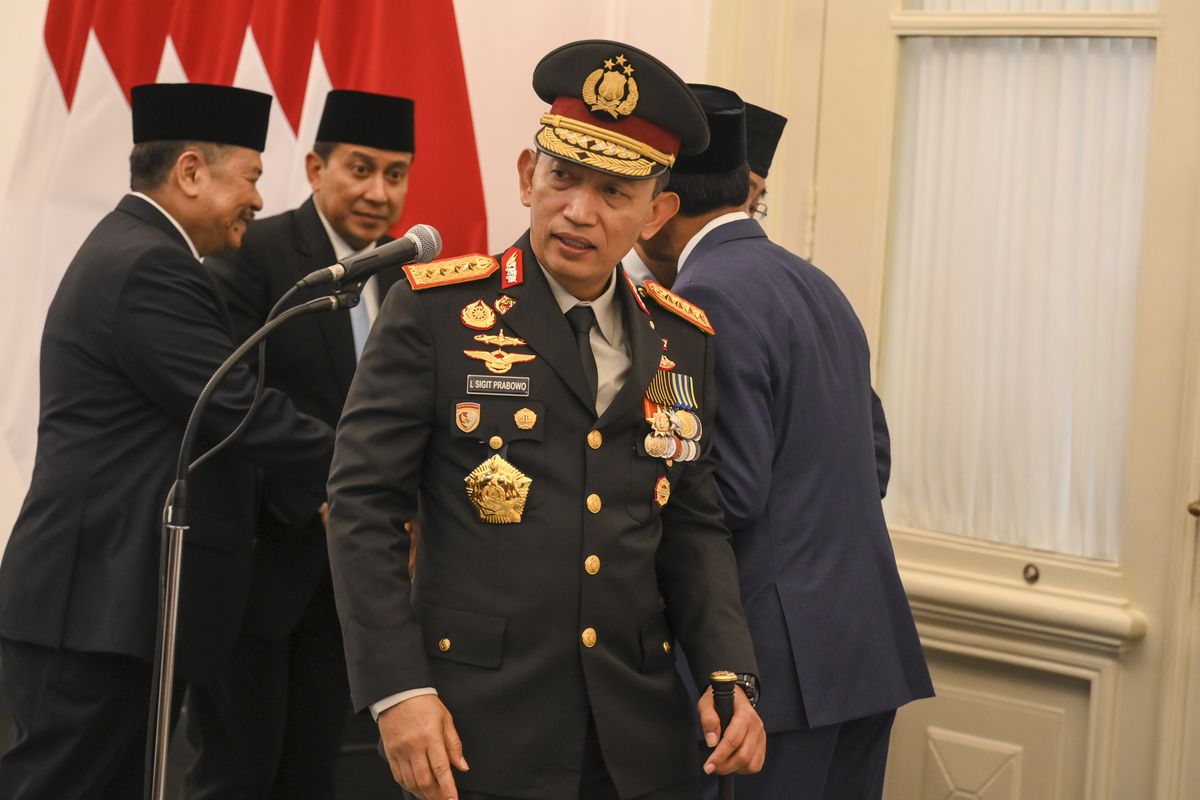
REFUSAL of former National Police Chief General Listyo Sigit Prabowo to attend the Polri Code of Ethics Commission (KKEP) session on November 26, 2026, raises questions that cannot be answered merely by procedure.
Moreover, when he again refused to appear at the second session on November 30, 2026, it brought further consequences.
As the former head of the police authority, Listyo certainly understands the implications of his choice. The session can proceed without him. His right to appeal could be forfeited. This is not a secret. It is clearly stated in the regulations.
Then, why is the opportunity to defend himself not utilized? Is Listyo evading ethical accountability or questioning the legitimacy of the ethical court that seeks his answer?
This question is significant not to speculate on Listyo's personal motives, but to interpret his refusal within the contexts of law, power sociology, and ethical jurisdiction morality.
In legal proceedings, a person's presence holds not just procedural importance but also symbolic significance. Procedurally, being present means exercising the right to defend oneself. Symbolically, it indicates a willingness to participate in accountability mechanisms.
Therefore, there is a fundamental difference between someone striving to avoid punishment and someone contesting the legitimacy of the forum that will judge them.
The former advocates for the outcome of the trial; the latter challenges the authority of the trial.
Tom R. Tyler in Why People Obey the Law (1990) explains that compliance with the law is determined not solely by the threat of sanctions but also by the legitimacy of authority and perceptions of procedural justice.
A person may refuse to participate in a legal process if they believe the authority conducting that process does not guarantee justice.
In Listyo's context, one plausible consideration could be objections to the basis of authority, composition, independence, or impartiality of the KKEP.
The change to the National Police Regulation Number 7 of 2022 through National Police Regulation Number 4 of 2026, occurring close to Listyo's hearings, also raises questions about the philosophy underpinning legal formation.
Is this change a necessity for a comprehensive renewal of the ethical enforcement system within the National Police or primarily to address the judicial needs of a four-star general officer?
Referring to Lon L. Fuller's concept of generality (1964) as one of the principles of internal moral law, laws should be established as general guidelines rather than solely to meet the interests of specific individuals.
In stronger terms, laws should not be intended for a particular case.
Nevertheless, the changes in procedural law do not automatically violate the principle of non-retroactivity. Their validity must be assessed based on the substance of the changes and applicable legal principles.
One should not hastily conclude that the new regulation is an argument against an individual (ad hominem). However, one should also not ignore the timing and context of these questions.
The public has the right to ask, and the police must respond with legal reasoning, not merely authority.
Another possibility is that the refusal to appear is part of Listyo's defense strategy in the ongoing criminal case against him.
The intersection between ethical and criminal matters can create dilemmas. Statements given in an ethical hearing could potentially serve as sources of information for evidence in criminal cases.
The legal principle of nemo tenetur se ipsum accusare protects individuals from being compelled to provide evidence that incriminates themselves.
Although this principle does not automatically validate the absence from the ethical hearing, the interest in a criminal defense may factor into legal considerations.
An alternative scenario would be a choice to question the legality of the ethical enforcement process through legal mechanisms outside the police organization.
The finality of the KKEP's decision within internal mechanisms does not preclude the possibility of legal review of the regulations or administrative decisions it generates, as long as legal requirements are satisfied.
However, all of these possibilities remain hypothetical until Listyo openly states his reasons for his refusal.
And therein lies the irony. A person who has led a law enforcement institution now chooses silence about his own legal reasoning.
Silence is indeed a right. However, remaining silent in such a position generates interpretations that are more wild than any explanation itself.
This incident is also compelling when viewed through the lens of power sociology. Let's look at it through Max Weber's framework in Economy and Society (1922), which introduces the concept of legal-rational authority.
Compliance within modern organizations is directed not at the individuals in power but at the authority sourced from the law.
Listyo once resided at the pinnacle of police authority. Now, he finds himself subject to scrutiny by the institutional mechanism that was once under his leadership.
This shift in power dynamics tests the institutionalization of law and ethics within the police. Does legal authority truly stand above an individual’s rank and position?
In an organization that upholds the supremacy of law, no individual should be too highly ranked to escape judgment.
Conversely, an individual should not lose their guarantee of justice merely because they have lost power.
The power once held does not excuse ethical immunity. Likewise, losing power should not strip anyone of their rights to justice.
At this juncture, the police are under public scrutiny. It is not just Listyo being judged, but also the institution that is judging him.
If Listyo continues to refuse to appear on November 30, 2026, the KKEP may proceed with the hearing as long as legal requirements are met.
However, the authority to continue the hearing does not absolve the KKEP from the moral obligation to ensure justice.
Indeed, when the suspected violator is absent, the commission's moral responsibility becomes even greater. The commission must ensure the validity of summons, the objectivity of evidence, the examination of both aggravating and mitigating facts, and the independence of decision-making.
Absence should not be construed as admission of guilt. Refusing to attend a hearing should not replace the obligation to prove the alleged ethical violations.
Herein lies the relevance of constitutional ethics as a basis to ensure that ethical enforcement does not merely fulfill procedural legality, but also upholds the integrity and fairness of the process.
Ethical jurisdiction must be conducted with ethical standards at least as high as those expected of the individuals being judged.
Indeed, Listyo's refusal to attend the hearing serves as a dual test: a test of his willingness to account for the alleged ethical violations and a test of the KKEP's ability to justify its authority in adjudicating him.
Listyo does not gain ethical immunity simply because he was once the National Police Chief. The KKEP does not receive justification for its actions merely because it possesses the authority to adjudicate.
From a constitutional ethics perspective, ethical jurisdiction is not just about having the authority to judge. It also must prove it is morally fit to judge.
For authority in judgment arises from the law, but the moral legitimacy of jurisdiction is born from its capacity to deliver justice.
Let not ethical jurisdiction lose its own ethics while adjudicating ethical violations.