

Attorney General's Office Continues to Investigate Companies Affiliated with Nickel Tycoon Arif Kurniawan
-
News
-
1 minute ago
This article was translated by AI. Read the original article on Kompas.com. See Original

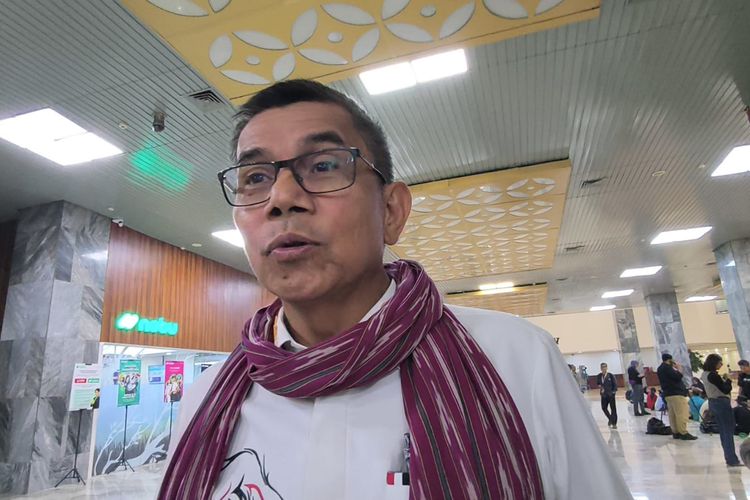
JAKARTA, KOMPAS.com - Member of the House of Representatives Commission III Hinca Panjaitan stated that the revision process of the Police Law (UU Polri), which was declared to have formal defects by the Constitutional Court (MK), could be included in the open cumulative National Legislation Program (Prolegnas).
"If the Constitutional Court has decided so, then there will be a Legislative Body, and it qualifies for the cumulative category. If given one year, then there's still time," said Hinca to reporters on Friday (27/11/2026).
The open cumulative Prolegnas is a list of bills that can be proposed and discussed outside of the annual Prolegnas list. This cumulative Prolegnas is created to address urgent legal needs.
Hinca mentioned that the House has one year to amend the Police Law in accordance with the Constitutional Court's ruling.
This deadline is still sufficient to follow up on the verdict through the legislative mechanism.
Hinca emphasized that the House will respect the Constitutional Court's decision, which is final and binding as part of the Indonesian constitutional system.
"Our constitutional system has indeed established a Constitutional Court, right? So we will respect it," he concluded.
The Constitutional Court declared that the formation of the Police Law had formal defects when granting part of the request from Case Number 251/PUU-XXIV/2026 on Monday (23/11/2026).
In its ruling, the Constitutional Court stated that the Police Law still has binding legal force conditionally, as long as lawmakers make corrections within a maximum of one year from the reading of the ruling.
If the House and the government do not make corrections by the deadline, the rules that will apply again are Law Number 2 of 2002 concerning the Police.
The Constitutional Court assessed that the process of forming the Police Law did not comply with the stages regulated in the Law on the Formation of Legislation (UU P3) and the DPR Regulation Number 1 of 2020.
One of the issues highlighted by the Constitutional Court was the takeover of the Police Bill from the House during the 2019-2024 period by the House for the 2024-2029 period to be established as a legislative initiative proposal.
This takeover process did not go through the harmonization stage in the House's Legislative Body (Baleg).
Additionally, the Constitutional Court noted the absence of real-time publication of the official Police Bill draft to the public. The court determined that video documentation and live broadcasts of discussions in the House cannot replace the written documentation that must be published through the official channels of lawmakers.