
Police Asked to Trace Data Flow from President Prabowo's Wiretap
-
News
-
1 minute ago
This article was translated by AI. Read the original article on Kompas.com. See Original
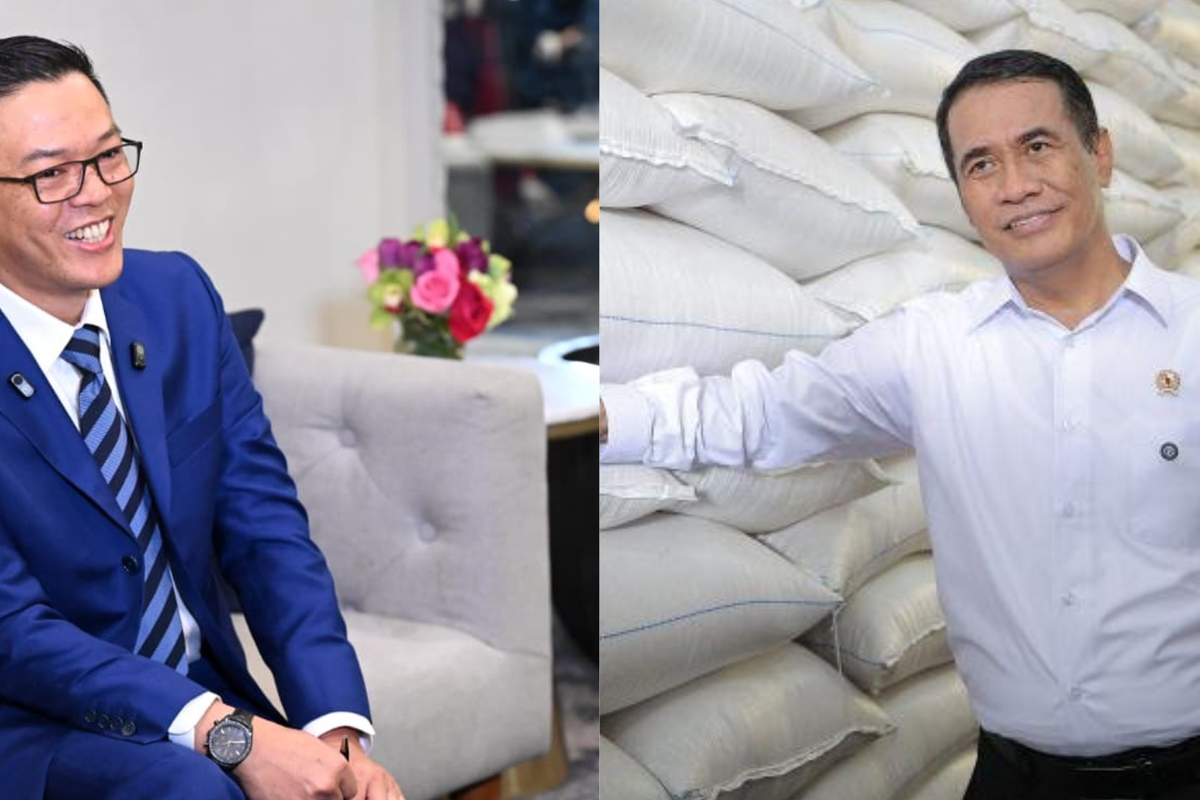
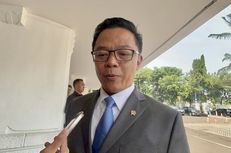
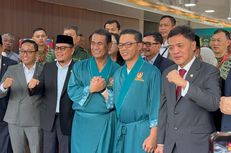
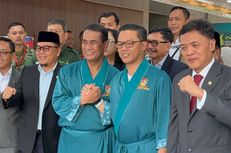
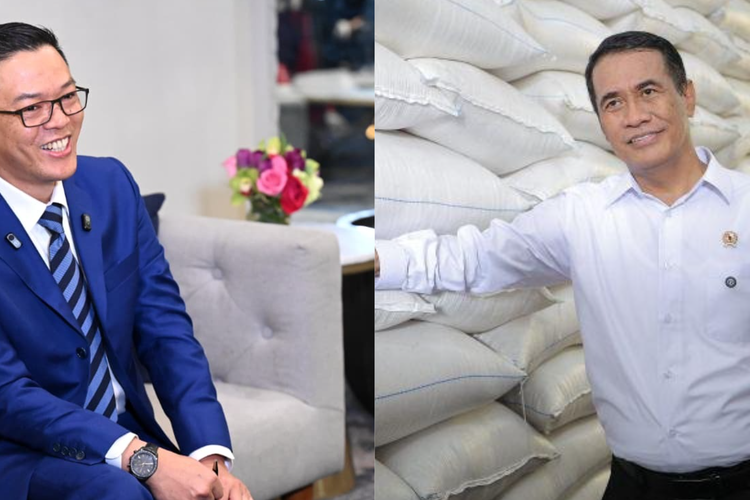
JAKARTA, KOMPAS.com - President Prabowo Subianto has several considerations when proposing Sugiono and Andi Amran Sulaiman as candidates for vice president to the People's Consultative Assembly (MPR).
Both are regarded as having achievements, dedication, and loyalty to the country.
However, their capacities to hold the second highest office in Indonesia exhibit different characteristics.
Sugiono has experience in diplomacy, defense, politics, and government coordination.
Meanwhile, Amran boasts a long track record in agriculture, food security, and the business sector.
The differences in their backgrounds raise questions about who Prabowo needs to accompany his administration until 2029.
Does the president require a strong partner for political coordination and government strategy, or a figure who can bolster the real economy and food security?
Political communication analyst from Esa Unggul University, M. Jamiluddin Ritonga, believes that both Sugiono and Amran possess advantages based on their experiences and fields.
According to Jamiluddin, Sugiono has legislative experience, party management, diplomacy, and inter-ministerial coordination.
Sugiono has served as a member of the House of Representatives, Minister of Foreign Affairs, and currently holds the position of Coordinating Minister for Human Development and Culture.
He also has a military background and serves as the Secretary General of the Gerindra Party.
"Therefore, Sugiono is strong in coordinating party politics, parliament, diplomacy, and cross-sectoral human development, despite his relatively new tenure as Coordinating Minister for PMK," Jamiluddin told Kompas.com on Tuesday (November 24, 2026).
On the other hand, Amran has a longer experience in agriculture and food security.
He previously served as Minister of Agriculture from 2014 to 2019 and was trusted to hold the position again since 2023.
Amran has also served as Head of the National Food Agency since October 2025.
Beyond government, he has a background as an entrepreneur and academic.
Jamiluddin assesses that this experience makes Amran stand out in managing the food sector and the real economy.
"Amran tends to excel in long-term executive experience in agriculture and has a background in business and academia," he said.
Nevertheless, Jamiluddin cautioned that Amran's experience is more focused on the food sector compared to legislative experience or inter-ministerial coordination beyond food.
He believes that the qualifications of both candidates cannot be evaluated with a single universal standard.
Evaluations should be tailored to the needs of Prabowo's administration.
"Thus, of the two figures, Amran appears more deserving of the vice presidential position, particularly if Prabowo prioritizes agriculture and the economy," said Jamiluddin.
"However, if Prabowo requires inter-ministerial coordination, Sugiono would also be a suitable candidate for vice president," he added.
In addition to technical capacity, loyalty is also a consideration for Prabowo in determining the vice presidential candidate.
Executive Director of Indonesia Political Opinion (IPO), Dedi Kurnia Syah, believes that in terms of capacity, Sugiono and Amran do not have markedly different qualifications.
However, Dedi sees Sugiono as having a relatively stable track record throughout his career in government.
"Sugiono, throughout his career in government, has been untouched by scandals, remaining stable and conducive," said Dedi to Kompas.com on Tuesday.
On the other hand, he assessed that Amran has faced criticism regarding his performance in the agriculture sector.
"It is Amran who has occasionally faced scrutiny over agricultural successes, with analysts frequently critiquing his performance," he said.
Dedi also highlighted Amran's loyalty to Prabowo.
According to him, Amran's entry into the government, through the administration of the 7th President of Indonesia, Joko Widodo (Jokowi), could be a political consideration.
"However, Amran lacks the guaranteed loyalty to the President," Dedi stated.
He added that the developing political dynamics, including the case involving former National Police Chief Listyo Sigit Prabowo, could make loyalty and alignment with the president even more critical concerns.
"In light of the Listyo Sigit scandal, as well as Amran's history of entering the government under Jokowi's administration, this could also become a concern for the President," he noted.
Jamiluddin reminded that loyalty and alignment of vision are indeed important in the relationship between the president and vice president.
However, these two aspects are not sufficient measures of a vice president's capacity.
According to him, a vice president must also possess political consolidation skills, government management, public communication abilities, and readiness to face national leadership responsibilities.
"In a presidential system, the vice president functions as the main helper to the president. Loyalty and chemistry ensure that there is no internal friction or 'twin suns' that could hinder the government's functioning," said Jamiluddin.
Additionally, executive and political experience is required so that the vice president can assist in executing priority government programs without a lengthy adaptation period.
Jamiluddin also emphasized the importance of political consolidation skills.
Given that the vice president's position is filled through the MPR's plenary session, candidates need political acceptance from various forces within parliament.
Apart from assisting the president, there are also constitutional responsibilities to consider.
According to Article 8 of the 1945 Constitution, the vice president is to replace the president in case of a vacancy in the office.
Thus, a vice president must still have adequate national leadership capacity.
"A comprehensive national leadership capacity, encompassing understanding of defense, macroeconomics, to international relations, remains a fundamental prerequisite beyond personal loyalty," said Jamiluddin.
Jamiluddin assesses that facing the remainder of the administration until 2029, Prabowo requires a vice president who possesses both loyalty and vision alignment, but who can also serve as a problem solver.
According to him, the vice president must help resolve strategic issues, such as the economy, law enforcement, and food security.
Furthermore, the ability to translate the president's ideas into executable policy is also needed.
"There is a necessity for a partner who can help address strategic problems and translate the president's grand ideas into policy execution and daily political dynamics," said Jamiluddin.
He also stressed the importance of technical and economic capacity to assist the government in facing economic growth and societal welfare challenges.
Moreover, political experience and networking are also necessary to maintain the cohesion of the government coalition.
"If the vice presidential candidate possesses these traits, then Prabowo's government is expected to address various challenges. At least the selected vice presidential candidate should not become a burden on the president but can help alleviate his tasks and responsibilities," Jamiluddin remarked.
Meanwhile, political and military analyst from Universitas Nasional, Selamat Ginting, sees Sugiono and Amran as two strategic choices with different advantages.
According to Selamat, Sugiono is more relevant if Prabowo needs strengthening in geopolitics, defense, diplomacy, and strategic government consolidation.
On the other hand, Amran is deemed more suitable if the government's priority is strengthening the real economy, agriculture, food security, and community productivity.
"If Prabowo requires a Vice President who understands his strategic orientation, can maintain policy consistency, and strengthen national diplomacy and security, then Sugiono is a relevant option," Selamat told Kompas.com on Tuesday.
Conversely, he believes Amran has an edge if the president requires a partner who can help solve the economic issues of the people.
"If Prabowo needs a Vice President who can help address the economic problems of the populace and ensure that development successes are felt directly, then Andi Amran has unique advantages," he said.
Selamat added that food security is not solely about agricultural production, but also has dimensions of economy and national security.
Disruptions in food production or distribution can impact economic and social stability.
Therefore, according to him, the choice between the two candidates should align with Prabowo's governmental priorities.
Sugiono offers strengthening in geopolitics, diplomacy, defense, and government consolidation.
Meanwhile, Amran provides experience in real economy, food security, and productivity.
The proposal of Sugiono and Andi Amran Sulaiman as vice presidential candidates is also perceived to have long-term political implications, particularly regarding the configuration of political power ahead of the 2029 Presidential Election.
Executive Director of Aljabar Strategic Indonesia, Arifki Chaniago, believes Prabowo's decision to nominate both names cannot merely be viewed as an effort to fill the vice presidential vacancy.
According to him, whoever is elected through the MPR has the potential to build experience, legitimacy, and political closeness with Prabowo until the end of the 2024-2029 administration.
"Amran and Sugiono are not just vice presidential candidates. They could become part of the 2029 political configuration. For Prabowo, the vice president is not just a partner for completing governance but also a potential figure prepared to ensure continuity of national leadership," Arifki noted in a statement on Tuesday.
Arifki sees at least two calculations behind Prabowo's choices.
The first is the need to find a figure who can enhance government effectiveness.
The second is the interest in building leadership continuity should Prabowo run again in the 2029 presidential election.
However, he noted that the emergence of a figure who gains political legitimacy while accompanying Prabowo could also lead to internal coalition issues.
Because, the supporting parties have vested interests in preparing their own cadres for the next political contest.
"This is where the potential for political friction lies. Coalition parties may not mind supporting Prabowo for two terms, but they certainly want the opportunity to promote their own cadres. If a figure begins to emerge now that can build legitimacy as a successor, internal coalition competition could start sooner," Arifki explained.
He assesses that Prabowo must manage two potentially conflicting interests: maintaining coalition solidity while also fostering leadership continuity.
"Prabowo needs loyalty and political stability, but coalition parties also require room for regeneration. We must ensure that consolidation towards the second term doesn’t make the supporting parties feel like mere spectators in determining the next leadership direction," he warned.
Arifki added that whoever is elected as vice president will gain political advantages from the direct experience of accompanying the president, engaging in strategic decision-making processes, and building a track record of national leadership.
"Thus, the real contest is not only about who becomes RI-2 until 2029. The larger contest is about who gains the stage, trust, and political legitimacy to enter the next national leadership configuration. On the other hand, coalition parties need to reassess their positions and political opportunities heading towards 2029," Arifki said.