
DPD Chairman Sees Open Opportunities for Deliberative Consensus in Vice Presidential Election
-
News
-
17 minutes ago
This article was translated by AI. Read the original article on Kompas.com. See Original
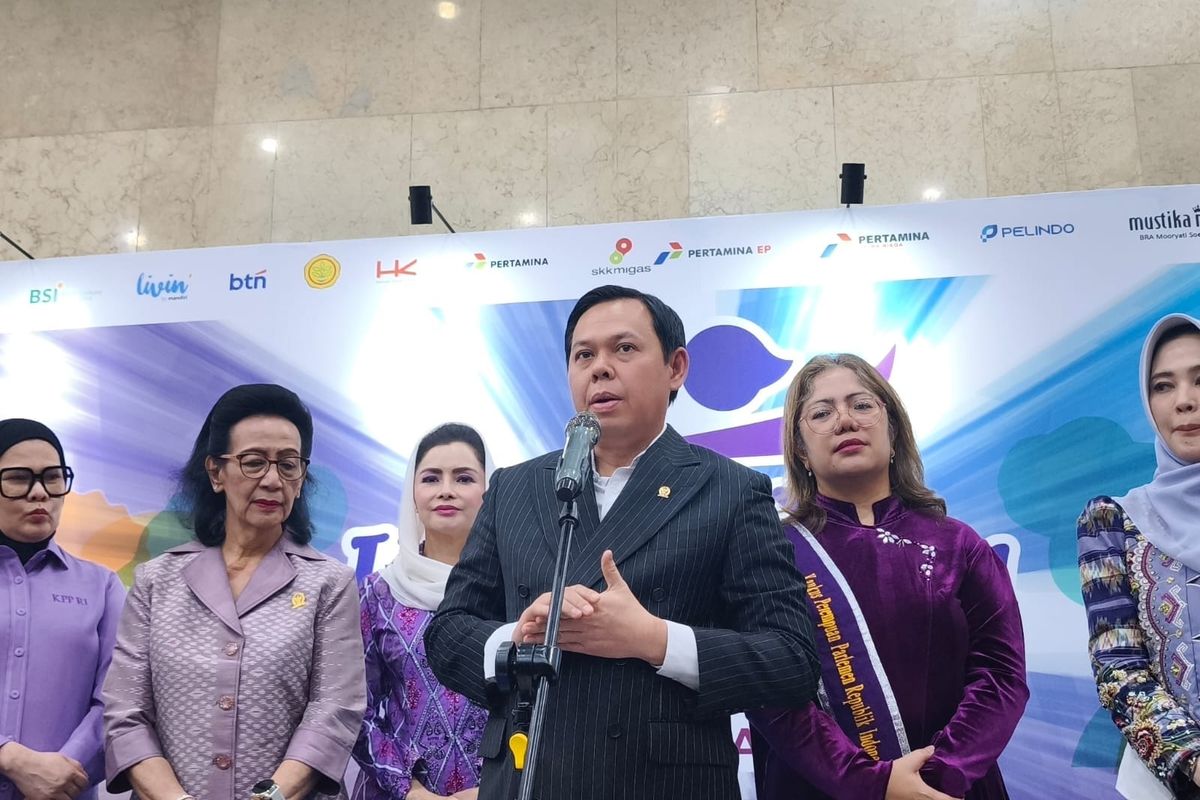
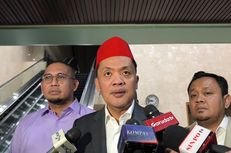
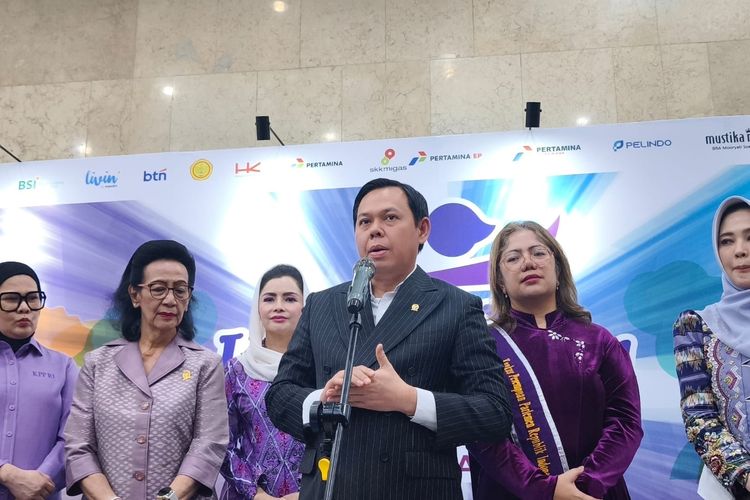
JAKARTA, KOMPAS.com - The Chairman of the Regional Representative Council (DPD) of the Republic of Indonesia, Sultan Najamudin, expressed openness to the possibility of using deliberative consensus in the election of the vice president to serve the remainder of the 2024-2029 term.
According to Sultan, the DPD will adhere to the mechanism agreed upon by all parties within the People's Consultative Assembly (MPR) of the Republic of Indonesia.
"We have heard proposals regarding the possibility of deliberative consensus. For us, if everyone agrees, then the DPD, as the largest faction in the MPR, will definitely participate," said Sultan at the Parliament Complex on Wednesday (25/11/2026).
He stated that deliberative consensus is one of the mechanisms aligned with the values upheld by the Indonesian nation, without disregarding democratic principles.
He also reminded that the principle of deliberative consensus is enshrined in the fourth principle of Pancasila.
"Isn't the fourth principle of Pancasila 'People's Democracy led by the wisdom of consensus in representative deliberation'? So it is possible. The principle is that the DPD will participate. The best will join in," he added.
However, he could not confirm whether the deliberative consensus mechanism would be chosen for the vice presidential election.
This is because discussions on the mechanism are still ongoing in the MPR through an ad hoc committee and verification team.
"I can't conclude too early because the team is currently working. So the mechanism in the MPR is being deliberated, there is a team, verification, and an ad hoc committee," he said.
Sultan believes that all parties involved in the discussion will consider various inputs, including from experts, to develop a mechanism deemed appropriate.
"I am confident that the friends there, both the ad hoc committee and the verification team, will gather inputs and certainly seek the most ideal, accommodating, and appropriate format for our nation," Sultan stated.
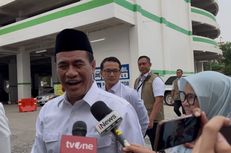
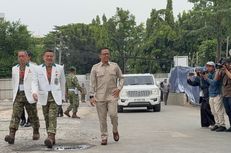
In this opportunity, Sultan assessed the two vice presidential candidates proposed by President Prabowo Subianto, namely Andi Amran Sulaiman and Sugiono, as having good track records.
He also mentioned that Amran and Sugiono possess integrity and maintain good relationships with the DPD RI as well as the regions.
"Both Mr. Amran and Mr. Sugiono have good track records, have proven integrity, and we know them well. They are also very friendly with the DPD RI institution and with the regions," Sultan revealed.
Sultan admitted it is too early to express support for any candidate as the selection mechanism in the MPR is not yet finalized.
He hopes that whoever is eventually elected as vice president can fully support the programs of President Prabowo.
"We hope that whoever will be elected, this vice president can truly support President Pak with all programs that need to be maximized within the approximately three years left. The most important thing is also to represent the regions," he concluded.
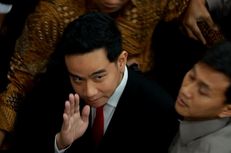
Previously reported, constitutional law expert Jimly Asshiddiqie suggested that the MPR prioritize deliberation in selecting the vice president to replace Gibran Rakabuming Raka.
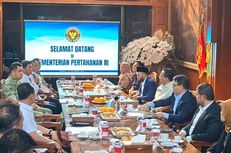
"I suggest just deliberation," said Jimly after a meeting with the Ad Hoc Committee for the Vice Presidential Election at the MPR RI on Wednesday.
Jimly proposed that the MPR leadership, together with political party representatives, should discuss to determine the selected vice president candidate.
He noted that deliberation could also involve President Prabowo to assess the most suitable companion for him.
"For example, represented by MPR leaders from all parties, discussing what is best. No need for voting. Just choose among these two. If necessary, deliberation should also be conducted with the president, so he can understand what is best, as generally, the factions in the MPR prefer this," Jimly explained.
However, the former Chief Justice of the Constitutional Court did not rule out the possibility of the MPR conducting a vote if deliberation did not yield consensus.
"But if consensus can't be reached, then it's alright to vote," Jimly said.