
Careers of Generals Involved in Prabowo Wiretap Case: 3 Officers Transferred
-
News
-
7 minutes ago
Writer
This article was translated by AI. Read the original article on Kompas.com. See Original
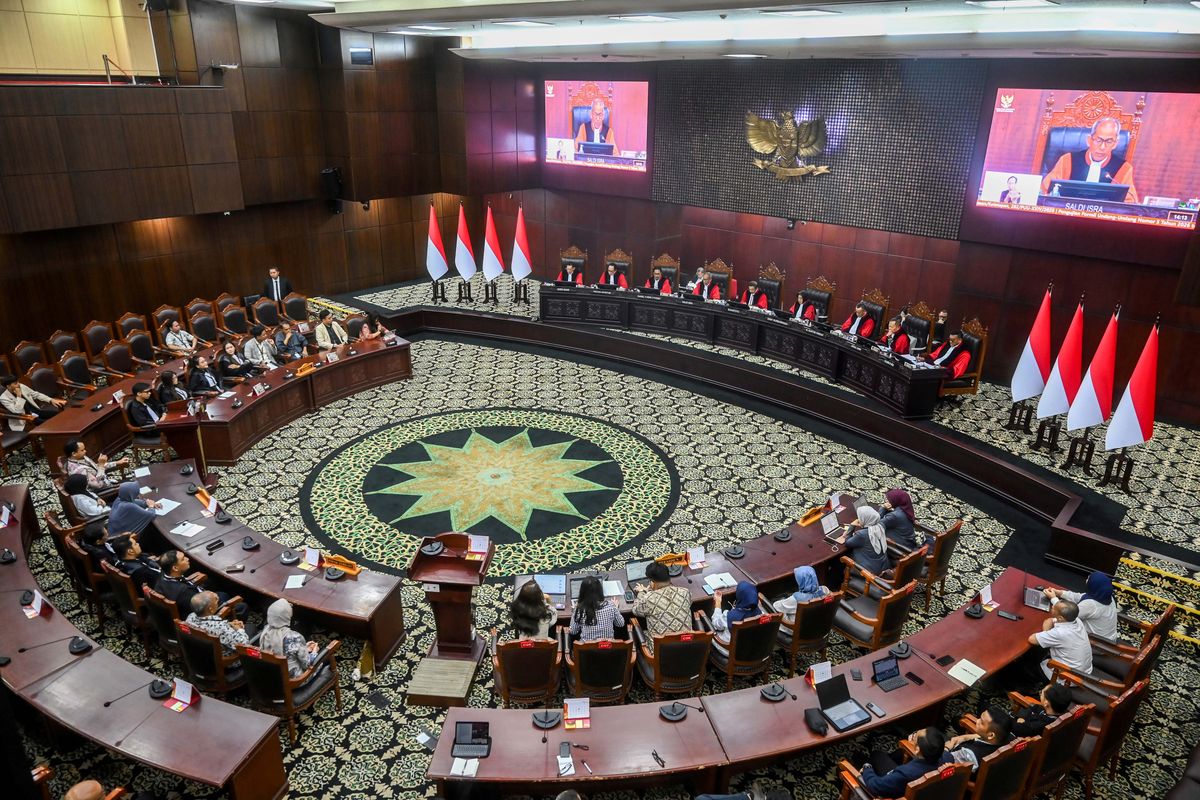
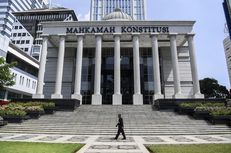
JAKARTA, KOMPAS.com - The Constitutional Court (MK) stated that the deliberation of Law Number 5 of 2026 concerning the National Police does not adhere to the legislative formation stages set forth in the Law on the Formation of Legislation (P3).
MK Justice Enny Nurbaningsih explained that the discussion on the Police Law does not comply with the stages outlined in the Law on the Formation of Legislation (P3).
"Based on the legal considerations outlined above, the Court concludes that the legislative process for Law 5/2026 a quo not only bypassed the harmonization stages at the DPR but also did not follow the stages for law formation," said Enny, reading the legal considerations from Decision Number 251/PUU-XXIV/2026 on Monday (23/11/2026).
"This also violates P3 and DPR Regulation 1/2020; therefore, it does not meet the principles of legislative formation outlined in the 1945 Constitution of the Republic of Indonesia, which serves as the reference for P3 and DPR Regulation 1/2020 a quo," she added.
One of the issues in the formation of the Police Law pertains to the decision of the 2024-2029 DPR to take over the draft of the Police Law from the 2019-2024 DPR to later establish it as a DPR initiative draft.
This takeover process has come under scrutiny as it did not go through the harmonization phase conducted by the Legislative Body (Baleg) of the DPR.
Harmonization is indeed one of the steps in the law formation procedure established by regulatory law.
MK emphasized that the authority of the plenary session as the highest decision-making forum in the DPR cannot be used as a reason to neglect the legislative stages outlined in the Law on the Formation of Legislation (P3).
Enny explained that while the plenary session does have the authority to establish a draft law (RUU) as a DPR initiative, this authority must still be exercised in accordance with legislative formation procedures.
"The plenary session's authority to set a bill as a DPR initiative is legitimate. However, that authority does not inherently justify bypassing stages that have been explicitly defined by the P3 Act," Enny noted as she referenced legal considerations.
Enny added that the DPR, as a legislative body, must also comply with the provisions of the P3 Law as it serves as a guide for every stage of the legislative process.
Furthermore, the MK rejected the argument claiming that the harmonization function has been substantively fulfilled through several discussion phases, such as drafting the inventory problems list (DIM), work meetings (raker), working committee (panja), drafting team (timus), and synchronization team (timsin).
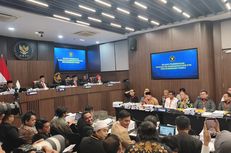
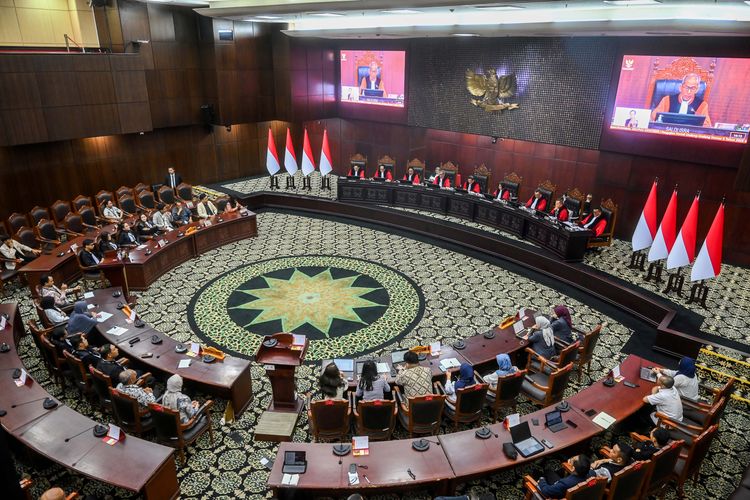
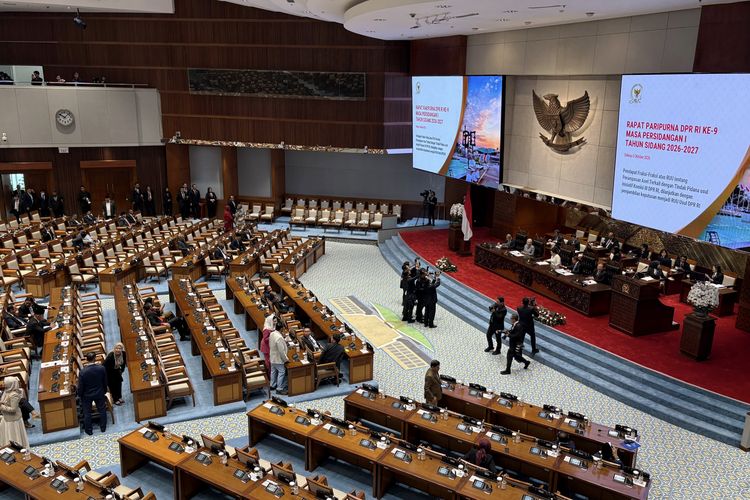 The atmosphere of the DPR RI Plenary Meeting with the agenda of ratifying the One Data Indonesia Bill and Labor Protection, Tuesday (6/10/2026).
In Decision Number 251/PUU-XXIV/2026, the MK partially granted the petition and declared the Police Law formally defective.
"The Court grants the request of Petitioner I in part," said MK Chief Suhartoyo while reading Decision Number 251/PUU-XXIV/2026.
The Court stated that the latest Police Law is procedurally flawed and must be corrected within one year from the reading of the decision.
The MK indicated that the Police Law remains in effect until corrections are made by the legislative body within the specified timeframe stated in the decision.
If the government and the DPR as the legislative body fail to make corrections within the one-year period, the rule that will be reinstated is Law Number 2 of 2002 concerning the National Police.
"The establishment of Law Number 5 of 2026 concerning the Third Amendment to Law Number 2 of 2002 concerning the National Police of the Republic of Indonesia is not in conflict with the 1945 Constitution of the Republic of Indonesia and remains legally binding conditionally as long as corrections are made within one year from the announcement of this decision," Suhartoyo stated.
It is known that the petition Number 251/PUU-XXIV/2026 was submitted by Zulfikar Putra Utama (Petitioner I) and Muhammad Ezra Suhaeri (Petitioner II).
They argued that the Police Law contradicts Law Number 13 of 2022 concerning the Formation of Legislation (P3).
In the formal review of the Police Law by the MK, they noted allegations that the revision of the Police Law was conducted while disregarding various principles and procedures for good legislative formation.
This includes principles of openness, effectiveness and efficiency, and meaningful public participation.
In their petition, Zulfikar and Ezra requested that the MK declare the Establishment of Law Number 5 of 2026 concerning the Third Amendment to Law Number 2 of 2002 concerning the National Police of the Republic of Indonesia does not meet the legislative formation requirements according to the 1945 Constitution of the Republic of Indonesia and that the Police Law is devoid of binding legal power. They also requested that the Court declare Law Number 2 of 2002 concerning the National Police of the Republic of Indonesia, as last amended by Law Number 6 of 2023 concerning the Establishment of Government Regulation in lieu of Law Number 2 of 2022 concerning Job Creation to again be in effect.