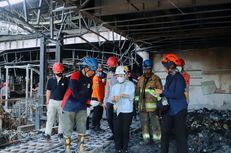
DPR Members Urge Police to Investigate Allegations of Negligence in Cikande Candy Factory Fire
-
News
-
1 minute ago
Writer
This article was translated by AI. Read the original article on Kompas.com. See Original

JAKARTA, KOMPAS.com - Constitutional law expert Feri Amsari believes that the proposal for three vice presidents would only lead to conflict and political disputes if implemented.
The conflict arises over who would lead the country if the president is incapacitated while there are three vice presidents.
“If the president is unable to serve, who becomes the next president? This would generate lengthy conflicts and political disputes,” Feri stated to Kompas.com.
He criticized the proposal for three vice presidents as merely a part of high-level political bargaining.
“Politicians are narrating things they do not understand, aiming solely to engage in high-level political bargaining that, in essence, does not affect the public,” Feri remarked.
On another note, he emphasized that the 1945 Constitution mandates that the president is assisted by only one vice president.
“The vice president serves merely as a substitute under certain conditions set out by the constitution. The constitution clearly states that the president is assisted by one vice president,” Feri added.
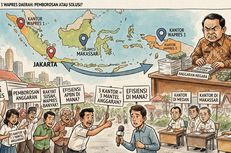
Previously, the Chairman of the Regional Representative Council (DPD) of Indonesia, Sultan Bachtiar Najamudin, proposed that Indonesia have three vice presidents.
In his proposal, the three vice presidents would ideally operate from three different regions in Indonesia: the western, central, and eastern areas.
“This has been our longstanding proposal, and I believe it is still relevant to discuss at a time when the nation is seeking a new vice president. Moving forward, we want these vice presidents to have offices in Papua, Kalimantan, and Sumatra,” Sultan stated in his remarks.
Sultan explained that each region in Indonesia has unique characteristics and needs. Therefore, he argued that national leadership design should consider regional aspects and political justice.
“Indonesia is a vast archipelagic nation geographically and is certainly complex from a sociological perspective. Each region, whether it be the West, Central, or East of Indonesia, has different character needs and challenges,” Sultan added.