

Experts Assess Proposal for 3 Vice Presidents Will Only Cause Conflict and Political Disputes
-
News
-
Just now
This article was translated by AI. Read the original article on Kompas.com. See Original
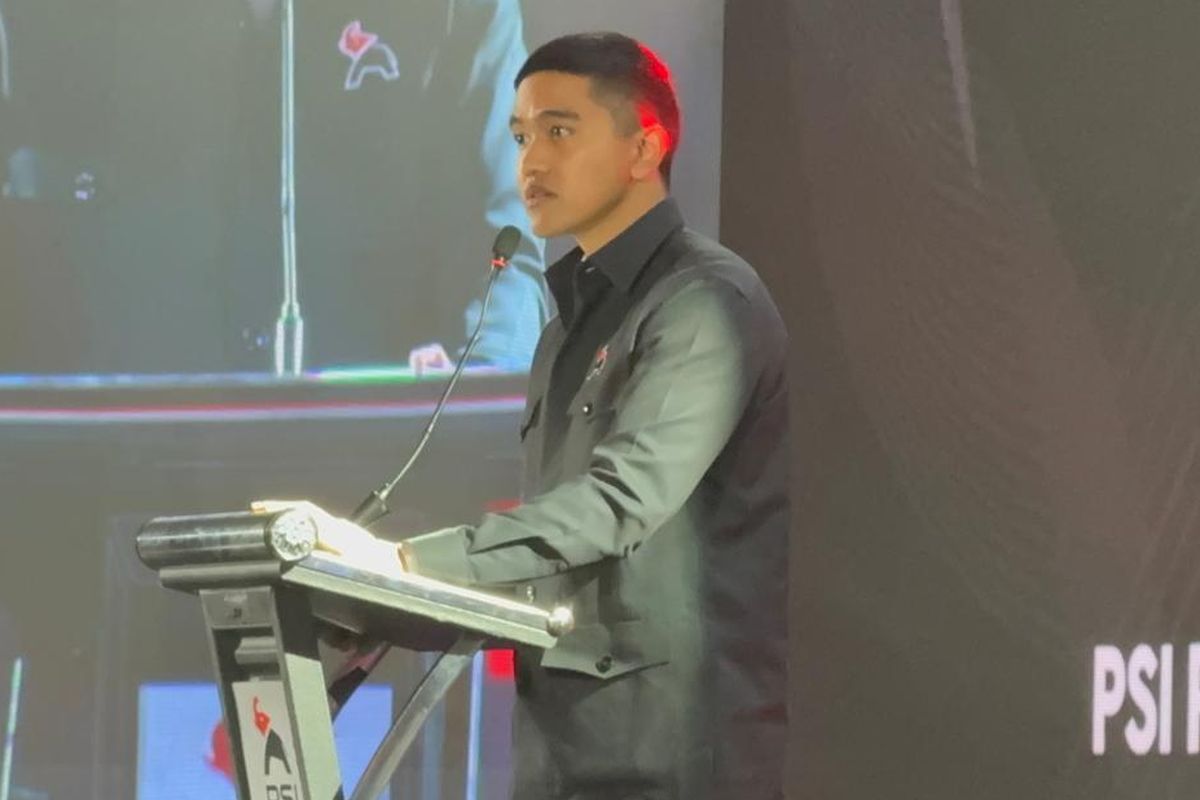
JAKARTA, KOMPAS.com - The Indonesian Solidarity Party (PSI) has chosen to continue supporting President Prabowo Subianto's administration following the resignation of Gibran Rakabuming Raka, the eldest son of President Joko Widodo, from the Vice Presidency.
This decision comes even after some of its members held government positions, recently opting to step back. So, why is PSI sticking around?
Political communication expert at Esa Unggul University, Jamiluddin Ritonga, noted that remaining supportive of the government is more advantageous for PSI amidst the various dynamics shaking the party symbolized by an elephant.
He argued that the party, led by Jokowi's youngest son Kaesang Pangarep, lacks the strength to become a credible opposition.
Moreover, PSI is a non-parliamentary party still fighting to increase its vote share to surpass the 4 percent parliamentary threshold.
“As I mentioned, they do not want to show confrontation with the government, in this case, Prabowo. Because if they display that, they will face difficulties themselves,” Jamiluddin told Kompas.com on Friday (20/11/2026).
Meanwhile, political analyst and Executive Director of the Indonesian Survey Institute (LSI), Djayadi Hanan, explained that there are consequences of political pressure if political parties take a clear opposition stance—even though the electoral incentives for being in opposition are currently quite high.
This political pressure makes it difficult for the party to maximize its consolidation efforts ahead of the presidential elections.
Djayadi stated there is no reason for PSI to drum up a war cry when their electoral support continues to strengthen, even without taking an aggressive opposition stance.
“Therefore, the choice for PSI is more beneficial to remain in government, even as they can be more critical, especially towards popular programs or policies experiencing governance and implementation issues, like the MBG and KDMP,” he emphasized.
However, Jamiluddin believes that this commitment does not mean PSI has only one approach.
PSI continues to prepare a “backstage” while displaying its “front stage” in front of the powers that be.
He acknowledged that politics often involves a certain level of dramatics.
“The front stage of PSI indeed states they are still with Prabowo. This means they won’t be exiting the coalition. So they continue to support the President. That’s the front stage. The back stage is something we’re still unsure about,” Jamiluddin explained.
In one scenario, PSI will show its commitment to continue supporting the government.
Yet in another scenario, the party will keep strategizing for consolidation ahead of the 2029 elections.
This isn’t without reason. PSI is currently in a tough position.
A declaration to diverge from President Prabowo Subianto would be too risky—and could potentially weaken the party’s base.
“That would certainly weaken them. As PSI doesn’t have representation in parliament. If they position themselves on the front stage as if they are an opposition party, who would want to listen to PSI if they are not in parliament?” Jamiluddin stated.
“But on the back stage, I’m confident they will continue to consolidate to strengthen their position, so that come 2029, in both legislative and presidential elections, they will have greater political strength,” he added.
Jamiluddin views the declaration of support for the government as one way PSI can persuade parliamentary parties, most of which are aligned with the government coalition, not to raise the parliamentary threshold.
This is because parties have recently begun voicing support for raising the threshold to 5 percent.
At the time the threshold was set at 4 percent, PSI could only garner around 2.8 percent of the votes in the 2024 Legislative Elections.
“Non-parliamentary parties need to negotiate to keep the parliamentary threshold from rising to 5 percent. Because if it does reach 5 percent, I’m confident non-parliamentary parties, including PSI, won’t achieve it. If this happens, it will further weaken PSI's future position,” he elaborated.
Furthermore, PSI realizes that the figure of Jokowi, often considered a mentor to the party, is not sufficiently strong to draw voters.
According to Jamiluddin, Jokowi has lost much of his voter base since stepping down as President.
Meanwhile, PSI is working to ensure they do not rely solely on Jokowi as their party's draw.
“I see a tendency for their operation to be a one-man show. If it’s a one-man show in politics, particularly in party structure, it isn't enough to boost electability. The party's efforts need to be a team approach from the central DPP down to the branches at the sub-district level. There needs to be a strong and solid unity,” he said.
If this strategy persists, PSI might “wither” before it can grow.
“PSI could eventually end up like other non-parliamentary parties, wilting before it has a chance to thrive. So to counter this, PSI is striving to remain cooperative with the government,” he concluded.
In agreement, the Executive Director of Parameter Politik Indonesia, Adi Prayitno, noted that PSI’s support for the government is now merely superficial.
This support doesn’t carry the same weight as during Prabowo’s earlier leadership when the party was fully behind him.
“Essentially, they’re supporting the government in a lackluster way, as a symbol that PSI is still on Prabowo's side,” Adi explained.
A lecturer at Syarif Hidayatullah State Islamic University, he also believes PSI will not put in a strong defense of the current government, a position influenced by recent political events.
Two of those events involve the resignations of three party members still serving as ministers and vice ministers, alongside Gibran’s departure.
“Because PSI also has no reason to adamantly support the government, especially given the strained relationship between Prabowo and Jokowi, compounded by Gibran’s exit. However, at the same time, PSI does not want to take an opposition stance, thus their coalition with Prabowo is quite minimal,” he remarked.
For Djayadi, PSI has a strong need to maintain good relations between Jokowi and Prabowo.
This is due to the party's close ties with Jokowi, who has even conducted political tours to various regions to bolster the party's profile.
Not to mention Jokowi’s involvement since the start as a member of the Prabowo-Gibran coalition in the 2024 presidential elections.
“Therefore, there is a need to ensure a good relationship between Prabowo and Jokowi, at least at a personal level,” he elaborated.
This move is also grounded in the party's calculation of the necessity for national political consolidation to qualify as a participant in the 2029 elections.
Consolidating the party will be far easier if they are part of a large government coalition, minimizing the presence of political actors who could obstruct consolidation efforts.
“Thus, up until now, PSI still chooses not to exit Prabowo's government coalition because of rational considerations to maintain relations between Jokowi and Prabowo and to preserve PSI’s chances for political consolidation leading up to the 2029 elections,” Djayadi concluded.
This support statement was made by Grace Natalie, the Secretary of the Advisory Council of the Indonesian Solidarity Party (PSI).
Grace stated that they will support Prabowo's policies that prioritize the people's interests. However, when asked if PSI's support for Prabowo would extend until 2029, Grace did not respond.
“PSI continues to support government policies, especially those that advocate for the public’s interests,” Grace emphasized.