
Cipete Command Post and a State Within a State
-
News
-
26 minutes ago
This article was translated by AI. Read the original article on Kompas.com. See Original
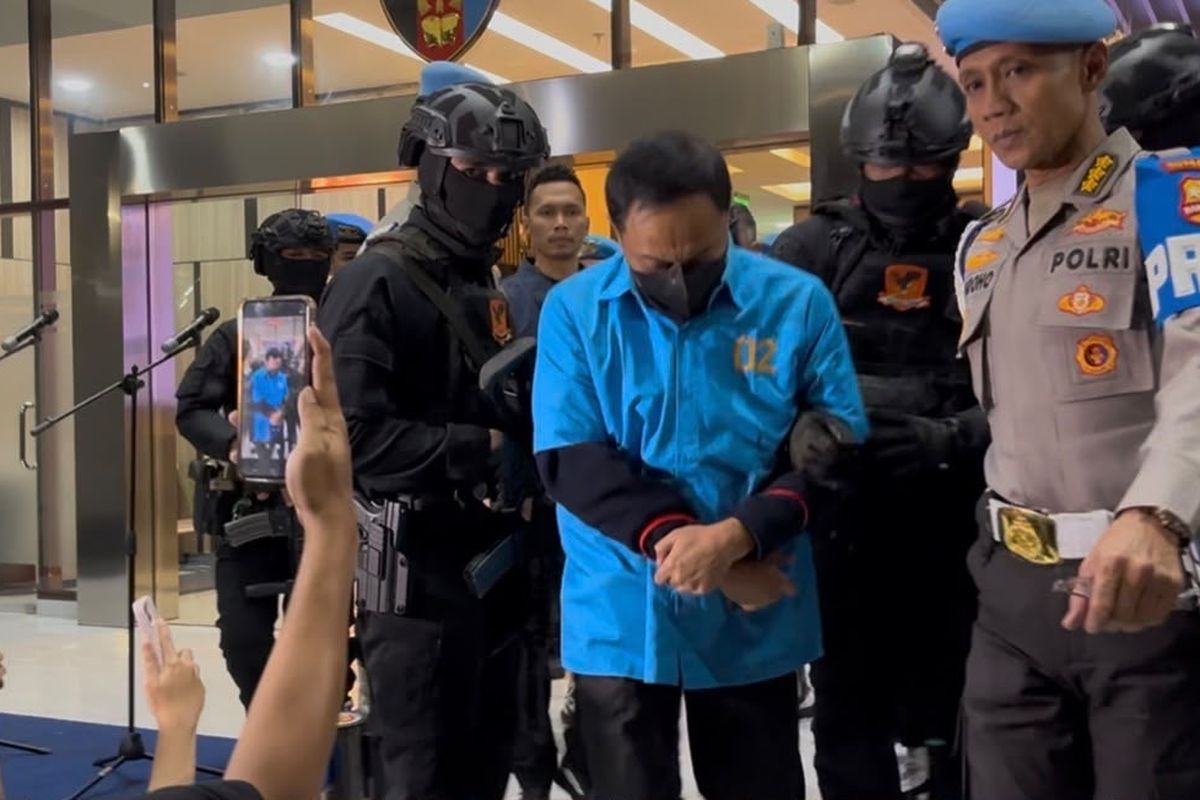
TUESDAY night, November 17, 2026, a house on Jalan Saidi II, Cipete Utara, South Jakarta suddenly transformed into a crime scene.
Investigators from the Criminal Investigation Department (Bareskrim) of the Indonesian National Police arrived, searched the premises, and conducted a crime scene investigation.
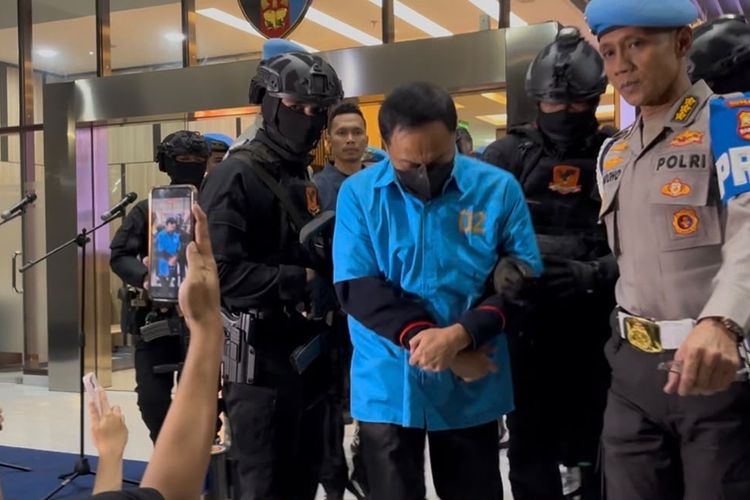
A house that appeared to neighbors as an ordinary residence was reportedly used by Inspector General Eko Hadi Santoso as a command post, according to investigators.
The police also stated that there were several other command posts being examined as part of the evidence collection for an alleged coup d'état.
The public was taken aback, and such surprise is understandable. For the previous two weeks, this case had been discussed as a wiretapping scandal, an act typically envisioned occurring in server rooms and on computer screens.
The term “command post” changes that imagery. It suggests people gathering, meetings being held, duties being assigned, and plans being formulated.
If the investigator's suspicions are proven true, we are not dealing merely with the missteps of an officer but rather an organized and deliberate operation.
What was actually being done at that house has not been officially disclosed. Bareskrim has not detailed the evidence confiscated.
Preliminary suspicions circulating claim that the house was used as a base for illegal wiretapping of President Prabowo Subianto’s phone number and several other targets.
This suspicion aligns with the decision from the police ethics council stating that Eko Hadi conspired to conduct wiretapping using police technology and sanctioned his dismissal without honor, a decision currently under appeal.
Additionally, there are wilder rumors circulating, including one about state wiretapping equipment valued at around IDR 1 trillion being transferred to various generals' residences, as well as allegations of financial flows from online gambling, drugs, and illegal mining.
This last rumor has not been confirmed by the police and should be treated as speculation.
Ernst Fraenkel in The Dual State (1941) distinguished two faces of a state that can coexist.
There is the normative state that operates according to the law, procedures, and clear authorities. There is also the prerogative state that operates according to the will of a handful of power holders, using state apparatus but bypassing its rules.
The frightening aspect of the prerogative state is not the absence of bureaucracy, but rather the presence of well-structured bureaucracy that is directed toward purposes that have never been sanctioned.
This case showcases both faces. According to statements from National Police Chief General Pol Suyudi Ario Seto in the DPR, orders for wiretapping allegedly came from Listyo Sigit Prabowo through Slamet Uliandi to Eko Hadi and Ahrie Sonta, with results reported back hierarchically (Kompas.id, 13/11/2026).
There is a command chain, there are operators, there are reports. The one thing missing is the legal basis, as the wiretapping was conducted without adhering to Perkap Number 5 of 2010.
The targets were not criminals, but rather the President, several ministers, political figures, and the media (Kompas.com, 5/11/2026).
This is where the public has the right to know. The tools used were purchased with tax money, the operators are paid by the state, and their authority is borrowed from the law.
When all these state facilities operate within the state but not for the state, the issue ceases to be simply an internal police matter. It becomes a matter for the republic.
Guillermo O’Donnell referred to the mechanism that should prevent such occurrences as horizontal accountability, which is the ability of state institutions to oversee one another.
The alleged wiretapping that purportedly took place from 2025 to 2026 without detection indicates that this mechanism is paralyzed.
It is no surprise that Mahfud MD referred to it in the podcast Terus Terang as potentially the largest crime in the history of the police, then asked, “What is the purpose of wiretapping the president if not to incite a coup?”
This rhetorical question represents the anxiety of many, although legally the police chief reminded that wiretapping does not automatically equate to conspiracy.
The tension between public anxiety and investigator caution creates a vacuum.
There is no suspect yet for the conspiracy charge, even though a notice of the start of the investigation has been sent to the prosecutor's office.
Government officials have occasionally spoken differently. Such vacuums are quickly filled with rumors, and rumors move much faster than press conferences.
The first possibility is that the case halts at the criminal charges of wiretapping, illegal access, and electronic data deletion, along with ethical sanctions for the generals involved.
Four suspects are tried, with Listyo positioned as both the orderer and end user, and the case is declared closed.
This scenario is the easiest to prove procedurally. However, as ISESS observer Bambang Rukminto reminded, it defies public logic that such a significant case would only involve four individuals.
The questions of why and for whom the wiretapping was conducted will linger.
The second possibility is that the case escalates to conspiracy and collusion. The door in that direction has already opened because the investigation is ongoing and case presentations involve Kompolnas and experts.
At this point, the command posts become key. Wiretapping alone is not sufficient to prove conspiracy. What is needed are intentions and steps to incapacitate or overthrow the legitimate government, such as planning documents, communication patterns, or financing routes.
If evidence from Cipete and other locations contains such elements, the conspiracy charge will strengthen. If not, then the claims of conspiracy risk becoming a political burden too heavy to bear in court.
The third possibility is the most definitive yet precarious. The case could expand to include parties outside the police who are thought to benefit from the wiretapping or diminish due to political compromise.
Various speculations about specific political groups have circulated, but none have yet been supported by publicly announced evidence.
The risk lies in everything unfolding while the republic is in the process of filling the vice-presidency left vacant by Gibran Rakabuming Raka.
In a politically negotiable atmosphere, the temptation to use legal issues as leverage or barter is too great to overlook.
Thus, President Prabowo Subianto's government needs to speak with one voice, providing periodic updates on the case without disclosing confidential material, and allowing for external oversight from outside the police.
Most importantly, the distance between the legal process and the political maneuvering for the vice-presidency must be tightly maintained so that law enforcement is not perceived as a cleaning operation against opponents.
The house in Cipete is now guarded by authorities and marked with police tape. However, what is being examined is not just the house, but the willingness of the state to open itself up.
If the prerogative state can grow silently within the legal state, who guarantees that it is not also growing in other unsearched rooms?