Megawati Reveals Her Array of Academic Titles: 3 Professors and 11 Honorary Doctorates
-
News
-
2 minutes ago
This article was translated by AI. Read the original article on Kompas.com. See Original

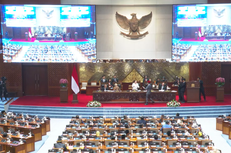
JAKARTA, KOMPAS.com - The House of Representatives Commission I has proposed that the Draft Law (RUU) on Artificial Intelligence (AI) be included in the Medium-Term National Legislation Program (Prolegnas).
Following this, user protection or societal safety has become an inseparable mechanism from the proposed law.
So, what forms of protection should be integrated into this new regulation?
Digital economy expert and Executive Director of ICT Institute Heru Sutadi emphasized that the bill must regulate limits on this form of artificial reasoning.
Humans should be placed at the center of AI governance as a form of protection.
"Protection must place humans at the center of AI governance," Heru told Kompas.com on Thursday (November 19, 2026).
Heru explained that protection also includes the right to know.
Citizens, he noted, have the right to know when interacting with AI.
They should also receive explanations for significant automated decisions, as well as mechanisms for objection and recovery if harmed.
Additionally, a personal data protection mechanism is essential.
"Personal data must be safeguarded, while deepfake, identity manipulation, and exploitation of vulnerable groups should be firmly addressed. AI developers and operators must also be accountable for systemic risks," Heru stated.
Cybersecurity expert from Vaksincom, Alfons Tanujaya, echoed these sentiments, stating there are at least three fundamental rights and protections for users outlined in the bill.
First, the right to know, meaning the public must be informed when interacting with AI, as opposed to a human.
This includes when individuals use call center services or are evaluated by algorithms.
Second, the right to intervene.