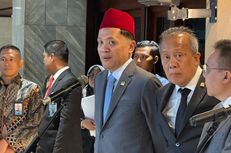

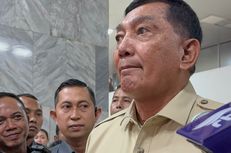
Refuting Discussions on Vice Presidential Candidates, Minister Sjafrie Explains Meeting with Sufmi Dasco at the House
-
News
-
3 minutes ago
This article was translated by AI. Read the original article on Kompas.com. See Original
JAKARTA, KOMPAS.com - The government's spending should effectively address the needs of the public, especially during disasters, when individuals struggle to access education or require assistance to meet their daily needs.
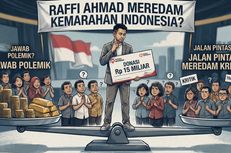
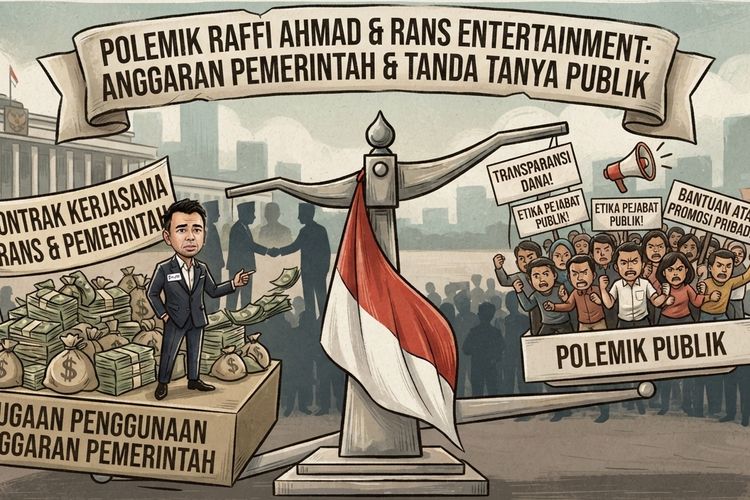
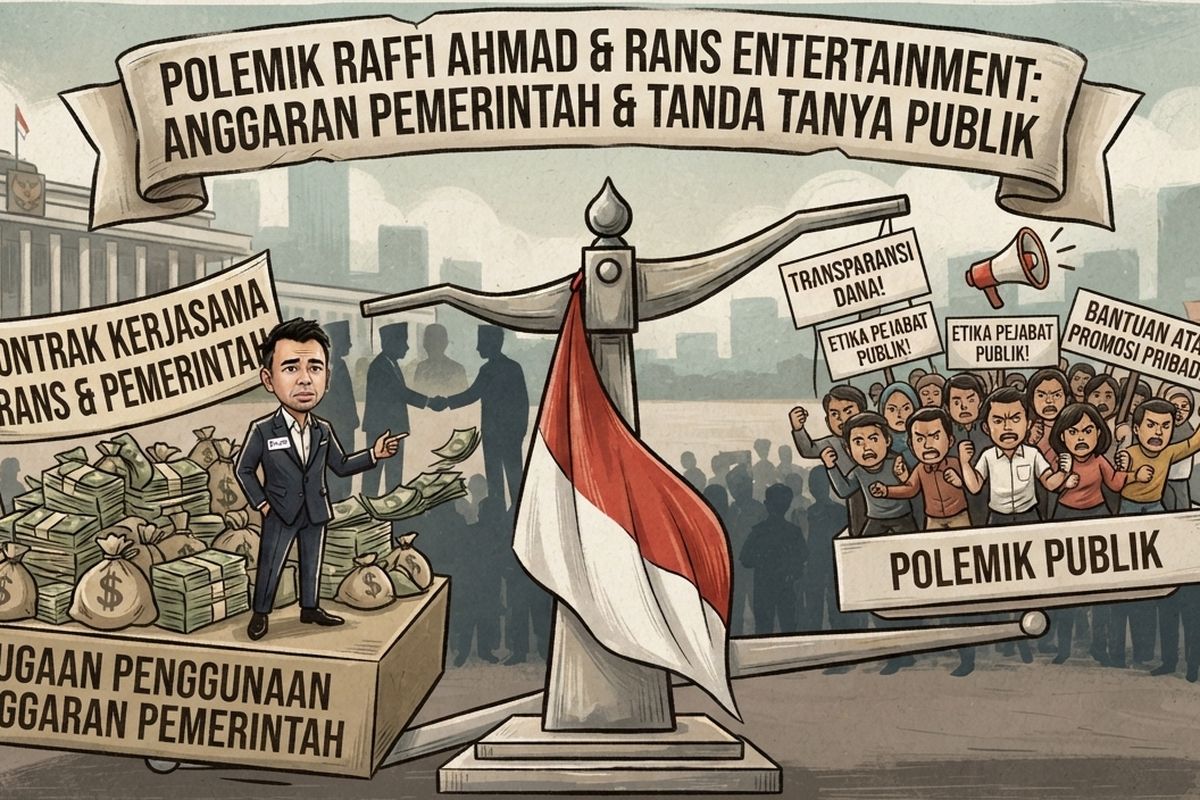
However, the controversy surrounding the partnership between Raffi Ahmad's company and several ministries that utilizes state funds raises a crucial question: Is the government prioritizing its spending correctly?
Amid scrutiny of the Rp 14.69 billion deal, Raffi promised to allocate Rp 15 billion in aid for disaster victims in Aceh.
This move has captured public attention.
Nonetheless, the broader issue remains: how can public officials ensure that every rupiah of state funds is spent according to the public’s needs?
So, how can the government become more sensitive in drafting budgets and determining priority programs?
Agustinus Subarsono, a lecturer in the Department of Management and Public Policy at Gadjah Mada University (UGM), argues that there are still issues regarding social sensitivity among public officials when preparing budgets.
He suggests that public officials sometimes show greater sensitivity to political interests rather than the social conditions of the community.
For instance, during the forest and land fires (karhutla) in Kalimantan, many schools were forced to conduct remote learning.
In such circumstances, Agustinus believes the Ministry of Education should have considered allocating funds to support students and schools' needs for internet access or mobile data.
However, these needs were overlooked.
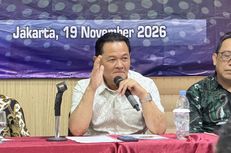
"Currently, I observe a lack of sensitivity among public officials towards community conditions in budget formulation, especially during disasters and urgent public needs," Agustinus told Kompas.com on Thursday (19/11/2026).
"I see a contrasting phenomenon; public officials exhibit a higher political sensitivity than social sensitivity," he added.
According to Agustinus, the controversy surrounding Raffi Ahmad's company and the ministries utilizing the state budget should serve as a lesson for public officials and bureaucrats in budget management.
He emphasized the importance of transparency in government procurement management.
The procurement process must comply with existing regulations, including Presidential Regulation No. 16 of 2018, as amended by Presidential Regulation No. 12 of 2021 and Presidential Regulation No. 46 of 2025.
In addition, there are implementing regulations such as Regulation of the Government Procurement Policy Agency (LKPP) No. 2 of 2025 regarding Guidelines for Government Goods/Services Procurement Through Direct Appointment for government priority programs, governmental aid and/or presidential assistance based on presidential directives.
With these regulations, Agustinus argues, every procurement must have a justifiable basis and process.
Agustinus states that one way to ensure ministries and agencies are more meticulous in determining spending priorities is by making budget information available to the public.
Transparency is essential so the public can understand how budget allocations are made and which programs are funded with state money.
With such openness, the public has the opportunity to monitor and provide input on government spending policies.
"In my view, to ensure that ministries/agencies are more prudent in determining spending priorities, so that state budgets are genuinely directed towards programs that have a direct impact on the community, budget transparency with accessible allocation information is key," Agustinus asserts.
He believes public oversight is crucial so that budget policies don't just cater to governmental needs but also pay attention to groups in society that deserve greater focus.
Agustinus specifically highlights poor communities, marginalized groups, and residents living in underdeveloped, frontier, and outer (3T) areas.
He argues that state budgets should be directed to promote social justice for all Indonesians.
Consequently, budget information must not merely be an administrative obligation.
The government should also create space for the public to voice needs and monitor program implementation.
Aside from prioritization issues, the controversy surrounding the partnership with Raffi Ahmad’s company also relates to how the government communicates programs to the public.
Political communication expert at UGM and Executive Director of Indonesian Presidential Studies, Nyarwi Ahmad, believes the government needs to improve its public communication strategy amidst the changing landscape of digital media and social networks.
He notes that using influencers has often been a shortcut for state institutions that have yet to fully adapt to the evolving digital platform landscape.
Instead, the government should be more selective in deciding whom to collaborate with to communicate policies and programs to the public.
"The solution is to develop, hire, or collaborate with the right public communicators. Relying on influencers due to government ineptitude is merely a shortcut," Nyarwi said.
He emphasizes that popularity and follower counts on social media should not be the sole considerations when selecting someone as a government communication partner.
The aspects of quality, integrity, ethics, competencies, and educational background should also be taken into account.
This is because the individuals disseminating information about government programs have responsibilities toward the public.
The messages conveyed should not only reach wide audiences but also be accountable.
"These influencers may not realize their role as public communicators and may lack necessary skills, that is the quality, integrity, and ethics, as well as their educational background," he explained.
Nyarwi further pointed out that collaborating with influencers without proper vetting could also harm the government if the partnered figure faces reputational issues.
Moreover, the partnership costs are sourced from public taxes.
"If an influencer’s reputation is threatened or damaged, the government ends up bearing the costs with the intended objectives unmet," Nyarwi stated.
"After all, those costs are funded by the public’s taxes," he added.
Therefore, he believes the government needs to build the capacity of public communicators within institutions while also improving the standards for selecting external partners.