Police Seize Rp 150 Billion in Assets from Muzammil's Drug Trafficking Network
-
News
-
1 minute ago
This article was translated by AI. Read the original article on Kompas.com. See Original
JAKARTA, KOMPAS.com - Zaenur Rohman, a researcher at the Anti-Corruption Study Center of Gadjah Mada University (Pukat UGM), stated that the authority of the Corruption Eradication Commission (KPK) is not mentioned in the draft of the Asset Seizure Bill (RUU) that will be ratified by the House of Representatives (DPR) today.
“I find it most problematic that the KPK is not mentioned at all in this bill,” Zaenur said when contacted by Kompas.com on Thursday (19/11/2026).
Zaenur explained that the asset seizure proposed in the bill would be carried out by prosecutors.
He questioned how the anti-corruption agency would carry out asset seizures under this bill.
“What if the initial case originates from the KPK, for example, then it must be handed over to the prosecutor’s office. This shows that the bill is not serious. Even the KPK is not mentioned in terms of authority. So if the KPK is not mentioned as having authority, then it seems that the KPK has no authority at all,” he stated.
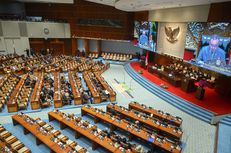
The DPR and the government have agreed that the bill concerning the Seizure of Assets Related to Corruption and Other Crimes will be brought to the nearest DPR Plenary Meeting for ratification into law today.
Chairman of Commission III of the DPR, Habiburokhman, stated that there are 10 main points included in the Asset Seizure Bill, ranging from ensuring that the bill protects human rights to defining the scope of the bill.
The scope of the bill extends from criminal fraud to trafficking. The bill also regulates the division of responsibilities in asset seizure enforcement, protection for good-faith parties, the return of assets to victims, oversight mechanisms, prevention of abuse of authority, and the application of technology.
Here are several key topics discussed in the Asset Seizure Bill:
1. Title, principles, and legal foundations advanced in asset seizure to ensure effectiveness, proportionality, accountability, and protection of human rights.
2. Scope of crimes, types, values, and criteria for asset seizure, including crimes of fraud or embezzlement that utilize information technology and impact large segments of society, such as Ponzi schemes, trafficking, and bogus stocks affecting numerous victims awaiting justice.
3. Affirmation that criminal penalties remain applicable to perpetrators of corruption and other crimes, including the death penalty as stipulated in legislation.
4. Regulations regarding a clear division of authority in asset seizure proceedings without criminal charges, starting from tracing, transaction stoppage, blocking, seizure, application submissions, court examinations, court decisions, to enforcement of decisions.
5. Guarantees of protection for third parties acting in good faith while ensuring a sufficient burden of proof and opportunity.
6. Guarantees of optimal efforts in returning assets to direct victims of crimes and their utilization for the public good.
7. Duties and powers regarding the management of assets related to crimes carried out by competent bodies for professional and accountable asset management, ranging from storage, security, maintenance, utilization, sale, to return or release.
8. Oversight of the implementation of asset seizure mechanisms and asset management by independent bodies.
9. Prevention of abuse of power to ensure that asset seizure is not solely used as a tool for law enforcement authority to misuse their powers.
10. Utilization of technology and information systems through asset management systems that prioritize transparency and accountability.