

Tomorrow, Polri to Present Case on Alleged Treason by Listyo Sigit and Others
-
News
-
7 minutes ago
This article was translated by AI. Read the original article on Kompas.com. See Original
SEOLAH has become an inevitability in politics when ruling elites make symbolic statements in public spaces—often conveying meanings that are never truly singular.
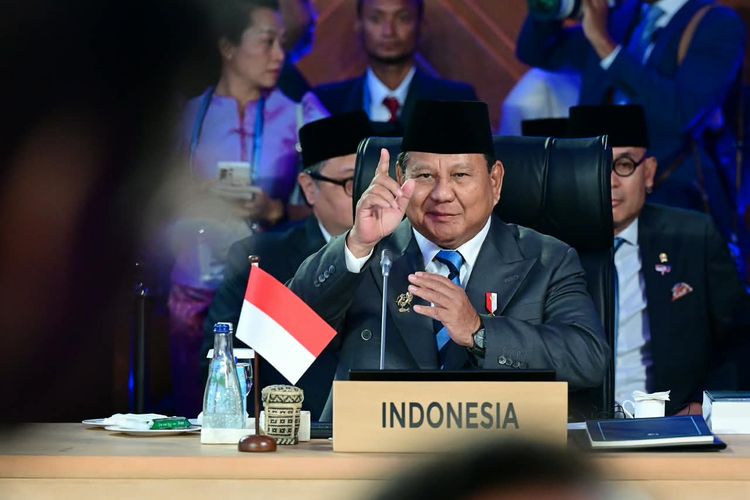
From that perspective, we must analyze and interpret the actual "political meaning" behind President Prabowo Subianto's remarks on "betrayal" that stirred the national political scene. To whom is this political message really directed?
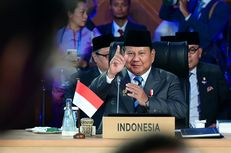
During the pinnacle event celebrating the 15th anniversary of the NasDem Party in Jakarta on Wednesday evening (11/11/2026), President Prabowo shared lessons learned from reading historical texts.
The history of human civilization is frequently accompanied by various forms of betrayal tragedies.
The primary cause that often triggers betrayal in many political power stories— as emphasized by President Prabowo—always rests on the same factor: an overwhelming temptation for power.
To strengthen his statement, the President quoted a well-known adage from prominent English historian and politician, Lord Acton—regarding the corrupting nature of power.
“Power tends to corrupt; absolute power corrupts absolutely” (Antara, 11/11/2026).
President Prabowo's sudden focus on the issue of betrayal is certainly not without context, nor is it merely coincidental.
As Franklin D. Roosevelt, former President of the United States, once said, “Nothing happens by accident in politics. If it happens, you can bet it was planned that way.”
Thus, the term betrayal appears to have been deliberately chosen by the President to reflect the prevailing emotional climate in political circles.
In light of the illegal wiretapping scandal targeting him—President Prabowo seems engulfed in a surge of indignation that has clearly surpassed boiling point.
Moreover, strong suspicions indicate that the President has become the primary target in this illegal wiretapping scandal.
Tragically, the wiretapping was allegedly conducted by his aide, General Pol Listyo Sigit Prabowo, the former Police Chief whom he had recently appointed as Chief of Staff.
Furthermore, this wiretapping is suspected to carry potential implications for efforts to “overthrow” the legitimate government.
Because it was expressed in a political forum, particularly before the top political party leaders in the Indonesia Maju (KIM) Plus Cabinet—the phrase “betrayal” carries a strong political message.
President Prabowo seems intent on underscoring the importance of “loyalty” in politics to these political party leaders.
His message is clear: loyalty should not be “divided,” especially in politics. Therefore, when the illegal wiretapping scandal emerged, heavily politicized motives were suspected—leading to potential betrayal involving political elites, including those sitting in the government cabinet.
The prevailing impression suggests that cabinet members—especially those associated with former President Jokowi—are not wholly loyal to Prabowo.