

Police Treat Detainees to a Meal at Restaurant, IPW: Where's the Funding Coming From?
-
News
-
1 minute ago
This article was translated by AI. Read the original article on Kompas.com. See Original
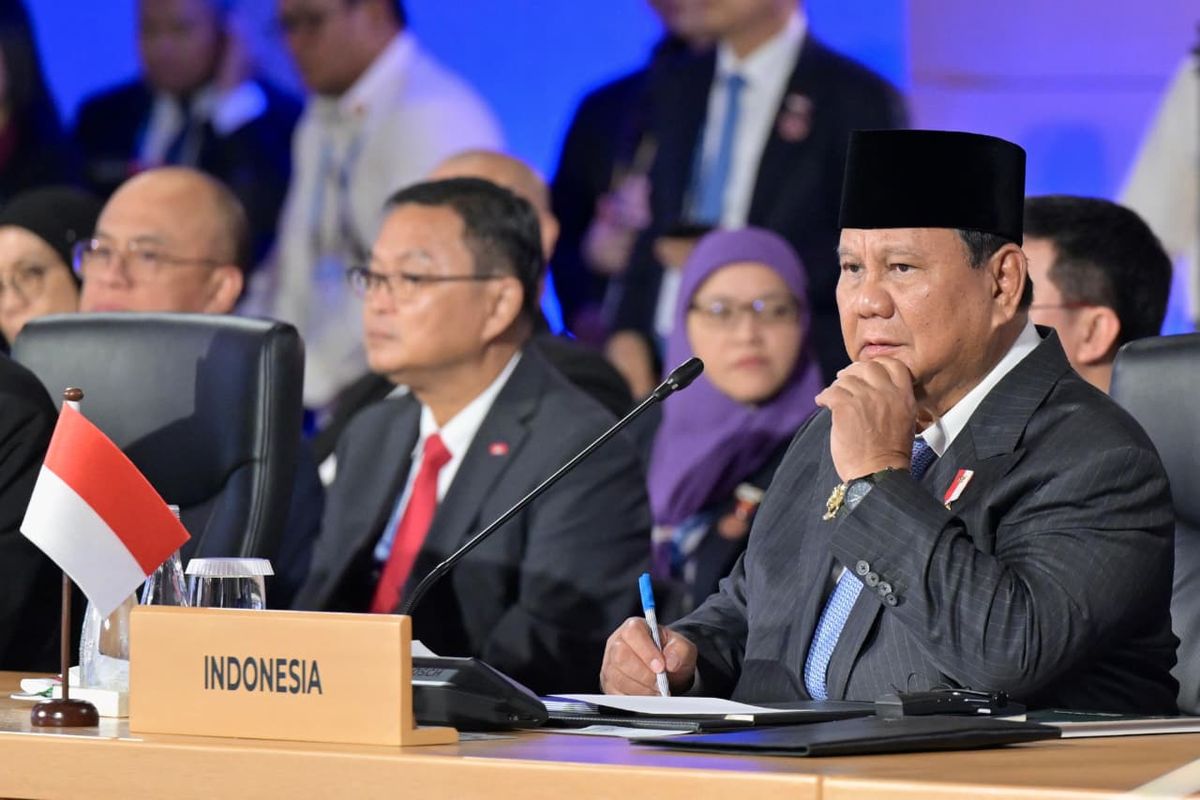
TRANSITION The change of Vice President should create space for regional perspectives in national leadership and serve as a moment to reevaluate the relationship between central and regional governments.
The selection process for the vice-presidential candidate to replace Gibran Rakabuming Raka reveals an intriguing trend.
Most names being discussed in national political conversations typically come from elite circles of political parties, parliaments, and governments.
This phenomenon can be understood, as political parties have been the main source for recruiting national leadership.
However, amidst this dynamic, a pertinent question arises: why is the potential for a vice-presidential candidate from the Regional Representatives Council (DPD) not taken more seriously in public discourse?
This question is not meant to pit the DPD against the DPR, nor to diminish the role of political parties in democracy. It is an invitation to broaden our perspective.
Indonesia is not only a nation built through political party representation, but also an archipelago that features diverse regions, social characteristics, economic potentials, and developmental challenges that are not always the same.
In this context, the idea of a vice-presidential candidate from the DPD deserves to be discussed as an alternative thought on national leadership.
This is not because the position should belong to a specific institution, but because regional issues require a stronger voice in the central government agenda.
The DPD is a significant product of constitutional reform. This body was established to ensure the representation of regional interests within Indonesia's political system.
Unlike the DPR, which represents political interests through parties, DPD members are elected individually from each province.
In the 2024–2029 period, there are 152 DPD members representing 38 provinces, with four from each.
The presence of the DPD reflects the idea that regional interests cannot always be fully represented by the political party configuration.
There are issues that transcend ideological lines and electoral interests, such as developmental inequalities, power distribution, fiscal relations, management of natural resources, and the protection of regional characteristics.
The question is whether this regional representation has adequate space within strategic national decision-making processes?
This inquiry becomes even more relevant when we observe that the majority of government agendas, from infrastructure development to budget management, are heavily dictated by central government policies.
Regions do have autonomous authority, but their fiscal capacity and execution ability are still significantly influenced by national decisions.
Therefore, national leadership needs a perspective that understands not only the elite dynamics in Jakarta but also the realities of governance and community life in the regions.
More than two decades after reform, decentralization has transformed the face of Indonesian government.