
After the Philippines, Prabowo Arrives in China for the APEC Summit
-
News
-
5 minutes ago
This article was translated by AI. Read the original article on Kompas.com. See Original

JAKARTA, KOMPAS.com - Wiretapping has become a vital tool for state apparatus in uncovering crimes and anticipating threats to national security.
However, this function carries serious challenges, as it can infringe on privacy rights and human rights (HR) of individuals.
In Indonesia, the authority to conduct wiretapping is not concentrated within a single institution.
Several agencies, including the Indonesian National Police (Polri), the Attorney General's Office, the Corruption Eradication Commission (KPK), the National Intelligence Agency (BIN), and the Strategic Intelligence Agency (BAIS) of the military, hold wiretapping authority based on various regulations.
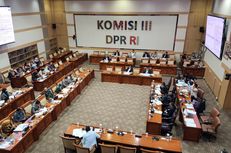
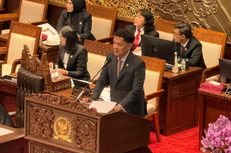
This situation has drawn attention during discussions on the Draft Law (RUU) on Wiretapping in the House of Representatives (DPR).
Some members of Commission III have noted that the existing regulations scattered across various laws can potentially lead to overlapping authorities and complicate oversight regarding the use of wiretapping equipment.
So, who is entitled to exercise wiretapping authority?
Can all law enforcement officers claim that right?
Commission III member from the PDI-P faction, I Wayan Sudirta, stated that the RUU on Wiretapping needs to clearly regulate which agencies are granted wiretapping authority, including the procedures for its implementation.
According to Wayan, such regulation is essential to ensure that wiretapping is not conducted without clear limitations, especially in relation to law enforcement interests and the substantiation of cases.
"We need regulations on wiretapping that clearly define who is authorized to conduct it, including the implementation procedures," Wayan told Kompas.com on Monday (November 16, 2026).
He explained that the public is increasingly aware that wiretapping is a sensitive action directly related to citizens' privacy rights.
Wayan mentioned that discussions regarding the RUU on Wiretapping had already been underway in the previous term of the DPR.
During that period, criticism and pressure from the public emerged due to fears that the regulations would undermine the KPK's authority to conduct sting operations.
"Many in the public may not have realized at that time that wiretapping is a sensitive activity concerning citizens' privacy rights guaranteed by the constitution. This issue always arises in policy-making, especially regarding law enforcement," he stated.
Commission III member Mangihut Sinaga drew attention to the numerous state institutions holding wiretapping authority through their own respective regulations.
He cited agencies like Polri, the Attorney General's Office, BIN, and BAIS of the military as having authority or equipment for conducting wiretaps in line with their institutional functions.
Mangihut believes this situation needs to be regulated to prevent overlap in wiretapping activities.
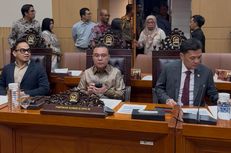
"Given the large number of state institutions now authorized to conduct wiretapping, the issue is not about who should be held accountable, but how can we avoid overlapping issues concerning wiretapping," said Mangihut during a hearing with the Head of the Intelligence and Security Agency (Kabaintelkam) of Polri, Commissioner General Dedy Kusuma Bakti, as cited from a broadcast by TVR Parliament on Monday (November 16, 2026).
This issue is also tied to the oversight of wiretapping devices held by each agency.
Commission III member retired Inspector General of Police Safaruddin emphasized the need for an auditing mechanism for all wiretapping devices belonging to state agencies.
According to him, audits are necessary to ensure that these tools are not misused outside the stipulated interests and procedures.
"The Criminal Investigation Agency has devices (for wiretapping), the Intelligence Agency has them, BIN has them, BAIS has them; this is within the context of the state. The Attorney General's Office, the KPK, Sandi (BSSN), if I'm not mistaken. To prevent misuse, there should be periodic audits, and whether this wiretapping regulation is passed, there should be a centralized audit body to examine all wiretapping equipment," said Safaruddin.
Criminal law expert from Trisakti University, Abdul Fickar Hadjar, opined that wiretapping authority should ideally be granted to law enforcement officers involved in the legal enforcement process.
According to Fickar, wiretapping is a form of coercion within the criminal procedural law framework.
Thus, its execution must have a foundation in law enforcement interests and must not be performed arbitrarily.
He referenced provisions in the Criminal Procedure Code which classify wiretapping as one form of coercive action, alongside suspect determination, arrest, detention, searches, seizures, blocking, document examinations, and travel restrictions.
"Wiretapping is currently recognized as one of the coercive actions per Article 89 of the Criminal Procedure Code. Its implementation must receive court approval, except for arrests and detentions," Fickar told Kompas.com on Tuesday (November 17, 2026).
According to him, this authority is granted as part of law enforcement during pre-trial investigations.
Therefore, the agencies that may carry it out should be those with investigative powers.
He noted that law enforcement deals with general crimes, the Attorney General's Office handles specific crimes, while the KPK holds authority in corruption cases.
"This authority is granted in the context of law enforcement during the investigatory phase, meaning police (general crimes), prosecutors (specific crimes), and KPK (corruption cases). This indicates that the underlying interest is law enforcement," he explained.
Fickar stressed that wiretapping conducted without case justification or without court approval can be categorized as illegal action.
He also reminded that there are penal repercussions under Article 258 of the Criminal Code for illegal wiretapping, which includes a maximum prison sentence of 10 years or a maximum fine of 2 billion rupiah.
"Thus, from these provisions, the most appropriate institutions for conducting wiretapping are law enforcement agencies in the context of law enforcement," Fickar stated.
Meanwhile, he indicated that wiretapping authorities granted to BIN and BAIS of the military need to be distinguished based on their objectives and interests.
He opined that if wiretapping is conducted within a military law enforcement framework, the authority still has valid grounds.
However, he deemed the granting of authority for political interests to lack strong justification.
"For this reason, illegal wiretapping, for instance, performed not by investigators, like the police without any legal case or without court approval, renders the action illegal," he remarked.
Fickar cautioned that wiretapping by agencies not involved in law enforcement poses risks of being used for the interests of specific groups if not strictly regulated.
"Politics is the preference of the ruling regime, so there is no strong reason to grant wiretapping authority to other agencies besides law enforcement," he said.
He reiterated that the objective of wiretapping should be the primary basis for determining which entities are entitled to conduct it.
"Ultimately, the most rational justification for granting wiretapping authority should only be within the scope of law enforcement. We shouldn't take this lightly because wiretapping constitutes a human rights violation," Fickar emphasized.
Aside from determining which institutions have authority, oversight becomes an important issue that must be regulated in the RUU on Wiretapping.
Researcher from Indonesia Corruption Watch (ICW), Seira Tamara, pointed out that the need for a specific wiretapping law has actually been affirmed by the Constitutional Court since 2010.
This refers to Constitutional Court Decision No. 5/PUU-VIII/2010, which asserts that wiretapping procedures should be governed by law.
However, to date, the specific law has yet to be established.
Meanwhile, Article 136, paragraph 2 of the Criminal Procedure Code has now returned to delegate wiretapping regulations to a separate law.
As a result, since January 2026, the Criminal Procedure Code refers to wiretapping regulations that are not yet available.
Seira explained that for nearly 16 years, agencies with wiretapping authority have operated based on their own regulations.
"For nearly 16 years, agencies with wiretapping authority have operated based on their own rules. The standards, duration, and extension mechanisms also vary," Seira stated in her remarks to Kompas.com on Tuesday.
She cited the wiretapping regulations in the police environment, which are governed by the Regulation of the Chief of the Indonesian National Police (Perkap) No. 5 of 2010 concerning Wiretapping Procedures at the Indonesian National Police Monitoring Center.
According to that regulation, the Head of the Criminal Investigation Agency has the authority to request approval for wiretapping operations, while the Monitoring Center is accountable to the Head of Criminal Investigation Agency.
Specifically, Perkap No. 5 of 2010 requires court approval before wiretapping is executed.
Article 6, paragraph 1 stipulates that the Head of Criminal Investigation Agency must submit a request for wiretapping permission to the Chairperson of the District Court after deeming the wiretapping plausible.
Subsequently, Article 6, paragraph 2 affirms that wiretapping operations can only proceed after obtaining that permission.
However, according to Seira, the presence of internal rules alone is insufficient to guarantee that there won't be misuse of authority.
She also highlighted the absence of independent oversight outside of the internal command chain to ensure that every number wiretapped has a legal basis.
According to Seira, this issue is critical since oversight confined within institutions may not be adequate to detect deviations early on.
Therefore, Seira asserts that wiretapping without authorization should be treated as unlawful action and abuse of authority.
She emphasized that issues of illegal wiretapping are not solely related to who is targeted for interception but also concern the protection of constitutional rights for all citizens.
"The issue is not just because the target of it is the Head of State, but because illegal wiretapping represents an assault on democracy, press freedom, and the privacy rights of every citizen guaranteed by Article 28G of the 1945 Constitution," Seira concluded.