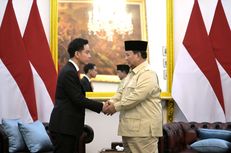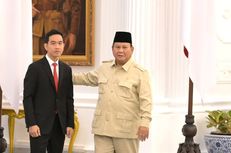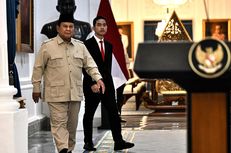

MPR Receives Letter from Prabowo Regarding Replacement Vice Presidential Candidate for Gibran
-
News
-
4 minutes ago
This article was translated by AI. Read the original article on Kompas.com. See Original
EVERY political organization will eventually face a test that will determine its future direction. This test does not always manifest in the form of electoral defeat or pressure from political opponents.
Sometimes, the challenge comes from within: when key figures leave the organization, when political relationships change, and when the foundational identity that has supported the party's journey begins to be questioned.
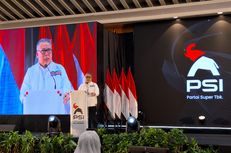
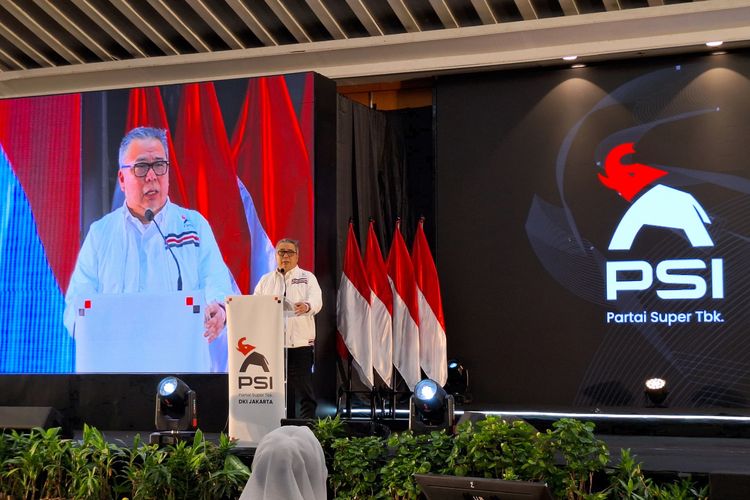
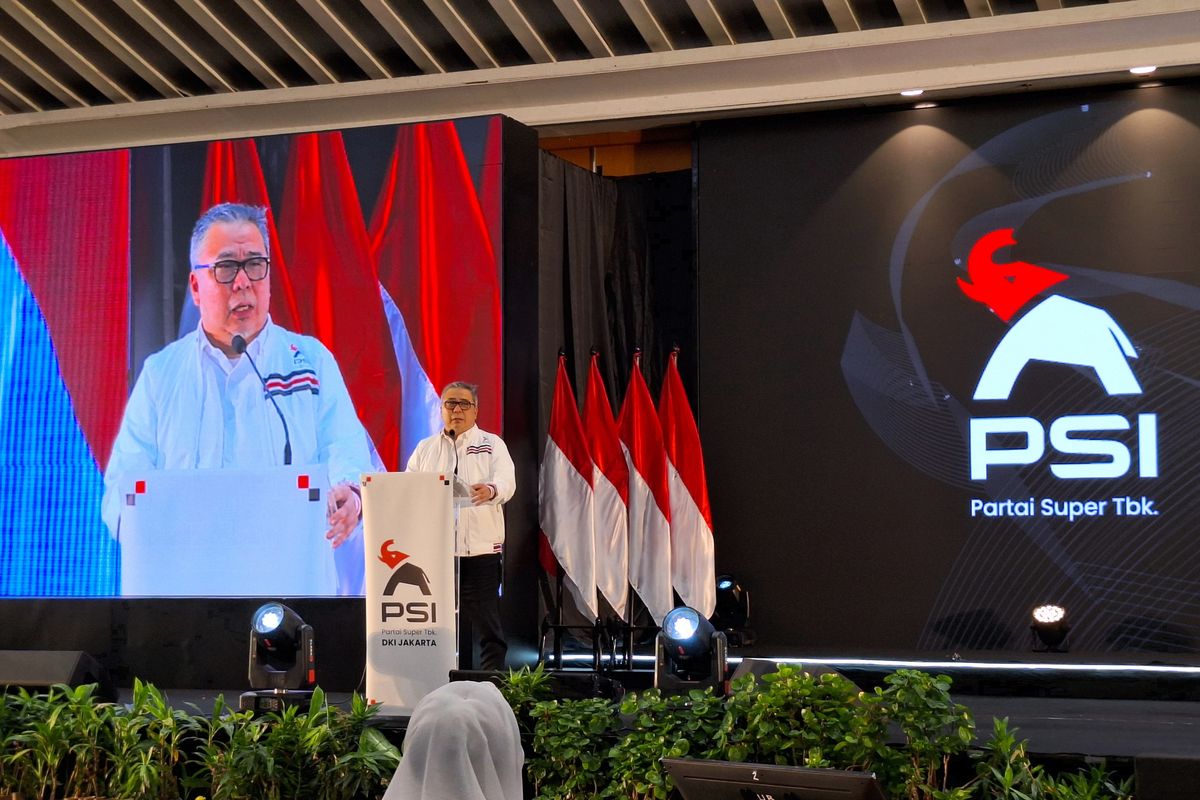
PSI is currently grappling with one of those moments. The decision of several central figures to resign from PSI is certainly not an ordinary event.
Instead of denying their past contributions and viewing their departures as a sign that the party's future is doomed with their exit, it would be far more valuable to treat this event as a moment for reflection.
This is where the political maturity of the organization is tested: can it transcend dependence on individuals, or will its identity and existence continue to be defined by who arrives and who departs?
A political party should be greater than the names that have previously elevated it.
It must possess ideas that transcend the popularity of individuals, an organization that goes beyond elite interests, and a political identity that does not easily shift merely because the power dynamics change.
Therefore, the most crucial question for PSI today is not merely why certain figures have chosen to leave the party.
A far more fundamental question is: what does PSI truly want to fight for, and how resilient is this organization in standing by its own political convictions?
In a constantly changing political landscape, PSI needs to forge a more mature relationship with the political forces around it.
The historical closeness with Jokowi is part of a political journey that does not need to be denied but should be reinforced through more meaningful institutionalization.
Jokowi's influence and contributions to PSI's journey remain a political reality that should be understood proportionally.
Similarly, its relationship with the Prabowo Subianto administration should not be built solely on a choice between unconditional support and consideration-free opposition.
The administration should be evaluated based on policies, performance, and their impacts on the community. Beneficial policies deserve support; problematic policies should be subject to criticism and correction.
In short, appreciating history does not mean tying the future to it.
This is where the importance of party autonomy lies. Autonomy does not mean severing ties with figures who have been part of the organization’s history. Autonomy also does not imply automatically distancing from the government.
Autonomy is the ability to determine positions based on values, public interests, political considerations, and the organization’s own decisions.
Simply put: closeness does not replace identity. Support does not replace independence.
PSI needs to establish a political position that isn’t solely determined by cabinet positions, nor its relation to the Prabowo administration.
Strategic relationships can still be maintained but must be framed within the interests and political identity of PSI itself.
Thus, the party avoids being trapped in dependence on individual centrality while maintaining the ability to cooperate with various political forces.
PSI can be part of the government’s political process without losing its critical edge; it can support good policies without having to justify every government decision; and it can maintain historical ties without surrendering its organizational independence.
This is the difference between a party that merely exists within power configurations and a party that has its own political identity.
However, autonomy is not sufficient just as a political stance. It must be demonstrated through organizational improvements.
An independent party requires cadres who possess critical thinking, courage to act and express opinions, and the ability to take responsibility.
It needs a democratic leadership mechanism, open regeneration, and space that allows ideas and critiques to develop without always depending on the will of a select few elites.
If PSI wants to be a strong party, it must build strong cadres. If it wants to have an independent political identity, it should develop an organization capable of producing and evolving that identity.
And if it seeks public trust, it must show that democracy, openness, and accountability are not just slogans, but principles that are genuinely upheld.
The departure of key figures from the party should serve as a chance to pose fundamental questions: Has leadership regeneration been carried out adequately? Do cadres have equal opportunities to grow and take on roles?
Have strategic decisions been built through an open and accountable organizational process?
These questions may not always be comfortable. However, an organization that fears self-evaluation will struggle to grow.
Solidarity should not be an excuse to stifle dynamics, just as loyalty should not be understood as an obligation to always agree with elite decisions.
The strength of an organization lies not in uniformity of voice, but in its ability to process differences into collective decisions.
PSI does not need to pretend that everything is fine. However, the party also should not view every change as a sign of impending doom.
Difficult circumstances can serve as a moment to distinguish what has merely relied on popularity and political closeness from what has genuinely developed as an organizational force.
The future of PSI should not solely hinge on who leaves the party, who remains, or who has connections to the centers of power.
That future must be dictated by the ability of all elements within the organization to rearticulate the reasons for the party's existence, improve its institutions, and build deeper relationships with the community.
Ultimately, the measure of the party's success is not how close it is to power, but how meaningful its existence is to people's lives.
Therefore, this moment should be seen as an opportunity for introspection, not mutual blame; to improve the organization, not merely to preserve positions; and to build a future, not live perpetually in the shadow of the past.
A great party is not one that never loses figures. A great party is one that can learn from loss, rectify shortcomings, and rediscover its struggle's direction amid changing circumstances.
Indeed, in challenging times like the present, PSI has the opportunity to prove this: a chance to grow into a more mature, more democratic, more independent, and institutionally stronger party.
Because, in the end, what we need to build is not a party that is only strong because of its prominent names, but a party that has great ideas, a robust organization, and the courage to stand on its own political convictions.