
Revisions to the Hajj Financial Law: Government Pushes for Stricter Oversight of BPKH
-
News
-
2 minutes ago
This article was translated by AI. Read the original article on Kompas.com. See Original
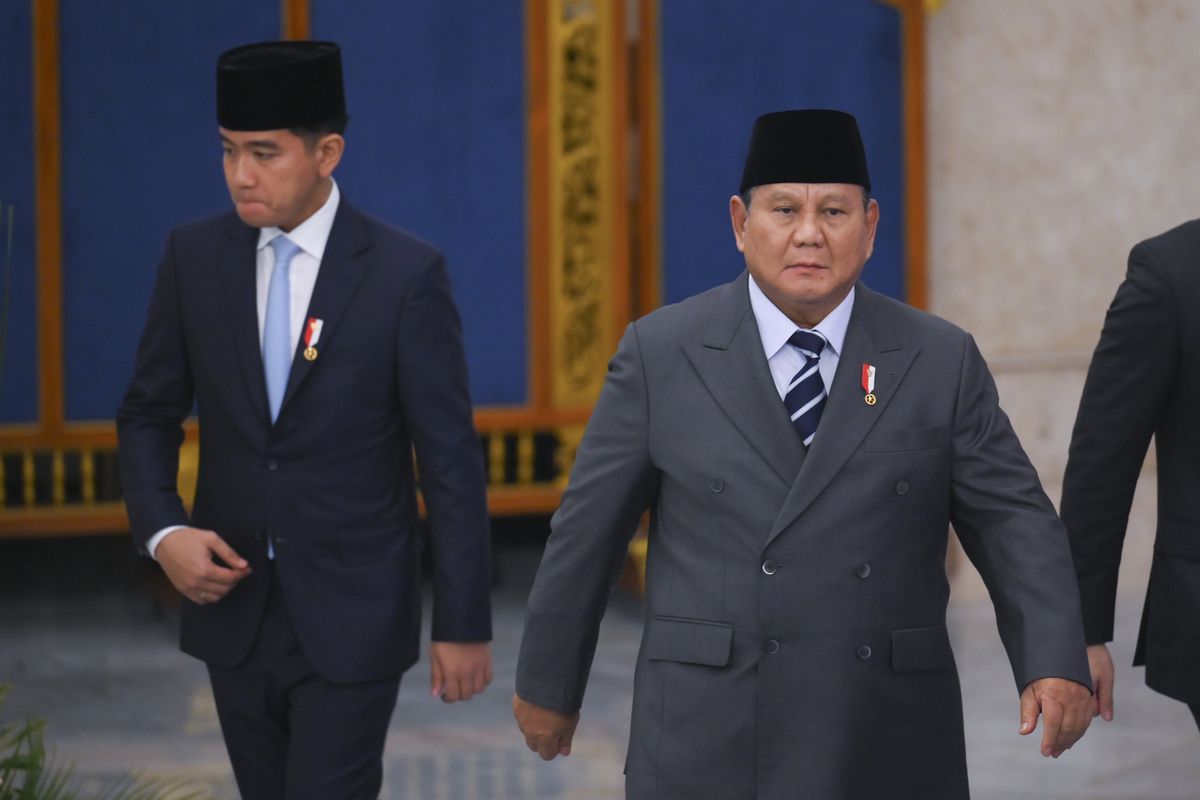
THE FUNCTIONS OF THE VICE PRESIDENT can be observed within the dynamic political landscape of both the executive and legislative branches.
In Indonesia, the Vice President's role is constitutionally defined as minimal.
However, in the political reality, a Vice President can play a crucial role in assisting the President, who holds the highest executive power in implementing development programs.
On the other hand, a Vice President’s support to the President in mobilizing legislative support is also vital.
In other words, within Indonesia's constitutionally minimal framework for the Vice President, their position and role can actually become significant, still within the context of our presidential system where the highest power rests with the President.
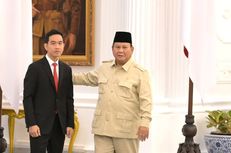
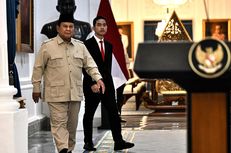
The recent developments regarding the Vice President's position, following Gibran Rakabuming Raka's resignation, indicate an important fact: the Vice President's functions are heavily dependent on the level of trust placed in them by the President as the highest authority.
Today's heated political dynamics regarding the Vice President's position have occurred before.
Prior to the 1993 MPR General Assembly, Chief of Staff for Social-Political Affairs of ABRI, General Harsudiono Hartas, publicly stated to the media that General Try Sutrisno was the Vice President candidate.
This open statement was shocking as it deviated from the norms of New Order power practice, where all parties would wait and then endorse President Suharto’s choice.
Consequently, this public announcement by an ABRI officer triggered political speculation and was viewed as a "fait accompli" for President Suharto.
Ultimately, President Suharto appointed Try Sutrisno as Vice President for the 1993-1998 term, and according to several records, their working relationship was relatively cold.
In the context of Indonesian democracy post-1998, the dynamics of determining presidential and vice-presidential candidates have changed, as seen in recent days.
However, the fundamental question remains the same: what is the role of a Vice President in the framework of a democratic presidential system?
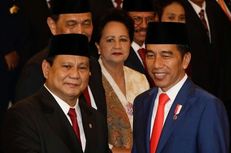
Efforts to answer this question should be preceded by identifying several assumptions regarding the current vacancy for the Vice President, as well as the context that President Prabowo must propose a name for appointment by the MPR.
Three assumptions can be outlined as follows.
The first assumption pertains to President Prabowo's need to grant full trust to the Vice President to carry out the entire vision and mission that will later be evaluated by voters in the 2029 election.
The second assumption relates to the first one, thus the candidate's name will likely come from President Prabowo's inner circle, possibly from the Gerindra Party or the military.
The third assumption is that, as the holder of prerogative rights, President Prabowo has likely conducted extensive calculations regarding the second assumption.
If both names proposed are from the Gerindra Party, it may create a negative perception politically, as the electoral accountability pathway (line of responsibility) would be directed solely towards the ruling party, the Gerindra Party.
From a political perspective, there are at least four functions that a president can delegate to their vice president.
The first function is as a bridge. In the context of the relationship between the legislative and executive branches, the Vice President can serve as a bridge for the President to the legislative body such as the DPR/MPR, or comparable to the Congress/Senate in the United States.
The bridging function is often carried out by a Vice President in the presidential system in the United States.
Joe Biden effectively performed this role when he was Vice President during Barack Obama's first term.
At that time, Joe Biden played a vital role in garnering legislative support for the massive health care program (Obamacare) that Obama proposed during his campaign to the American public.
Joe Biden's proficiency and ability to engage in intensive lobbying in the legislative body helped President Obama secure political support in Congress and the Senate for those plans and policies.
To perform such a bridging function, extensive experience as a legislative member is required, like that of Joe Biden.
He was a veteran senator who had represented Delaware since 1973 until 2009 when he became Vice President.
An understanding of how the legislative body operates and how networks within it interact is a prerequisite for a Vice President fulfilling this bridging function.
The second function is to break through and debottleneck government program implementations.
It must be acknowledged that many policies exist in an ideal context today, facing steep challenges, partly due to an overreaching bureaucracy, an unclear chain of command, and overlapping government jurisdictions at various levels.
The fixer and debottlenecking function requires a Vice President with determination and strict discipline, enabling them to assist the President in making tough decisions often avoided by bureaucratic officials, including ministries as executive implementers trapped in overlapping rules and instructions.
The third function is that of a symbolic state figure, recognized and acknowledged within the international community.
Indonesia is considered an important country with a strategic role. Ensuring that Indonesia's position on various issues is understood by the international community is a function that can also be entrusted to a Vice President.
To carry out this function, a figure known and respected internationally, including in international markets and among Indonesia's global strategic partner countries, is required.
Moreover, in terms of our constitutional symbolism, a Vice President should be prepared for any hypothetical situations imagined by our constitutional framers, such as when the President becomes incapacitated.
This calls for a mature and experienced figure in both executive and legislative fields, possessing presidential capacity, and accepted by various circles, both domestically and internationally. Most importantly, this figure must have the absolute trust of the President.
The fourth function is that of an executor (do-er) and technocrat. A Vice President can function as a partner to the President in strategic policy thought and formulation, whether general or specific.
As Vice President, Al Gore played a significant role in assisting President Clinton with environmental issues.
In Indonesia, Vice President Budiono (2009-2014) was entrusted with reviewing and formulating policies related to economic issues, particularly dealing with poverty.
Choosing Budiono, a former finance minister, as Vice President was a prudent technocratic decision by Susilo Bambang Yudhoyono during his second term.
Since this technocratic function requires background, experience, and expertise in policy formulation and creation, these must be primary prerequisites.
In determining a successor for Gibran, who has stepped down as Vice President, these four functions are particularly relevant for the President's considerations.
Of course, finding a single individual who possesses all four Vice Presidential functions simultaneously is nearly impossible.
Therefore, if a combination of two or three of these functions can be found, it would be quite ideal for President Prabowo Subianto’s administration in the three years leading up to the general election in 2029.
A final important note to consider is that, contrary to the previously outlined third assumption, opening space and opportunities for Vice Presidential candidates coming from outside President Prabowo's inner circle or the Gerindra Party may indeed be a way to reduce political tensions.
This opening can serve as an entry point to address a common mistake often made within the inner circle of policymakers everywhere.
This mistake is when an inner circle that is too small becomes prone to the pitfalls of group-think. Group-think occurs when the core power circle is so restricted that it fails or refuses to acknowledge alternative viewpoints, which could actually broaden and deepen thought processes in policy formulation and implementation, as well as garner broader support even in the most profound crisis situations.