

Challenging the Delay in Road Repairs: UU LLAJ Contesting at the Constitutional Court
-
News
-
20 minutes ago
This article was translated by AI. Read the original article on Kompas.com. See Original
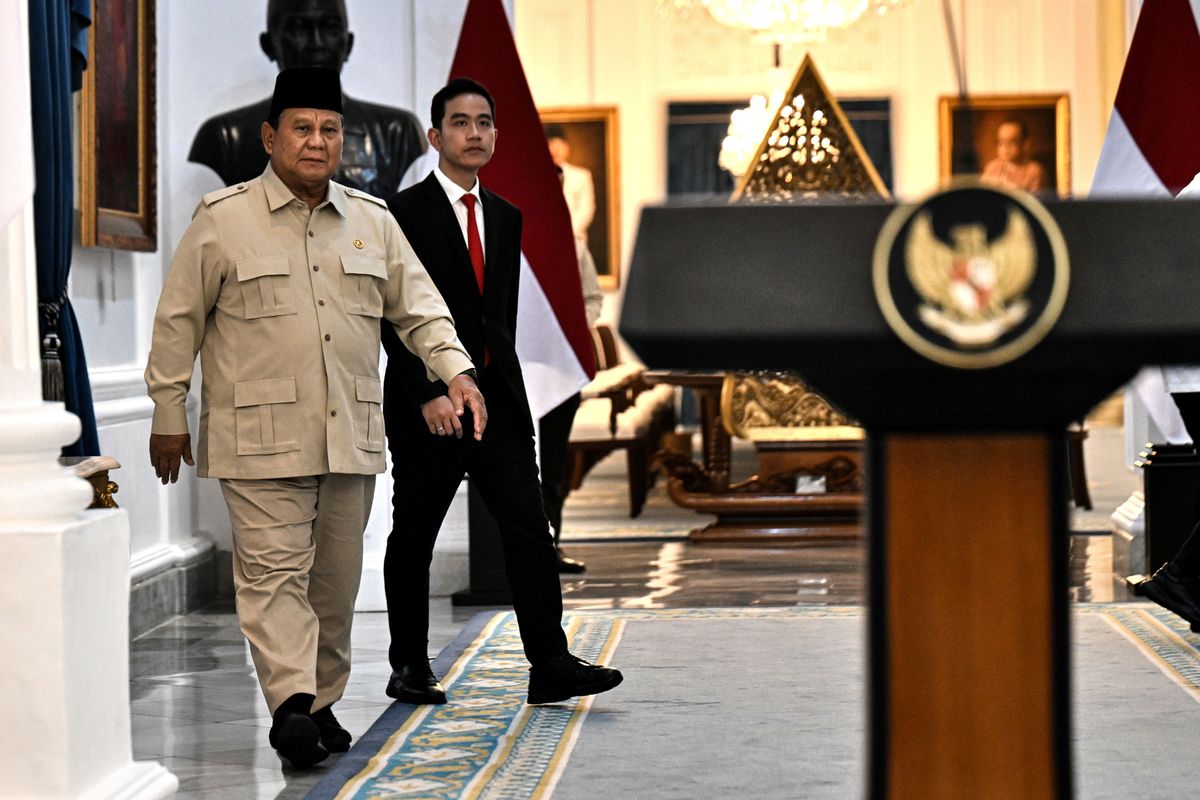
THE CHANGE of vice president is not just about filling a vacant seat in the Palace. Behind the ongoing constitutional process, Indonesia is facing a strategic decision concerning the direction of national leadership, the quality of governance, and the future of politics beyond 2029.
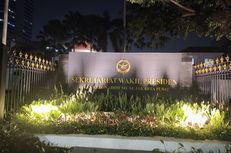
When Gibran Rakabuming Raka submitted his resignation letter as Vice President to the MPR on November 12, 2026, the process to fill the vice presidency entered a new chapter.
The MPR has scheduled a session for the election and inauguration of the replacement on December 2, 2026.
According to Article 8 paragraph (2) of the 1945 Constitution, the president proposes two names, and the MPR selects one. This mechanism places the president as the proposer, while the MPR exercises its constitutional authority to determine the successor.
However, the most important issue is not who will be chosen. A far more fundamental question is what kind of figure Indonesia truly needs to accompany Prabowo Subianto in an increasingly complex national and global situation.
This question is crucial because Indonesia is not facing ordinary governance issues. We are dealing with global economic pressures, geopolitical competition, industry transformation challenges, the need to maintain political stability, and public demands for a more effective and accountable government.
Thus, choosing a vice president purely based on political proximity, seniority, popularity, or coalition balance is an excessively narrow viewpoint.
The vice president Indonesia needs is not just a presidential companion, but a strategic partner to strengthen the state’s capacity.
In a presidential system, the president indeed holds the power of government. The vice president assists the president as regulated in Article 4 paragraph (2) of the 1945 Constitution.
This means, the vice president is not an independent holder of government mandate, let alone a second president with a different command center.
However, this constitutional position does not imply that the vice president is merely a symbolic complement. They must have the capacity to assist the president in addressing governmental issues, coordinating strategic agendas, and providing quality considerations in decision-making.
Herein lies the importance of distinguishing political loyalty from state capacity. The president requires a trustworthy partner, but the state needs a partner who also possesses the intellectual courage to voice criticism when policies may go awry.
Loyalty to the president must not override loyalty to the constitution and the interests of the people.
Indonesia's political experience shows that the president-vice president relationship can be a source of strength but can also potentially lead to rivalry if the division of roles is unclear.
Therefore, Gibran's replacement must be chosen based on their ability to complement Prabowo's leadership, rather than simply reinforcing the existing circle of power.
The first challenge that must be addressed is the economy. Indonesia indeed has significant growth potential, but the real issue lies in the quality of that growth.
We require industrialization that creates added value, productive investment, quality jobs, productivity improvements, and strengthening of the national industrial competitiveness.
Bank Indonesia in its Third Quarter 2026 Monetary Policy Report predicts Indonesia's economic growth to be in the range of 4.9%–5.7%.
However, the same report cautions that the global economy is still overshadowed by weak growth, high inflation, and tight monetary policies from advanced countries.
This global uncertainty may affect external stability and Indonesia's economic policy space.
Thus, an ideal vice president must have an understanding of the economy that goes beyond growth figures. They must comprehend the interrelationships between industry, trade, investment, fiscal policy, employment, and public purchasing power.
They should also be able to assess whether large government programs genuinely yield economic benefits or merely strain the budget without commensurate impact.
We need a figure who can assist the president in ensuring that the downstream agenda does not stop at building production facilities, that investments indeed lead to technology transfers, and that economic growth genuinely enhances public welfare.
In other words, the vice president must serve as an accelerator for economic transformation, not merely as a government success spokesman.
There is one dimension that must receive greater attention when selecting a vice president, namely international relations and geopolitics.
The world is experiencing a shift in the balance of power. The competition between the United States and China, regional conflicts, tensions in the South China Sea, changes in global supply chains, and the contest for technological influence have made the positions of developing countries increasingly strategic.
Indonesia cannot afford to be a mere spectator. As a major country in Southeast Asia, a G20 member, and an important power in ASEAN, Indonesia must be able to maintain its strategic autonomy.
The active free foreign policy must not stop as a slogan but should be translated into the capability to maintain relations with various global powers without losing independence in determining national interests.
The vice president must understand that relations with the United States and China are not solely diplomatic matters but also involve investment, trade, technology, energy, defense, and national security.
Similarly, strengthening ASEAN is not just a regional meeting agenda but an instrument for maintaining regional stability and enhancing Indonesia's bargaining position.
The maritime dimension also cannot be overlooked. Indonesia's interests in Natuna, international trade routes, maritime security, energy resources, and territorial sovereignty require an understanding that links diplomacy, defense, economy, and law enforcement.
The vice president does not need to be a diplomat or a general. However, they must have the capacity to read geopolitical changes and understand the strategic consequences of every government decision.
For, misreading global directions can directly impact Indonesia's economic interests and sovereignty.
The next issue is the effectiveness of governance. Indonesia does not lack programs, ministries, or agencies.
The recurring challenges often arise from coordination, overlapping authorities, slow implementation, and weak evaluations.
An ideal vice president must be able to bridge the president's decisions with policy implementations in ministries and agencies.
They need to understand government management, bureaucratic reform, budget oversight, and how to measure the success of programs based on results experienced by the public.
However, governance effectiveness should not be built at the expense of democracy. Political stability does not mean eliminating criticism.
Parliamentary support is not a reason to weaken oversight functions. And loyalty of apparatus should not justify abuse of power.
Gibran's successor must also possess integrity and a strong understanding of the constitution. They should be able to maintain the relationship between the government and civil society, the academic world, the press, and groups with differing views.
In a situation where public trust in state institutions is a vital asset for development success, integrity is no longer merely a personal quality. Integrity is a strategic asset of governance.
The most strategic dimension of this transition actually lies in the future beyond 2029. The vice president chosen now will simply serve the remainder of the 2024–2029 term. However, their political and strategic influence could last much longer.
If Prabowo runs again in the 2029 presidential election, the vice president could become a political partner to continue the government's agenda.
If Prabowo does not run again, the vice president has the potential to become one of the figures considered in the next national leadership configuration.
However, this position does not automatically grant the right to be a presidential candidate.
Therefore, the selected figure must have the capacity to face both of these possibilities.
They must be able to assist the current government without making their position a personal campaign platform. They must also possess a state vision that transcends the interests of a single power period.
Indonesia requires continuity in development, but continuity should not be understood as a necessity to maintain one figure or one political group. What should continue is the strategic agenda of the state, not a monopoly on power.
From all these challenges, there are at least six main qualities that the vice president replacing Gibran must possess.
They must serve as a political balance, a driver of economic transformation, a strategic partner in geopolitics, an integrator of governance, a unifier of society, and a guardian of constitutional principles.
Integrity and legal eligibility must be fundamental requirements that cannot be exchanged for any political advantage.
Meanwhile, a track record in governance, economic capability, diplomatic experience, and leadership capacity must be tested based on evidence, not just reputation.
The president certainly has the authority to propose two names. However, this constitutional authority carries significant responsibilities.
The MPR should also not view the election process merely as a political formality. The public has the right to know why the proposed figure is considered suitable for the nation's needs.
Ultimately, the replacement of the vice president should be a momentum to enhance the quality of national leadership.
We are not looking for the most popular person, the most senior, or the closest to the president. We are searching for the figure most capable of helping Indonesia tackle today’s challenges while also preparing for the future.
The best vice president is not the one most needed by the president to maintain power, but the one most needed by the country to ensure that power results in progress.
For, the vice presidency is not a political gift for anyone or any particular group. It is a constitutional mandate that must be accounted for to all Indonesian people.
And in an increasingly uncertain global situation, Indonesia cannot afford to choose the wrong person to accompany its leader.