

The Controversy of Rights and Benefits of Former Vice President Gibran
-
News
-
25 minutes ago
This article was translated by AI. Read the original article on Kompas.com. See Original
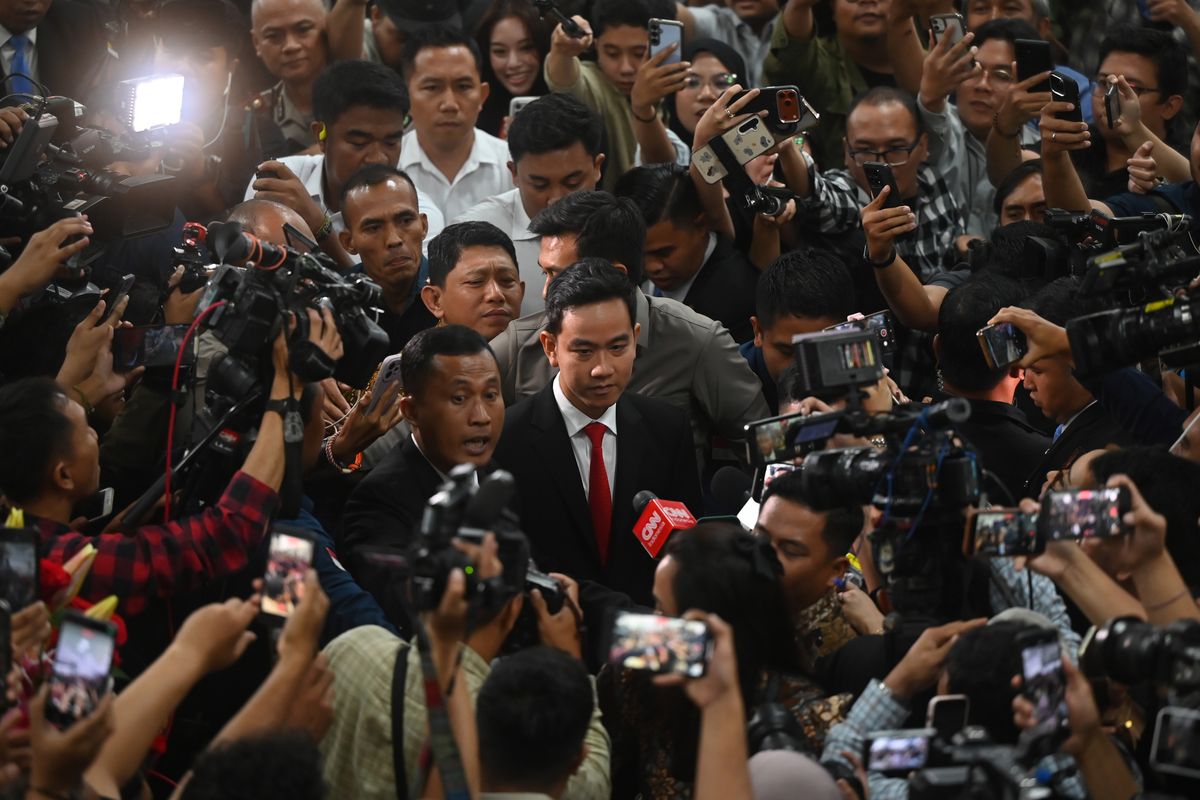
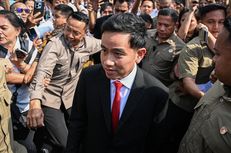
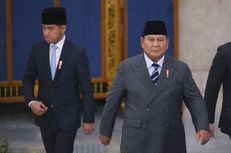
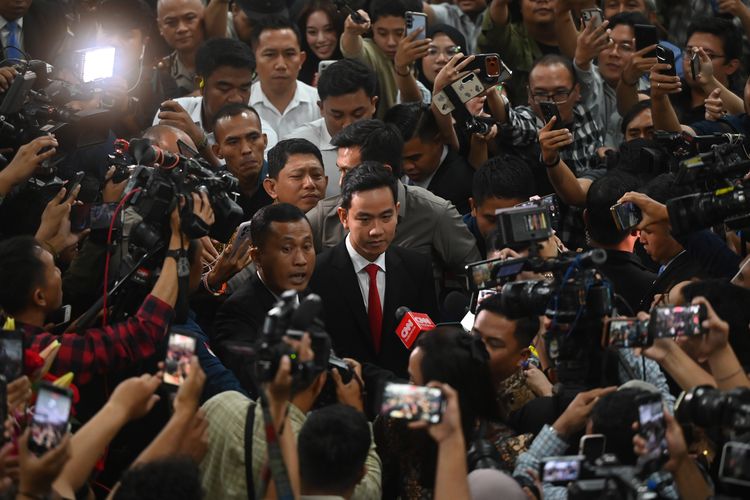
DECISION Gibran Rakabuming Raka's resignation from the Vice Presidency was initially seen as the end of a long-standing controversy regarding his educational qualifications. However, it has instead opened a new chapter.
The public is now questioning the rights and benefits that continue to accrue to him as a former vice president, which include a lifetime pension, housing, an official vehicle, and security from the Presidential Security Forces.
Legally, all of this is governed by Law Number 7 of 1978 on Financial and Administrative Rights of Presidents and Vice Presidents, and Former Presidents and Vice Presidents.
A vice president who resigns honorably is entitled to a basic pension of 100 percent of their last basic salary, approximately IDR 20.16 million per month, along with family allowances, a suitable residence, and a government-owned vehicle with a driver.
The amount of this pension does not depend on the length of service. Gibran served from October 20, 2024, which is less than half a term, yet his benefits are equivalent to those of a vice president who completes a full five-year term.
The issue is not merely numerical. The Constitutional Court found no convincing evidence that Gibran possessed a diploma equivalent to a high school certificate, although it did not disqualify him since he had been sworn in.
The Supreme Court subsequently declared his document of educational equivalence invalid and null and void (Kompas.com, 10/11/2026).
Gibran has asserted that his resignation was a personal decision unrelated to the diploma controversy. That denial deserves respect.
Nonetheless, the public's questions remain valid. Should state award rights be granted to an official whose candidacy requirements were annulled by a court?
This law was enacted during the New Order era when presidential and vice-presidential transitions occurred with minimal surprises.
Its drafters likely never imagined a vice president would be elected under conditions that would later be declared null and void by a court, only to resign before the impeachment process was underway.
The law recognizes only two exit pathways: resigning honorably or being dismissed. There is no space between the two.
Nearly half a century has passed, and the law has never been revised, despite a complete transformation of the state apparatus following constitutional amendments and the establishment of an impeachment mechanism.
This is where the loophole widens. Impeachment under Articles 7A and 7B of the 1945 Constitution allows the Constitutional Court to determine whether a vice president no longer meets the qualifications.
By resigning, that pathway is closed. There will be no definitive ruling that states Gibran fails to meet the qualifications, thus his status will be recorded as having resigned honorably. The principle of legality protects him since the state cannot revoke rights without legal grounds.
Some constitutional law experts reject this interpretation. They argue that resigning after two court rulings questioning educational qualifications cannot automatically be termed honorable.
This viewpoint rests on the classic principle that rights should not arise from actions that are legally flawed.
On the other hand, the de facto official doctrine posits that Gibran's actions during his tenure remain valid for the sake of legal certainty for the public.
Both positions could actually be reconciled. The validity of actions taken in office is protected as it concerns the public interest, but this does not automatically mean that personal rights stemming from that office should also be protected.
Two theoretical lenses help weigh this issue. Aristotle, through the notion of distributive justice, teaches that rewards should be distributed according to merit and worthiness. Treating different matters as the same constitutes injustice.
A lifetime pension identical for a five-year vice president with valid qualifications and for a two-year vice president whose candidacy was annulled clearly disregards the principle of proportionality.
John Rawls in A Theory of Justice (1971) offers a sharper test through the idea of the veil of ignorance.
Imagine citizens formulating rules without knowing whether they would become officials or ordinary citizens.
They would almost certainly reject rules that allow the highest officials to enjoy full rights after their qualifications are annulled, while an ordinary job applicant is immediately disqualified when their diploma is declared invalid.
Justice as propriety demands rules that can be accepted by all parties, rather than rules that benefit those at the top.
Comparing with civil servants clarifies this inequality. A new civil servant is only entitled to a pension after fulfilling a certain service period and can be dismissed honorably if found using invalid documents.
Strict standards for employees at the lower levels, but lenient for officials at the top is a form of injustice that is readily felt by the public.
In Rawlsian terms, inequality can only be justified if it benefits the least advantaged, not the most powerful.
However, not all facilities deserve to be challenged with equal weight. Security by the Presidential Security Forces is protective.
Former vice presidents remain public figures who are vulnerable to threats, and their safety pertains to the country's prestige.
The strongest moral objection is directed towards rights that are appreciative in nature, such as pensions, allowances, housing, and vehicles, as these are all intended as rewards for service. This differentiation is important so that critique does not turn into punishment.
The momentum for reform is indeed available. The Constitutional Court has ordered lawmakers to reorganize the financial rights of leaders and former leaders of state institutions within two years.
An opinion piece in Kompas asserts that this ruling encourages a fairer pension system for officials, attuned to the state's finances, and no longer applicable for life (Kompas, 30/3/2026).
Law Number 7 of 1978 should also be reviewed. Appreciative rights need to be made proportional to the term of office, accompanied by a forfeiture clause should a court ruling state that candidacy requirements have not been met from the outset.
Outside the legislative path, there lies an ethical avenue open for Gibran himself. The law allows former vice presidents the freedom to decline protective services, and a similar attitude could be taken towards other rights, for instance, by allocating part of his pension for public interests.
Such gestures would bolster his claim that he resigned in the nation's interest.
The law has indeed provided him with rights. However, the law enacted nearly half a century ago does not always align with today’s sense of justice.
If an ordinary job applicant loses their rights due to invalid documents, why does the state reward a lifetime pension to an official whose candidacy was annulled by a court?