
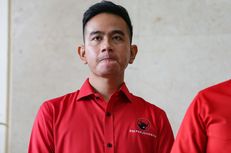
Gibran, PDI-P, and Old Wounds from the 2024 Presidential Election
-
News
-
1 minute ago
This article was translated by AI. Read the original article on Kompas.com. See Original
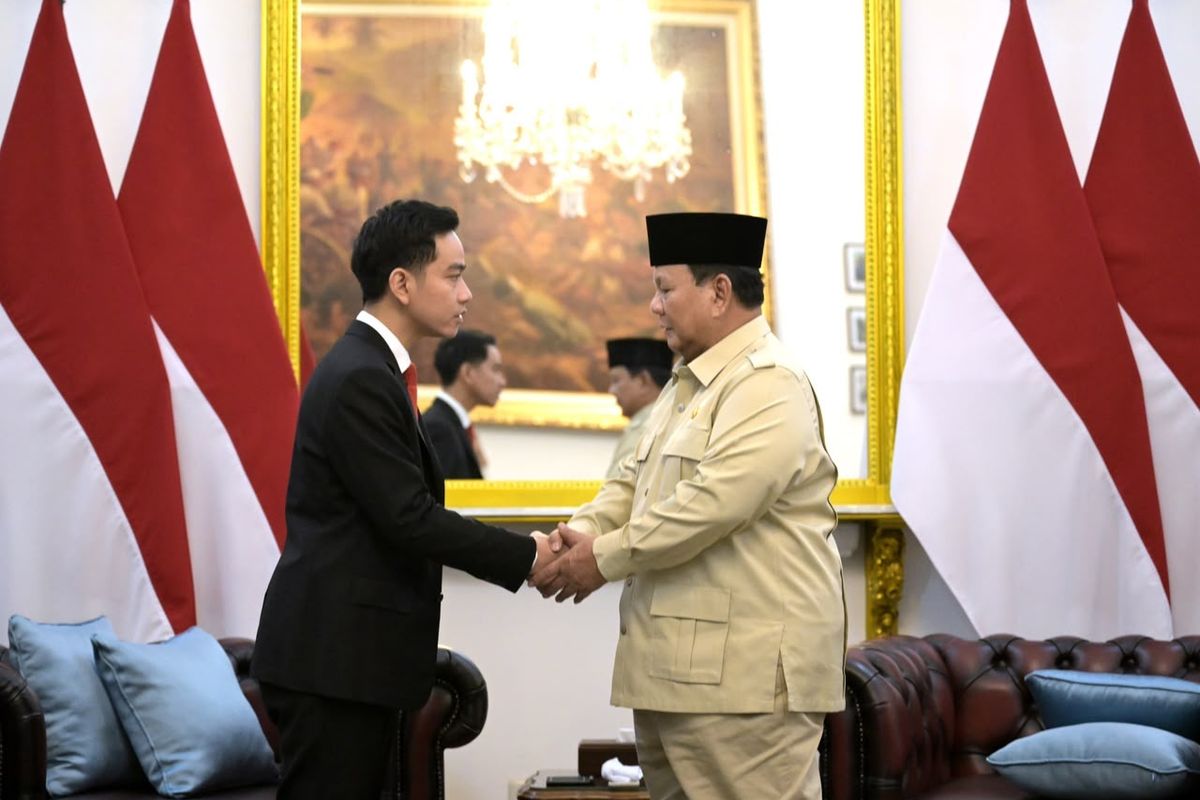
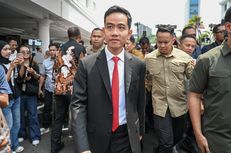
GIBRAN Rakabuming Raka has officially submitted a letter announcing his resignation as Vice President on Thursday, November 12, 2026. The political dynamics are expected to heat up further as a new vice president is to be appointed.
The upcoming vice presidential election might not hold significant importance for Gibran's loyalists anymore. For them, one thing is clear: Gibran is no longer vice president.
This is a reality they have long been reluctant to accept, but it has ultimately come to pass.
How will Gibran's loyalists cope with this? What direction will they take? Gibran has yet to indicate his plans.
In his resignation statement, he expressed that one chapter of his life has ended and closed.
He added that he “will always be loyal to the people of Indonesia, whatever the circumstances.”
Although this narrative conveys a commitment to public service, it is insufficient to predict whether he will engage in politics again.
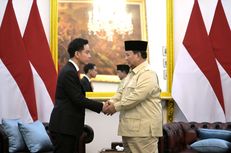
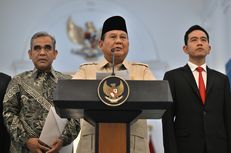
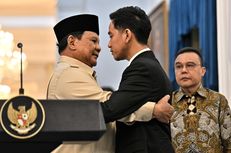
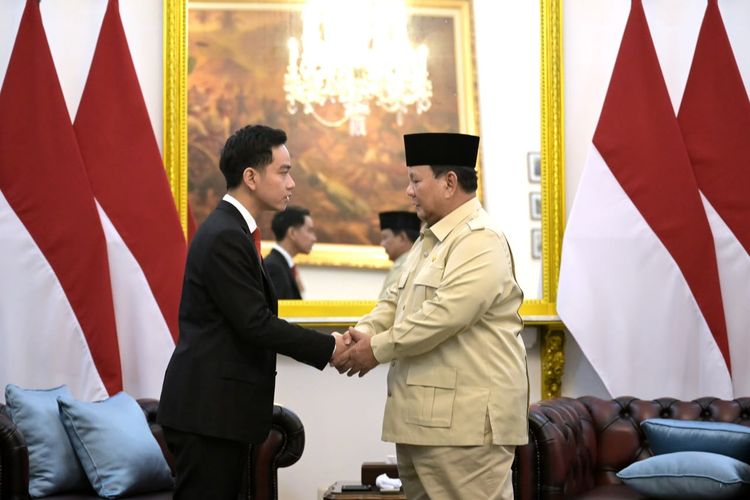
Meanwhile, at the Vice Presidential Palace, the high-level political event quickly transformed into an emotional drama.
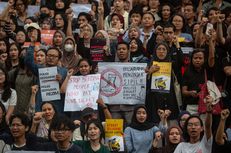
Hundreds of volunteers welcomed Gibran's return with tears, supportive banners, and rows of small business stalls.
In public spaces and on social media timelines, various narratives defending him emerged. Sadness, anger, and even humor for self-comfort were all displayed.
This phenomenon is interesting to analyze as both a political communication maneuver and a mechanism for collective psychological defense.
How are Gibran's loyalists handling the cognitive dissonance they face? Can this cognitive dissonance provide insight into how they shape their future as Gibran's loyalists?
In social psychology, the condition experienced by these loyalists is known as cognitive dissonance.
The theory introduced by Leon Festinger in 1957 explains the mental discomfort that arises when a person holds two conflicting beliefs or when new facts challenge old beliefs that have become entrenched. This is the situation Gibran's loyalists are currently facing.
Over the past two years, supporters believed Gibran represented a young leader who would disrupt the status quo. He was expected to have full legitimacy until 2029.
The reality, however, tells a different story. He must step down mid-term due to controversies surrounding the administrative requirements for candidacy.
This creates a significant conflict in the minds of his loyalists. To alleviate this psychological pain, according to Festinger, a defense mechanism must form to dispel discomfort.
This includes creating new narratives to prevent their old beliefs from completely collapsing.
If mapped out, the self-comforting efforts among Gibran's loyalists can be divided into three main response spectra.
First, a group of loyalists adopts an accepting attitude framed by strategic resolution. This group mitigates dissonance through rationalization and reframing.
Political defeat is reinterpreted as a moral victory. This rationalization is quite clear. High positions are reframed as traps of power, while resignation is celebrated as a chivalrous act.
Gibran is portrayed as stepping back to maintain the stability of Prabowo's administration. At the same time, hints are dropped about gearing up for the contest for president in 2029.
Second, there is the group of loyalists who reject reality and maintain a stance of resistance. Here, dissonance is confronted by fostering a victimhood mentality.
The defeat at the Constitutional Court and the Supreme Court is set aside, replaced with a narrative of an “innocent person being wronged.”
Various posts on social media depict that “Mr. Gibran has always been a good person” and “the people still need him.”
His image of personal generosity is used to mask the grief from their legal battle's loss.
The extreme narrative from this group even surfaced as threats of mass mobilization to blockade Jakarta. This can be understood as an emotional outburst rejecting the encroaching legal realities.
Third, there is the group of loyalists who engage in deflection or distraction. Finding it too bitter and complicated to discuss the substance of the court's ruling and the political processes surrounding it, this group opts to avoid the main topics.
They shift the stage of debate. This includes creating a public celebration adorned with meatball and chicken noodle stalls at the Vice Presidential Palace, as well as posting compilations of Gibran’s work during his tenure.
A slightly more extreme reaction involves directing their anger at coalition partners perceived to have political amnesia; sweet after the fruit is gone, or forgetting where they came from.
The peak of this aim to shift their anger is the hope that Gibran's resignation will open a ”Pandora's box” revealing who the real masterminds behind this case are.
Some loyalists attempt to turn the tables by arguing that Gibran's resignation is not the end of the battle but the beginning of uncovering a grand conspiracy.
In this narrative, Gibran is positioned as someone who has restrained himself to maintain elite harmony. When he finally lets go of his position, the political burden is deemed lifted.
Next, the veils surrounding those who previously facilitated his candidacy—as well as those now pushing for his impeachment—will be lifted before the public.
Psychologically, the ”Pandora's box” narrative represents an advanced defense mechanism. It is a way to divert the bitter reality of acknowledging that their idol has fallen.
For comfort and to maintain self-esteem, believing that there is a giant “puppet master” at play, and that Gibran still holds the trump card to expose it, becomes an option.
Whether this is realistic or merely an illusion remains to be seen.
In the midst of unresolved sadness and lingering bitterness, Gibran's loyalists will face existential questions about where they will go and who they are now.
Gibran's loyalists cannot escape from introspection and recognizing the journey they have taken.
The political shock Gibran has faced proves how fragile daily popularity can be, driven only by algorithms and fleeting euphoria.
People may sympathize with Gibran. He is liked by many. However, that sympathy and fondness are only geared towards gaining those cool algorithms.
Algorithms only provide Gibran with instant friends and supporters, akin to school mates or party companions, borrowing the framework of Constanza Gajardo and Irene Coster in their article How Loyalty Works: Why Do People Continue Their Relationship with Journalism (2023).
Algorithms cannot give Gibran true friends, let alone friends akin to family.
As we've realized in these final days, algorithms are not robust enough when facing the traditional political forces filled with tactics and intrigue.
In electoral contests, in terms of campaign voting, it may play a part.
However, in a semi-marathon struggle, traditional politics driven by ideology, organization, and territorial networks will prevail, especially in times of crisis.
If Gibran's loyalists intend to reshape their political steps after losing power, one thing is now clearly necessary: the supporting base can no longer be nurtured and developed through ”party companion” or merely ”schoolmate” relationships.
Party companions only show up when the power music thumps, the entertainment stage is set, and logistics are overflowing.
Once the party ends and crisis strikes, party companions lack ideological resilience. They easily panic, busy themselves with conspiratorial narratives, or gradually leave the arena.
Meanwhile, school friends are bound by cold and minimal formal obligations. They cannot be relied upon in difficult times.
Pursuing consolidation after his resignation requires Gibran to forge bonds with supporters akin to true friends or family members. In politics, true friends are not just a line of admirers who always justify their leader's every step.
True friends are those bound by deep values and empathy, willing to sincerely remind when procedures go awry, and who remain steadfast not out of promises of power positions but due to shared vision and sincere dedication.
The broader public can indeed become the strongest friends and protectors for a public figure when they see their connection with their patron transcending mere schoolmate or party companion ties.
This is a lesson not only for Gibran but especially for his loyalists, who still see Gibran as an expected figure for the future.