
Sugiono Ensures State Will Secure Future for Families of Fallen Karhutla Volunteers
-
News
-
56 minutes ago
This article was translated by AI. Read the original article on Kompas.com. See Original

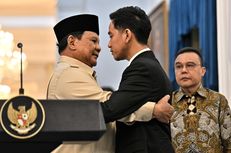
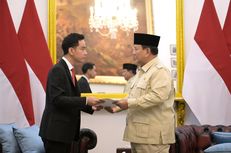
GIBRAN Rakabuming Raka has resigned. On Thursday (12/11/2026), his resignation letter was accepted by the chairman of the MPR.
Since then, the position of Vice President has been declared vacant. President Prabowo Subianto faces an unusual situation: leading the government without a partner who supported his victory in the 2024 Presidential Election.
However, the republic continues to function.
The palace continues to govern. The ministers retain their authority.
Presidential decisions remain legally grounded. There is no constitutional provision that diminishes the President's power merely because the vice president has resigned.
This situation raises more fundamental questions than merely speculating who will replace Gibran.
If the government can continue to operate without a vice president, how important is that position really?
This question might sound simple. However, its answer touches on one of the most crucial issues in constitutional law: how to ensure that power persists when its holder can no longer fulfill their duties.
For, the ability to govern today does not necessarily equate to readiness for a change of power tomorrow.
Article 4, paragraph (1) of the 1945 Constitution states that the President holds executive power according to the Constitution.
The following paragraph states that in fulfilling his duties, the President is assisted by one vice president.
This formulation reveals the character of Indonesia's presidentialism.
The President is not half of two holders of executive power.
The vice president is not a second president with equal governing authority.
The center of executive power lies with the President. The responsibility for the success or failure of government primarily rests on him.
Consequently, Gibran's resignation does not diminish Prabowo's authority.
The President can continue to lead the cabinet, set policies, conduct foreign relations, and exercise other powers granted by the constitution.
There is no requirement for every government action to obtain approval from the vice president.
Herein lies the constitutional basis for the phrase "No Wapres, No Problem."
Without a vice president, the government does not lose its executive power holder.
However, there's a difference between power that can still be exercised and power that has assured succession.
A President may lead robustly. However, a country should not depend on the strength of a single President for its continuity.
The Constitution is necessary precisely because power is executed by humans who are never completely free from limitations.
The vacancy of a position does not always mean a vacancy of power.
When the vice president resigns, the position indeed has no holder. Yet, the government remains in the hands of the legitimate President.
In normal circumstances, this might not pose significant issues.
The problem is that the vice presidency is not only designed to assist the President in daily tasks.
Article 8, paragraph (1) of the 1945 Constitution places the vice president as the substitute for the President in the event of death, resignation, dismissal, or inability to fulfill his duties during the term.
Herein lies the paradox.
The President's authority remains intact in the absence of the vice president. However, the nation loses an official directly prepared by the constitution to replace him.
While the government may remain stable, the certainty of succession faces greater risks.
The strength of the President and the resilience of the constitutional system are not necessarily aligned.
A President may have broad political support, a solid cabinet, and the ability to control the government.
However, none of these automatically resolves who should take over power if circumstances change abruptly.
Thus, the significance of the vice president cannot be measured by how often he leads meetings or appears alongside the President.
There are positions where the most important functions are not visible when things run smoothly. The vice president is among them.
A constitution is not only written for times when everything goes according to plan.
It must also be able to respond when a leader resigns, institutions face vacancies, or decisions need to be made in unanticipated circumstances.
Here, three issues need to be distinguished.
The continuity of governance relates to the state's ability to exercise executive functions.
Succession security pertains to certainty about who legitimately replaces the leader.
While constitutional resilience indicates the overall system's capability to handle disruptions without losing its foundational authority.
All three are interconnected, but do not always possess the same level of resilience.
Indonesia can still have a functioning government when the vice presidential position is vacant.
However, the situation becomes more complicated if that vacancy is followed by circumstances whereby the President can no longer fulfill his duties.
Unlike a minister, whose replacement can be determined through presidential authority, the vice president is in a succession structure directly outlined by the 1945 Constitution.
This vacancy touches on issues larger than mere cabinet job distribution.
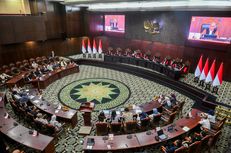
Indeed, Article 8, paragraph (2) provides a mechanism for filling the vice presidential vacancy. The MPR must conduct an election within sixty days from the two candidates proposed by the President.
This regulation indicates that the constitution anticipates vacancies but does not design them as permanent states.
In other words, the constitution allows the state to endure a vacancy but also mandates that it be resolved.
What if worse circumstances actually occur?
The framers of the 1945 Constitution have provided extraordinary mechanisms through Article 8, paragraph (3).
If both the President and Vice President simultaneously die, resign, are dismissed, or are unable to fulfill their duties, the presidency is executed jointly by the Minister of Foreign Affairs, Minister of Home Affairs, and Minister of Defense.
These three are known as the triumvirate.
This choice is not without meaning. Foreign relations, domestic governance, and defense are crucial fields for the nation’s continuity when national leadership faces emergencies.
The minutes of the amendments to the 1945 Constitution show that this mechanism emerged through discussions of constitutional amendments in 2002.
The final choice places the three ministers as acting presidential leaders, not as definitive Presidents.
Their authority is also limited. Within a maximum of thirty days, the MPR must hold elections for President and Vice President based on constitutional mechanisms.
However, this formulation raises complex questions.
What if the Vice President resigns first, then the President dies or becomes unable to perform duties?
Article 8, paragraph (3) uses the phrase "simultaneously."
Does "simultaneously" refer to the timing of events, or does it relate to the circumstances in which both positions are ultimately unable to function?
From a textual interpretation standpoint, this phrase should not be overlooked.
However, from a constitutional purpose perspective, it is also difficult to accept the possibility of leaving the state without an acting presidency simply because two events occur at different times.
The issue is not merely about choosing between a literal reading of the text or prioritizing the constitution's intent.
Each interpretation must explain the basis of authority, its application limits, and the consequences for governmental legitimacy.
The minutes of the amendments to the 1945 Constitution confirm the option of a triumvirate mechanism.
However, this does not automatically resolve all potential disputes regarding sequential vacancies.
Therefore, the triumvirate should not be viewed as an automatic answer to every situation.
It serves as an emergency safeguard, not a regular substitute for the vice presidential position.
Succession issues concern not only who executes power but also where that authority derives its legitimacy.
The President and Vice President are elected as a pair through a general election.
Both receive mandates from the same electoral process, although their positions and constitutional powers differ.
When the vice president replaces the President, power continuity flows through an official who also has received a direct mandate from the people.
The situation differs when presidential duties are carried out by a triumvirate.
The three ministers have not been elected by the people as President or Vice President.
They gain their positions through presidential appointment.
However, this does not imply that the triumvirate's authority is invalid or lacks legitimacy.
Indeed, the 1945 Constitution itself provides the basis for that authority.
The difference lies in the source of the mandate and the nature of power execution.
The vice president possesses an electoral mandate as part of an elected pair.
The triumvirate receives a temporary constitutional authority to maintain the government's operation.
Therefore, the performance of presidential duties by three ministers cannot be treated as a definitive form of leadership.
Article 8, paragraph (3) then returns the election to the MPR through two pairs of candidates proposed by political parties or coalitions based on the previous election results.
This mechanism maintains the relationship between power continuity and democratic mandates.
Thus, the constitution not only seeks to prevent government vacancy but also aims to avert emergencies as a pathway for extending unchecked power.
In a democratic state, certainty about who is ruling must always go hand in hand with certainty regarding the foundation and limits of their authority.
Gibran's resignation should not be viewed as a direct threat to Prabowo’s government.
The President still possesses constitutional authority. The cabinet continues to function. Government decisions do not lose legitimacy simply because the vice president's position is vacant.
However, this calm should not foster the assumption that the vice presidential position is unnecessary.
The 1945 Constitution has established a complementary security arrangement. Article 4 places governmental power in the hands of the President.
Article 8, paragraph (1) regulates the replacement of the President by the Vice President. Paragraph (2) provides a mechanism for filling the vice presidential vacancy.
Meanwhile, paragraph (3) governs the execution of presidential duties in extraordinary circumstances.
All these provisions serve one great purpose: the state must endure even as those in power change.
Thus, filling the vice presidential position is not merely a matter of seeking a new companion for the President.
It is part of the responsibility to maintain the state's continuity.
The President does not lose his authority when the vice president resigns.
However, that intact authority does not exempt the responsibility of executing constitutional mechanisms to fill the vacancy.
In a rule of law, the ability to maintain governance should not be used as a reason to disregard rules regarding power transitions.
Indeed, this is where the maturity of a system is tested.
A strong government can make decisions in normal conditions. A robust constitutional system can ensure that decisions remain possible even when power holders change.
Both are equally necessary.
Thus, "No Wapres, No Problem" should not be interpreted as a statement that the vice president is unimportant.
This phrase is only accurate as long as it is understood that the government does not cease operations when that position is vacant.
Beyond that, there are still questions that must be answered: how to ensure that the state maintains legitimate leadership when circumstances change suddenly?
Indonesia will not lose its government simply due to an empty vice presidential seat.
But that situation serves as a reminder that a President's strength does not always correlate with constitutional resilience.
A mature state not only knows who holds power today but has also ensured who legitimately leads when unforeseen circumstances arise.