
Commission III Leadership Meets Prabowo, Suggests Vice Presidential Appointment by End of November
-
News
-
2 minutes ago
This article was translated by AI. Read the original article on Kompas.com. See Original
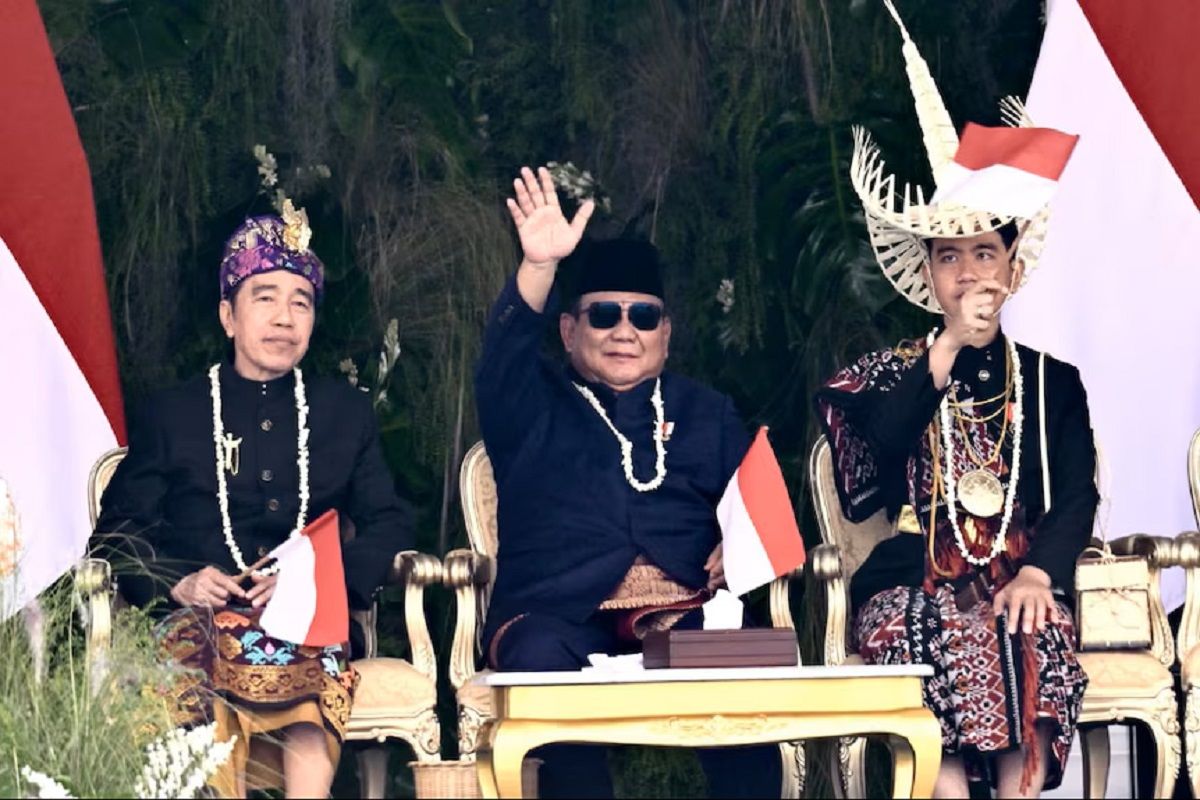
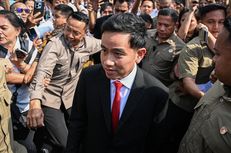
JAKARTA, KOMPAS.com - The resignation of Gibran Rakabuming Raka from his position as Vice President is seen as a catalyst for change in the practical political relations between the Solo and Hambalang factions. What does this mean?
President Prabowo Subianto and the 7th President of Indonesia, Joko Widodo (Jokowi), have allied in the 2024 presidential election, moving from partnership to collaboration, and are now perceived to be entering a new phase in their political relationship.
"The Hambalang-Solo alliance formed during the 2024 presidential election is now entering a new chapter," said political communication analyst Jamiluddin Ritonga from Esa Unggul University to Kompas.com on Thursday (12/11/2026).
Jokowi has made efforts to emphasize that his son's decision will not disrupt relations with Prabowo's government.
He characterized the political dynamics as typical and reminded that positions are temporary.
"There will definitely be political dynamics; that’s normal, that’s normal," said Jokowi at his residence in Surakarta, Central Java, on Thursday (12/11/2026).
Observing his eldest son’s resignation from the vice presidency, Jokowi reminded the public that such positions are temporary while expressing support for Prabowo's government programs.
This statement arises amidst shifting political landscapes within Jokowi's circle.
Before Gibran submitted his resignation to the People's Consultative Assembly (MPR) yesterday, three founders of the Indonesian Solidarity Party (PSI)—Giring Ganesha, Raja Juli Antoni, and Isyana Bagoes Oka—had already decided to leave the party.
The day prior, Projo General Secretary Panel Barus also announced his departure from the volunteer organization traditionally aligned with Jokowi.
Additionally, Gibran faced pressure regarding controversies surrounding educational documents that were under legal scrutiny and related to the freedom of speech (HMP) issue in the DPR.
These events have made the political relationship between the Hambalang faction, associated with Prabowo, and the Solo faction, identified with Jokowi, come under scrutiny again.
Will Gibran's resignation create more distance between the two factions, or could it serve as a moment to reconfigure their political relations ahead of the 2029 elections?
Gibran's resignation is believed to have broader implications beyond merely a change in government positions.
The loss of the Vice Presidency could alter Jokowi's political access and influence within Prabowo's administration.
Jamiluddin Ritonga notes that Gibran's position as Vice President has been an essential direct link between Jokowi and the executive power center.
With Gibran part of the government circle, Jokowi retained political access through his son.
However, after Gibran's resignation, such structural access is no longer available.
"Gibran's official resignation on Thursday, November 12, 2026, directly shifts the balance of power toward a complete dominance of the Prabowo Subianto (Hambalang) camp and cuts off Joko Widodo's (Solo) direct access to the center of government," said Jamiluddin.
 Political communication analyst from Esa Unggul University, Jamiluddin Ritonga. (Personal documentation of Jamiluddin Ritonga)
He argues that this situation tests Jokowi's political influence.
Since Gibran no longer holds a strategic position, the Jokowi family lacks an instrument to maintain its influence in the power center.
Furthermore, Gibran now faces political pressure without direct support from major political parties in the parliament.
This scenario leaves the Jokowi family's political strength increasingly reliant on public sympathy and the ability to consolidate political networks outside the government.
The PSI serves as a potential vehicle for Jokowi to maintain his influence.
However, as a non-parliamentary party, the PSI faces challenges in building a strength that can be accounted for within the national political configuration.
On the other hand, Prabowo has broader leeway to consolidate the government without ongoing political controversies surrounding Gibran.
Jamiluddin predicts that the formal relationship between the two factions will still appear cooperative.
However, beneath that relationship, differing interests may become more pronounced as the 2029 elections approach.
"The Hambalang-Solo alliance formed during the 2024 presidential election has now entered a new chapter," he stated.
With Gibran's resignation, Jamiluddin believes that the Solo faction will focus on independent consolidation for the 2029 election, while the Hambalang faction will have the freedom to organize coalitions without legal controversies burdening them.
Gibran's resignation does not automatically end the political relationship between Jokowi and Prabowo, but it does allow both to potentially start pursuing their own political agendas independently of the power configuration that existed during the 2024 presidential elections.
Moreover, Jokowi's statement reaffirming his support for Prabowo's government is seen by Jamiluddin as an effort to maintain stable political relations and mitigate speculation regarding a rift between Jokowi and Prabowo.
According to him, there are two messages that can be interpreted from Jokowi's statement.
First, acceptance of the political reality faced by Gibran. Second, an attempt to preserve good relations with Prabowo even though his son is no longer in government.
When Jokowi refers to positions as temporary, he attempts to frame Gibran's resignation as part of typical political dynamics rather than a family political defeat.
This narrative can also serve to mitigate the impact of Gibran's resignation on Jokowi's and Gibran's public images.
Jamiluddin observes that Jokowi aims to ensure Gibran's decision is not interpreted as a form of opposition against Prabowo.
"Jokowi's insistence that Gibran continue to support President Prabowo's government, especially in programs prioritizing public interests, can be read as a peace signal or a gesture of political buffer," said Jamiluddin.
However, there is another side to Jokowi's word choice.
Jamiluddin points out that the emphasis on programs beneficial to the public allows Jokowi to maintain his political position without being structurally tied to Prabowo's government.
This means Jokowi's support need not be construed as a complete surrender of his political interests to the Hambalang camp.
Jokowi can still maintain a position as a political figure with his own support base while demonstrating a cooperative attitude toward Prabowo's government.
Such statements can also be interpreted as a strategy to keep a safe distance.
By not positioning himself as an opposition, Jokowi retains the space to determine his next political steps according to the situation's developments.
Jamiluddin believes Jokowi’s statements are not driven by a single motive.
On one hand, Jokowi seeks to demonstrate acceptance of Gibran's political decision.
On the other, he attempts to ensure that issues surrounding his son do not escalate into an open conflict with Prabowo.
In doing so, personal relations and political communications between the two figures can be maintained, even as their political interests may begin to diverge further.
Although Jokowi expresses support for Prabowo's government, the possibility of changed political relations between the two figures remains open.
Dedi Kurnia Syah, Executive Director of Indonesia Political Opinion (IPO), even posits that Prabowo could potentially enter the list of parties opposing Jokowi's political interests.
According to Dedi, Gibran's exit marks a pivotal moment that alters the positions of both factions.
If previously Jokowi and Prabowo had mutual interests in maintaining the government formed from the 2024 elections, moving forward, both could have their own political agendas.
"Prabowo is sure to be seen as an adversary to Solo, similar to Jokowi in the eyes of the PDI-P. Therefore, Jokowi is likely to focus on the PSI, preparing to face Prabowo in the elections and the 2029 presidential race," Dedi told Kompas.com on Thursday.
 Executive Director of Indonesia Political Opinion (IPO) Dedi Kurnia Syah after participating in a discussion in Gondangdia, Central Jakarta, Saturday (8/2/2020).
Jamiluddin assesses that the Hambalang-Solo relationship may still be upheld in the form of formal communication and cooperation.
However, both factions need to consider their own political interests heading toward 2029.
For instance, Jokowi could utilize the PSI as a vehicle to sustain his political networks and influence.
Meanwhile, Prabowo has the freedom to strengthen the government coalition without continuously accommodating the political interests of the Jokowi family through the Vice Presidential position.
Jamiluddin suggests that Prabowo must find a balance between consolidating power and political stability.
Gibran's resignation could become a moment for Prabowo to enhance the independence of his government.
"President Prabowo needs to balance political stability with asserting his authority as head of state. This situation opens avenues for Prabowo to diminish the shadow of former President Joko Widodo's influence without triggering open conflict that could disrupt government operations," said Jamiluddin.
"In this way, Prabowo can strengthen the independence and control of the government," he added.
Nevertheless, this does not require creating open opposition to Jokowi.
One area that needs safeguarding is the independence of legal processes concerning issues affecting Jokowi's circle.
According to Jamiluddin, legal processes, including allegations of illegal wiretapping involving former Police Chief Listyo Sigit Prabowo and administrative issues regarding Gibran, should proceed without political intervention.
This approach is crucial so that shifts in power configurations do not create the impression that legal processes are leveraged to eliminate certain political groups.
Additionally, Prabowo has the opportunity to consolidate the cabinet and coalition in ways that align with his government's agenda.
However, this restructuring needs to be based on governmental needs and performance rather than merely political closeness or distance from Jokowi.
Prabowo should also maintain personal communications with the former president.
"Prabowo can also maintain a good relationship with Jokowi. Even though dynamics between the Hambalang and Solo factions are often interpreted as political tension leading to 2029, maintaining personal communication with Jokowi remains crucial to prevent polarization among supporters at both grassroots and elite levels," he emphasized.
Maintaining this relationship can help prevent differences in elite interests from escalating into tensions among their respective supporters.
Jamiluddin believes that Prabowo should frame Gibran's resignation as a political decision to be respected and not as a severance of ties with the Jokowi family.
For Jokowi, the next challenge is to prove that his political influence can endure without relying on Gibran’s position in the government.