
Filling the Vice Presidential Seat Accelerated, Target is a New VP by December
-
News
-
25 minutes ago
This article was translated by AI. Read the original article on Kompas.com. See Original
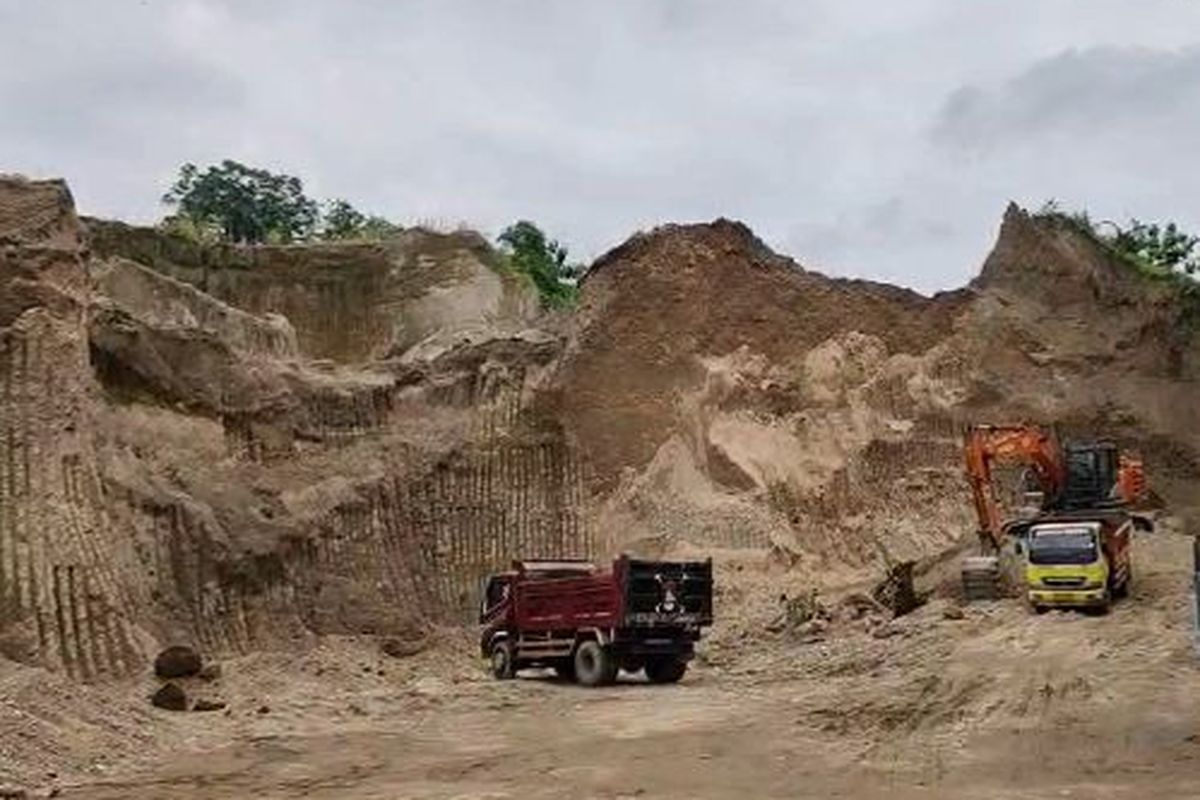
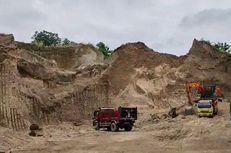
THE PLAN by the government to return the licensing authority for mineral extraction, specifically category C mining or sand and stone (sirtu), to the regional governments of districts/cities deserves a positive reception.
This proposal comes in the wake of the floods and landslides that affected several areas in Sumatra in November 2025, and is not merely a technical step towards the normalization of rivers.
More than that, it represents a moment to correct the trajectory of decentralization that has tended to pull local government authority to higher levels.
From the perspective of regional autonomy, this policy is akin to returning the betel leaf to its place.
Matters that are characteristically tied to the scope of impact and the service needs should indeed be handled by district/city governments.
Why is that?
First, looking at the complexity of the issues. Mining encompasses a broad spectrum of activities, ranging from oil and gas extraction, minerals, and coal, to the mining of materials like sand and stone.
Each type has its own characteristics, technological needs, expertise, capital requirements, and environmental risks. Not all mining issues need to be managed by the central or provincial government.
For example, managing oil and gas extraction requires advanced technology, substantial investment, and specialized expertise, hence it rightly falls under the purview of the central government.
However, category C mining involving sand and stone is relatively simpler from a technical management perspective.
District/city governments should have the capacity to handle licensing, coaching, and supervision while still complying with the technical and environmental standards set by the central government.
In the theory of government division, there are principles of accountability, efficiency, externalities, and national strategic interests.
The externality principle requires that governmental matters be handled by the level of government closest to those affected by such matters.
Meanwhile, the accountability principle demands that authority is given to the government that can best justify its implementation.
In the context of category C mining, the local community is the party that is closest and most directly impacted by mining activities.
Environmental damage, changes to river paths, sedimentation, infrastructure damage, as well as potential floods and landslides are ultimately felt by local communities.
Thus, it seems somewhat odd that district/city governments must wait for decisions from provincial or national governments for issues happening right in front of them.
The local government, which understands the geographical conditions, river characteristics, development needs, and the impacts of mining activities, is often left without adequate authority to take action.
Second, the return of this authority will make government services more effective. District/city governments are geographically and socially closer to mining locations.
Consequently, licensing processes, utilization of materials, business actor coaching, and on-site supervision can be carried out more quickly and responsively.
Compare this to provincial governments that must oversee mining activities across many districts/cities with extensive geographical areas. Limited reach can result in suboptimal supervision.
Often, on-the-ground issues only come to light after they have caused damage or conflict with the community.
In disaster management in Sumatra, for example, piles of sand and stone in rivers require immediate action. These materials can be utilized to support river normalization and development needs.
Local governments should be able to make decisions more swiftly, certainly through transparent mechanisms, according to legislative regulations, while considering environmental carrying capacity.
Third, the return of authority can strengthen regional fiscal capacity. Amid fiscal constraints and many district/city governments' dependence on regional transfer funds (TKD), local natural resource potential must be managed more productively and responsibly.
Utilization of sand and stone can contribute to regional income through legitimate revenue instruments in line with regulations.
Moreover, collaborating with third parties in utilizing materials for river normalization can provide economic benefits for regions and communities.
However, it should be emphasized that increasing local revenue (PAD) must not come at the expense of environmental interests.
We should not allow the returned authority to open the door to excessive natural resource exploitation. While local income is important, environmental sustainability and community safety are far more critical.
In fact, the authority to manage category C mining at the district/city level is not a new concept in Indonesia’s governance history.
In earlier times, local governments had more significant room for authority over mining operations of category C materials.
Changes occurred alongside the reordering of governmental affairs in the mining sector. Through legal policies concerning minerals and coal, authority that was previously decentralized was centralized to the national government.
Subsequently, some licensing authority was delegated to provincial governments.
This reorganization aimed to strengthen control and oversight over mining activities. However, in practice, centralization of authority does not always equate to effective management.
In fact, when authority is too distanced from the site of issues, oversight can become less responsive, and accountability to local communities diminishes.
Regional autonomy should not be viewed as a threat to the central government. Instead, decentralization is an instrument to bring governance closer to the people, shorten bureaucratic chains, and improve public service effectiveness.
The constitution also provides a clear foundation. Article 18A, paragraph (2) of the 1945 Constitution emphasizes that financial relations, public services, and the utilization of natural resources between the central and regional governments are regulated and implemented fairly and in accordance with the law.
The phrases 'fair' and 'in harmony' carry important meanings. The management of natural resources must not only benefit the central government, while the regions where exploitation takes place bear the social and ecological burdens.
Regions must receive proportional authority and benefits, accompanied by clear management responsibilities.
Therefore, the return of category C authority should not be limited to districts/cities affected by disasters in Sumatra.
While disasters may serve as a trigger, an evaluation of governmental affairs division should be conducted nationally. The characteristics of sand and stone mining exist in various regions throughout Indonesia.
Of course, returning authority must not be done arbitrarily. Several prerequisites must be met.
First, the central government must establish clear norms, standards, procedures, and criteria (NSPK) as guidelines for district/city governments. Technical mining standards, safety, reclamation, and environmental protection must remain national references.
Second, institutional capacity and human resources at the local level must be strengthened. Not all district/city governments have personnel with adequate technical expertise in mining and environmental aspects.
As such, provincial and central governments must still perform capacity-building, facilitation, supervision, and oversight duties in line with their authority.
Third, transparency in licensing must be mandatory. The process of issuing permits, determining mining areas, supervising production, reclamation obligations, and regional revenues must be accessible and subject to public oversight.
This is crucial to prevent rent-seeking practices, corruption, conflicts of interest, and abuse of power by local elites.
Fourth, environmental oversight must not be compromised. District/city governments must ensure that sand and stone extraction activities do not damage river basins, disrupt ecosystems, or increase risks of new disasters.
Material extraction must be based on technical and environmental assessments, not merely economic considerations.
Thus, the decentralization of authority must parallel the decentralization of responsibility. Local governments are given authority but must also have the capacity, integrity, and accountability.
Ultimately, the government's plan to return licensing authority for category C mining to district/city governments is a wise and appropriate step.
We must ensure that the disaster momentum in Sumatra does not pass without leading to fundamental corrections in regional governance.
The central government should promptly issue regulations underpinning this return of authority.
Further, this policy should not be limited to disaster-affected areas but should apply to all districts/cities across Indonesia while considering each region’s institutional preparedness and capacity.
We must not remain trapped in the paradigm that consolidating more matters to the center or province means better governance.
What is more important is not where the authority is pooled, but at what level of government an issue is most effectively, efficiently, and accountably managed.
If simple, local matters with direct community impacts continue to be controlled from higher government levels, what is the point of advocating for regional autonomy?
Returning authority for category C mining to district/city governments does not mean weakening the central or provincial governments. Instead, it exemplifies a more proportional, fair, and harmonious division of responsibilities as desired by the constitution.
It is time for the government to stop distancing authority from the people. We must ensure that while sand and stone reside in the area—where the impacts are felt by the local community—the authority remains with those closest to the issues.