
Gibran Resigns, New Chapter for Vice President Appointment Begins
-
News
-
17 minutes ago
This article was translated by AI. Read the original article on Kompas.com. See Original
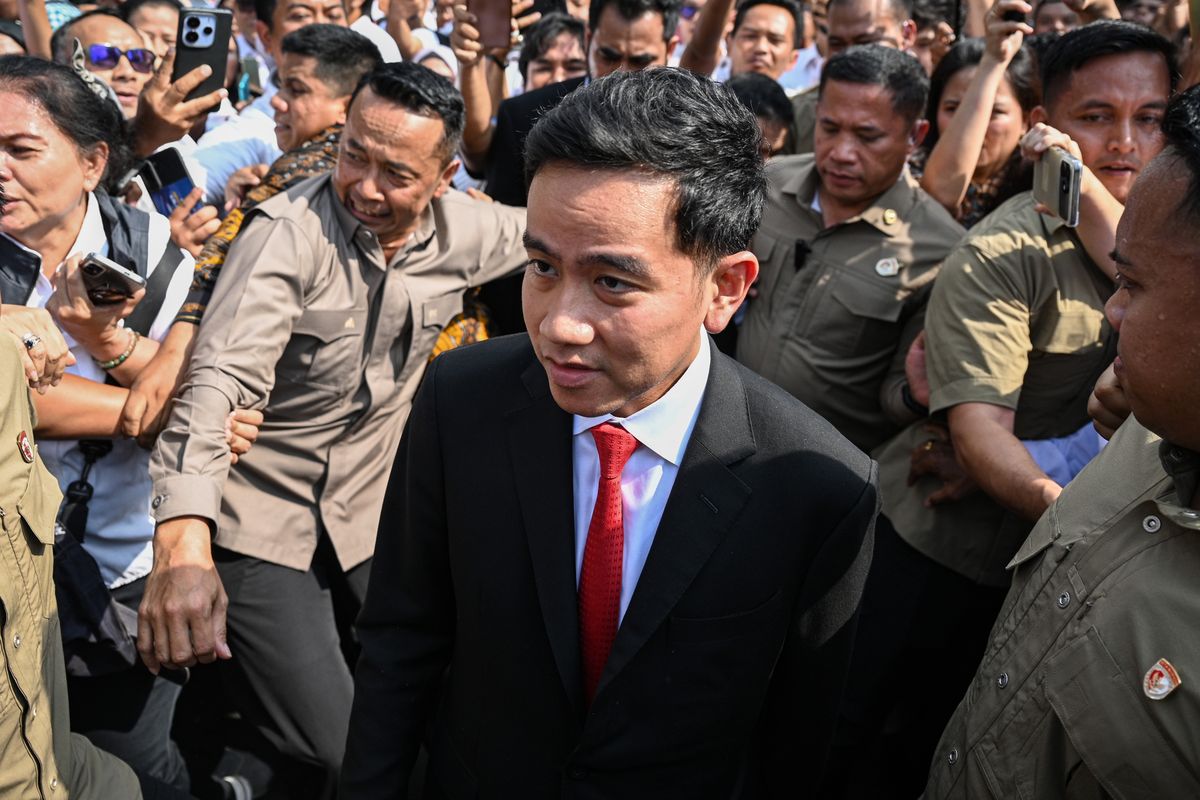
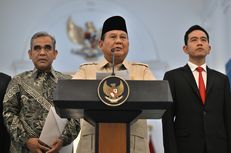
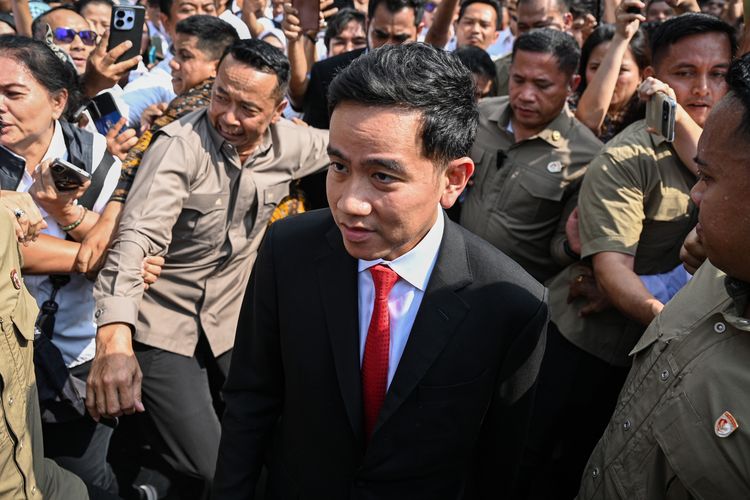
AFTER a lengthy and tumultuous debate, the Vice President of the Republic of Indonesia, Gibran Rakabuming Raka, officially submitted his resignation letter as Vice President.
This statement of resignation does not position Gibran as a guilty party; rather, it relates to issues of ethics and the dignity of the government.
We must avoid misinterpretations that suggest Gibran has been declared guilty under the law.
In fact, both legally and constitutionally, there is no verdict that has found him guilty concerning allegations of forgery or diploma misuse.
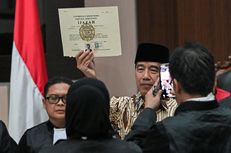
Stepping down honorably within the framework of the 1945 Constitution is not an admission of criminal wrongdoing but rather a political and ethical choice that distinctly separates the Supreme Court's Decision No. 742 K/TUN/2026 from the subsequent revocation of the Certificate of Equal Educational Degree Equivalent to High School No. 9149/D.D1/KS/2019 by the Ministry of Education and Culture and the personal accountability of the officials.
Although the Supreme Court ruled in an administrative case that the basis for issuing the letter of certification only states attendance and grades, not proof of completing education equivalent to high school, this does not imply a criminal offense.
It is clearly stated in the ruling that the document is void, and the revocation is ordered. What was annulled was a product of administrative decisions, not Gibran's criminal actions.
Likewise, the Constitutional Court's Decision No. 01/PHPU.PRES-XXIV/2026 did not assert otherwise.
The Constitutional Court found no convincing evidence of a diploma, certificate, or foreign degree that could be equated with high school education.
This assessment is negative (insufficient evidence in the trial), not positive (proven forgery). The Constitutional Court did not disqualify, impose criminal sanctions, or declare Gibran guilty.
Under Indonesian law, a decision declared void due to administrative issues does not equate to a determination that an individual is guilty.
The analogy is straightforward: a driver's license revoked due to flawed issuance procedures does not automatically make the holder a criminal for forgery.
Educational requirements are regulated by law (Article 6 Paragraph 2), but the dismissal of an incumbent official follows the mechanisms outlined in Articles 7A and 7B.
The Supreme Court does not have the authority to dismiss a Vice President. Thus, the choice to resign constitutionally is a personal stance, similar to Vice President Mohammad Hatta's resignation in 1956.
After the vacancy occurs, Article 8 Paragraph (2) mandates that the MPR selects a replacement within 60 days from the two candidates proposed by the President. A resignation letter does not require MPR approval.
By resigning, the DPR's efforts to initiate a statement of opinion for impeachment lose their object, rendering them uncontinuable.
In this context, Gibran recognizes that public office is a mandate anchored in moral and ethical values.
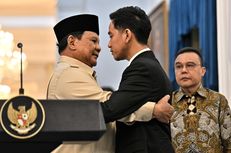
When his position was questioned, he did not fiercely defend it; rather, he set an example that, even if legally he has not been fully declared guilty, moral and ethical awareness guided him to honor President Prabowo's government.
Resigning honorably demonstrates moral maturity and acknowledges that the legitimacy of the position, although still debated, should not sacrifice the interests of the nation and state.
In the tradition of republican ethics, the power of an official lies not in the ability to endure by any means but in the courage to submit to moral and ethical values.
Gibran's choice separates past procedural errors from current political responsibilities and hands over the continuation of governance to the mechanisms provided by the Constitution.
Public debate has long been muddled with administrative disputes, political issues, and criminal allegations. Many conflate the annulment of the certification with a guilty verdict. This confusion harms and undermines the perception of justice, widening polarization.
This misunderstanding of the law is what ultimately creates public bewilderment.
Questions arise as to whether Gibran is guilty or merely a victim of the state's administrative mistakes.
This debate is not entirely settled. However, I wish to emphasize that there is no ruling stating Gibran is guilty. Regarding his resignation, it reflects a significant ethical and moral awareness on Gibran's part.
Gibran prefers to end this controversy to restore trust in the government and the presidential institution rather than forcing himself to retain his position.
Therefore, Gibran's stance is a noble one that we should exemplify in our national life.
Politically, calls for his resignation have come from various factions in the DPR RI. Parliamentary parties such as PKS, Democrats, PKB, PAN, Gerindra, PDIP, Golkar, and Nasdem view resignation as the most elegant way to end the controversy without a lengthy impeachment process.
On the other hand, DPR leadership and some coalition members emphasize the respect for the mechanism and Gibran's right to make his own decision. In this context, an honorable resignation preserves the stability of Prabowo's government.
This also avoids the precedent that a Vice President can fall solely due to political pressure or media framing, simultaneously closing the loophole for Article 7B, which could consume significant resources for the nation.
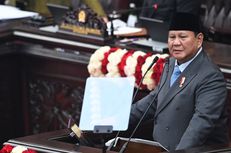
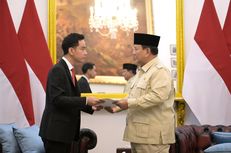
Once the vacancy occurs, President Prabowo Subianto will propose two names, and the MPR will select. This process is constitutional, clearly time-bound, and does not alter the fact that no criminal verdict has yet been rendered.
What remains is the responsibility of other parties—the issuer of the certification and the agency accepting the nomination documents—which can be examined ethically or administratively without mingling it with Gibran's status as an individual.
In conclusion, I want to reaffirm that legally and constitutionally, Gibran's resignation statement is a splendid constitutional action.
His resignation does not mean he is legally guilty. And to this day, he has not been declared guilty of anything in any court.
Even though the certification is annulled, it pertains to an administrative product, not a verdict on a person. Mistakes in procedure by the Ministry of Education and Culture are what led to this situation.
Resigning honorably is the choice that most aligns with the 1945 Constitution. In a state governed by law, clarity in assessing the situation is more valuable than a forced insistence on retaining power.
Constitutionally, Gibran resigns honorably, not because he is guilty, but chooses for the interests of the nation and state, and for the stability of President Prabowo Subianto's government.